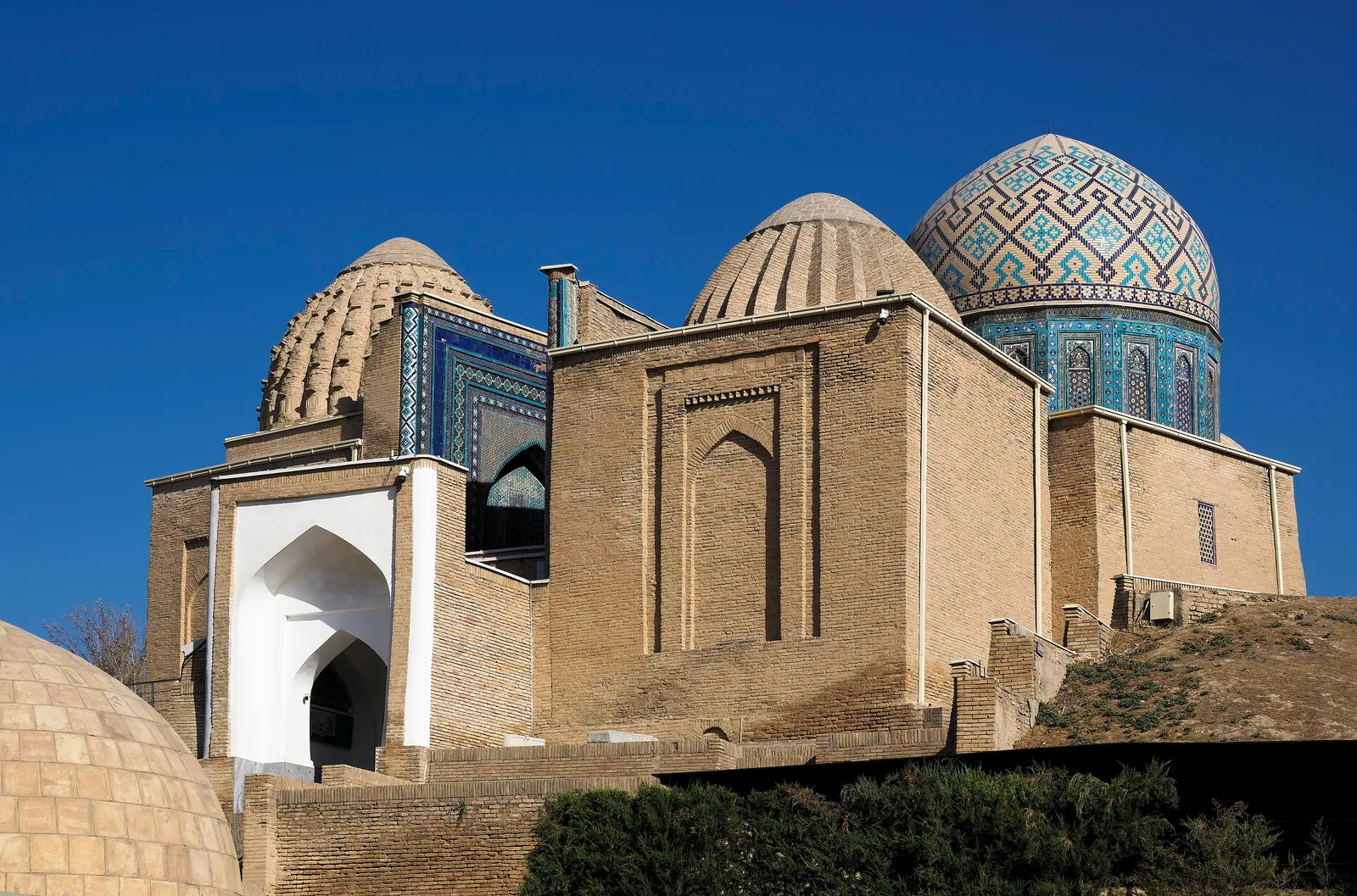
The Blue-Tile Architecture of the Silk Road, Explained
Why are the domes of Samarkand and Bukhara so intensely blue, and how were the tiles actually made? A short field guide to the ceramic architecture that defines Uzbekistan's oasis cities.
The first thing anyone remembers about Samarkand is the blue — domes of turquoise and cobalt rising over a tawny city. That colour is not paint and not stone. It is glazed ceramic, fired tile cladding an architecture of plain baked brick beneath, and it is the defining art of the Silk Road's oasis cities.
Knowing a little about how that tilework was made and read transforms a visit. The blue is a deliberate technology with a long history; the patterns follow rules; and the different methods of setting tile produce visibly different surfaces. This is a short field guide to looking at the ceramic architecture you will meet across our Silk Road Reborn journey.
Why blue, and where the colour comes from
The two dominant colours have specific chemistry. Turquoise — the lighter, greenish blue — is produced by copper in the glaze. The deep, saturated cobalt blue comes from cobalt ore, and that mineral was genuinely traded along the Silk Road, much of it sourced from Persia, which is one reason the colour spread with the network.
There were practical and symbolic reasons to favour blue as well. Against the dust-brown of a desert city and the hard light of Central Asia, blue and turquoise read vividly from a great distance, drawing the eye to a monument across the rooftops. Blue also carried associations with water, the sky and paradise — fitting for religious buildings in an arid land where water meant survival.
Brick first, tile second
It helps to remember that the structure underneath is humble. Central Asian monumental architecture is built of fired mud brick — the same material as an ordinary house, only more of it. The tile is a skin applied to that brick core.
The oldest surviving monuments show the bare structure with no tile at all. The Samanid Mausoleum in Bukhara, from around 900 CE, achieves all its beauty through patterned brickwork alone. Glazed tile cladding spread later and reached its height under the Timurids in the 14th and 15th centuries. So a quick rule for dating: the more a building disappears under blue tile, generally the later it is.
Three ways to set a tile
Three main techniques recur, and they look different up close. The oldest decorative method, banna'i, sets glazed bricks among plain ones to spell out geometric patterns and even words across a whole wall — best seen on the Kalyan Minaret in Bukhara.
Mosaic faience is the most laborious and the most luminous: craftsmen glaze tiles in single colours, then cut them by hand into small shaped pieces and assemble them like a jigsaw into flowing arabesques and calligraphy. Cuerda seca — Spanish for dry cord — is faster: a single tile is painted with several colours at once, the glazes kept from bleeding by a greasy line drawn between them, which leaves a faint matte outline. A guide who points to a panel and tells you which method built it changes how you see every wall after.
Reading the patterns
Islamic architectural decoration generally avoids images of living beings on religious buildings, so the tilework concentrates on three families of pattern. Geometric design builds endlessly from interlocking stars and polygons, a mathematics made visible. Vegetal arabesque uses stylised flowering vines and tendrils in continuous, rhythmic growth.
The third is calligraphy: Quranic verses and sacred names worked into the design as ornament, in angular Kufic or flowing cursive scripts. The famous exceptions — the tigers of the Sher-Dor in Samarkand, the phoenixes of the Nadir Divan-Begi in Bukhara — are striking precisely because figurative imagery is so rare. Once you can name the three families, a tiled facade stops being a blur and becomes a text.
Restoration and the living craft
Much of the tilework seen today is not original. Centuries of earthquakes, weather and neglect destroyed a great deal of it, and large areas were reconstructed in the 20th century, much of that during the Soviet period. This is honest to acknowledge: a visitor is often looking at modern tile faithfully replacing a lost medieval design.
The encouraging side is that the craft never fully died. Workshops in Uzbekistan still cut and fire tile by traditional methods, and ceramic towns such as Rishtan in the Ferghana Valley keep the glazes and patterns alive as a working trade. On The Silk Road Reborn there is usually a chance to watch a tilemaker or potter at the wheel — which makes the domes overhead feel less like relics and more like the latest chapter of a continuing art.
Quick answers
Why are the domes of Samarkand blue?
The domes are clad in glazed ceramic tile, not painted. Turquoise comes from copper in the glaze and deep cobalt blue from cobalt ore, a mineral traded along the Silk Road. Blue was favoured because it stood out vividly against a desert city and the bright Central Asian sky, and because it carried associations with water, the heavens and paradise.
Is the tilework original or reconstructed?
Often it is reconstructed. Earthquakes, weather and neglect destroyed much of the original tilework over the centuries, and large areas were rebuilt in the 20th century, much of it during the Soviet era. The craft itself survived, however — Uzbek workshops still produce tile by traditional methods, so restoration draws on living skills.
What do the patterns on the tiles mean?
Religious buildings generally avoid images of living creatures, so the decoration uses three families of pattern: geometric designs built from interlocking stars and polygons, vegetal arabesques of stylised vines and flowers, and calligraphy carrying Quranic verses and sacred names. Rare figurative exceptions, such as the Sher-Dor's tigers, stand out precisely because they break the convention.
Let the reading become a route.
When an article sparks something, our planners are the next step. Tell us what you are dreaming of.