Cave Churches and Underground Cities: The Hidden Cappadocia
Cappadocia's strangeness runs downward as well as up. For centuries people carved homes, frescoed churches and entire subterranean cities into the soft rock — a whole civilisation lived inside the landscape.
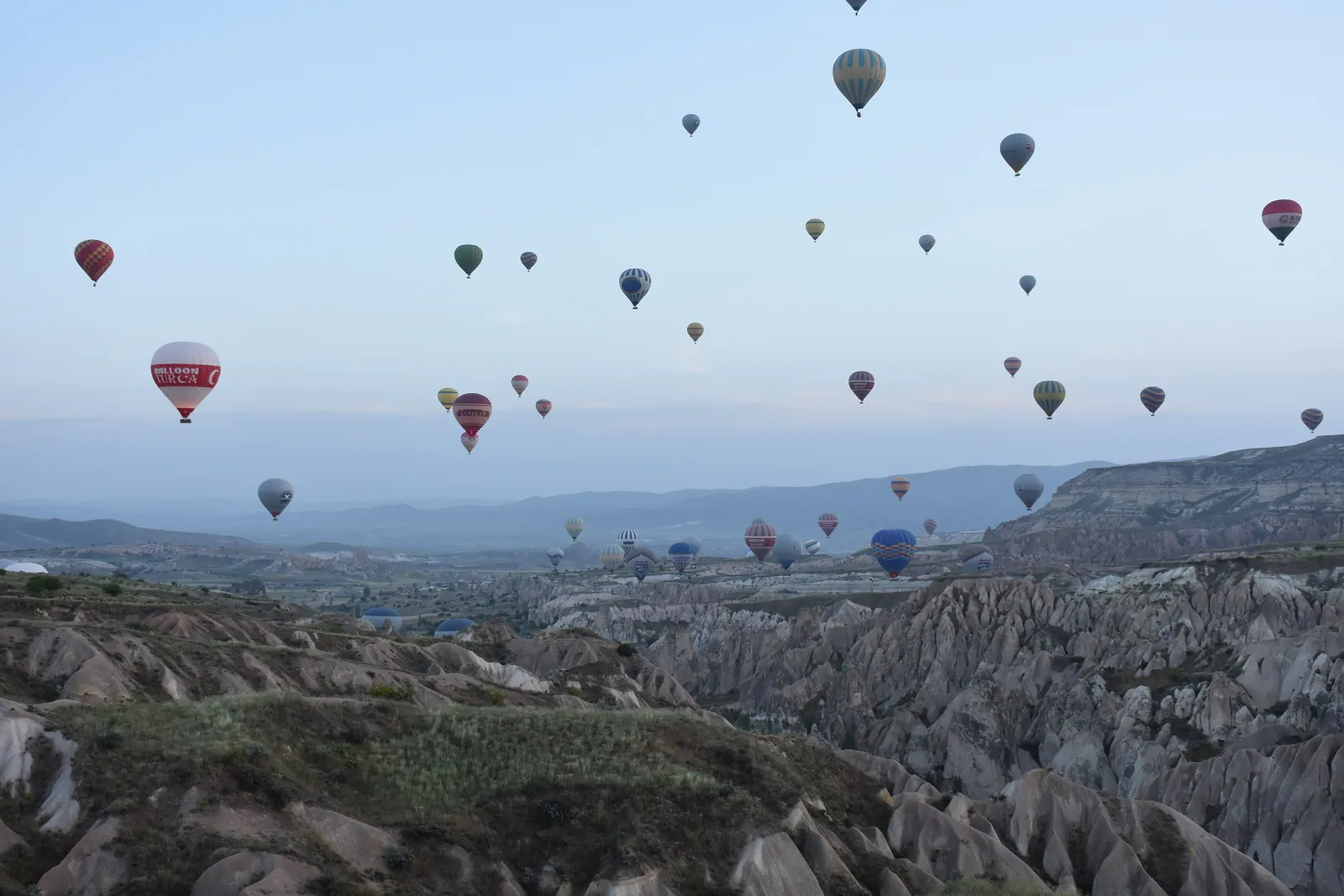
The soft volcanic rock that makes Cappadocia's fairy chimneys so easy to admire from a balloon is also easy to dig. For at least two thousand years, the people of this region cut their dwellings, storerooms, stables and churches directly into the stone — and, when danger came, hollowed out entire cities beneath the ground.
The result is two Cappadocias. There is the one of valleys and pinnacles you see at first glance, and there is the carved one: a labyrinth of rooms, tunnels and frescoed chapels reaching deep into the cliffs and far below the fields. The second is the more astonishing, and it is the one this article is about.
Why people built into the rock
Cappadocian tuff is a gift to anyone with a chisel. Freshly exposed it is soft enough to carve quickly, and on contact with air its surface hardens, so a room cut today becomes durable tomorrow. It also insulates beautifully — cool in the fierce continental summer, warm against the hard winter.
Those qualities shaped a way of life. Villagers carved homes into cliff faces and chimneys, pressed grapes in rock-cut vats, kept pigeons in cliffside dovecotes for their valuable fertiliser, and stored food in stable cellars. Living inside the landscape was not a curiosity here; for many communities it was simply the sensible way to build.
The painted churches of Göreme
From the fourth century onward, Cappadocia became a great centre of early Christian and then Byzantine monastic life. Monks and congregations cut hundreds of chapels and churches into the rock, and the finest cluster in the Göreme Open-Air Museum, a former monastic settlement now protected within a UNESCO World Heritage Site.
Several of these tiny churches keep vivid Byzantine frescoes, their blues and ochres still strong in the dim rock-cut interiors. The celebrated Karanlık Kilise, the Dark Church, owes the survival of its colour to the very thing its name describes: it received almost no daylight, and the pigments were spared centuries of fading. Stepping from a sunlit valley into one of these painted vaults is one of the quiet thrills of Cappadocia.
The cities beneath the fields
More extraordinary still are the underground cities. At Derinkuyu and Kaymaklı, generations of inhabitants excavated multi-level warrens descending many storeys into the earth — Derinkuyu reaches perhaps sixty metres down and is thought to have sheltered thousands of people, along with their livestock, for extended periods.
These were not mere cellars. They held living quarters, kitchens with soot-blackened ceilings, wine and oil presses, wells, stables, chapels and even spaces that may have served as schools. Vertical shafts carried air to the lowest levels, and great circular millstone doors could be rolled across the passages from the inside, sealing the city against any intruder who found the entrance.
A refuge on a dangerous road
Why dig so deep? Cappadocia lay on the contested frontier between empires and along the trade routes that fed them, and the plateau offered little natural cover. The underground cities were places to disappear — refuges where a whole community could withdraw with its food and animals and wait out a raid or an army passing through.
Used over many centuries by different peoples, and expanded by early Christians among others, they are best understood as the survival strategy of communities living on a hard, exposed and strategically valuable land. The same trade that made the region prosperous also made it perilous, and the cities are the answer to that danger.
Seeing the hidden Cappadocia well
The underground cities ask a little of the visitor: passages are narrow and low, the air is cool, and some stairways are steep. They are not suitable for everyone, and travellers who are strongly claustrophobic should be honest with themselves before descending. Sturdy shoes and a light layer are sensible, and a knowledgeable guide turns a maze of empty rooms into a legible human story.
On The Silk Road Reborn we pair the two halves deliberately: a morning among the painted churches and chimneys above ground, an afternoon in the carved depths below. Seen together, they explain Cappadocia better than either does alone — a place where, for two millennia, people did not merely live on the land but inside it.
Quick answers
How deep are the Cappadocian underground cities?
Derinkuyu, the deepest excavated so far, descends roughly sixty metres through multiple levels and is believed to have sheltered thousands of people together with their livestock. Kaymaklı is broader and somewhat shallower. Both are open to visitors, though only a portion of each network is accessible, and the passages connecting the levels are deliberately narrow and low.
Are the underground cities suitable if I am claustrophobic?
They can be challenging. The connecting tunnels are narrow, some stairways are steep, and you spend time well below ground. Travellers with significant claustrophobia may prefer to admire the cave churches and rock-cut villages at the surface instead — there is more than enough above ground to fill a visit. If you do go down, the open chambers are roomier than the passages between them.
What are the cave churches of Göreme famous for?
The Göreme Open-Air Museum preserves a cluster of small churches and chapels carved into the rock by Byzantine monastic communities, several with remarkably well-preserved frescoes. The Dark Church (Karanlık Kilise) has the brightest colours, precisely because it received little light to fade the pigments. The whole area is part of a UNESCO World Heritage Site.
Let the reading become a route.
When an article sparks something, our planners are the next step. Tell us what you are dreaming of.