Cherry Blossom or Autumn: Choosing Your Kyoto Season
Kyoto has two glorious peaks — the pale flood of cherry blossom in early April and the red-gold fire of maples in late November. How to choose between them, and what the quieter seasons offer instead.
If you can travel to Kyoto only once, the two seasons worth building a journey around are cherry-blossom season — roughly the last week of March into mid-April — and the autumn foliage, which peaks in the second half of November. Spring is softer, pinker and more festive; autumn is sharper, warmer in colour and a little longer-lasting. Neither is objectively better, and both draw large crowds.
The deciding factors are usually practical: when you can travel, how you feel about crowds, and whether you prefer the fleeting drama of blossom or the slow burn of the maples. This article sets the two seasons side by side, then makes the case for the underrated months in between.
Cherry blossom: the fleeting spring
Kyoto’s cherry blossom, or sakura, typically reaches full bloom in the first days of April, though the exact date shifts a week either way with the weather and is forecast obsessively each year. Full bloom lasts only about a week, and a single rainstorm can end it — which is precisely the quality the Japanese prize. The blossom is a meditation on impermanence, and the custom of hanami, gathering beneath the trees to admire and picnic, is as much a part of the experience as the flowers.
The classic blossom settings are the Philosophers’ Path, where cherry trees lean over a canal in the eastern hills; Maruyama Park, with its great weeping cherry lit at night; and the riverbanks at Arashiyama, where the pale trees stand against the wooded slope of Storm Mountain. The light in spring is gentle and the air mild, and the city feels celebratory.
Autumn: the slow fire
The autumn colour, or kōyō, builds through November and peaks in Kyoto in the latter half of the month, though it lingers a little later in the city than in the surrounding mountains. Maples turn scarlet and crimson, ginkgo trees blaze yellow, and the season as a whole is more forgiving than spring: the display unfolds over two or three weeks rather than collapsing in a week, so a visit is less of a gamble.
Autumn’s great stages are Tōfuku-ji, whose maple valley is crossed by a famous viewing bridge; Eikan-dō, illuminated after dark; and Tenryū-ji in Arashiyama, where the borrowed scenery of the hills turns red behind the garden pond. The Sagano Romantic Train, rattling along the Hozugawa gorge, is at its most spectacular now. Daytime temperatures are mild and the skies often clear.
Crowds, and how each season feels
Both peaks bring Kyoto’s heaviest crowds of the year, and it is fair to set expectations honestly: the famous sites will be busy, accommodation books out months ahead, and prices rise. Autumn is, if anything, marginally busier at the headline temples, because its longer season concentrates visitors over more weeks.
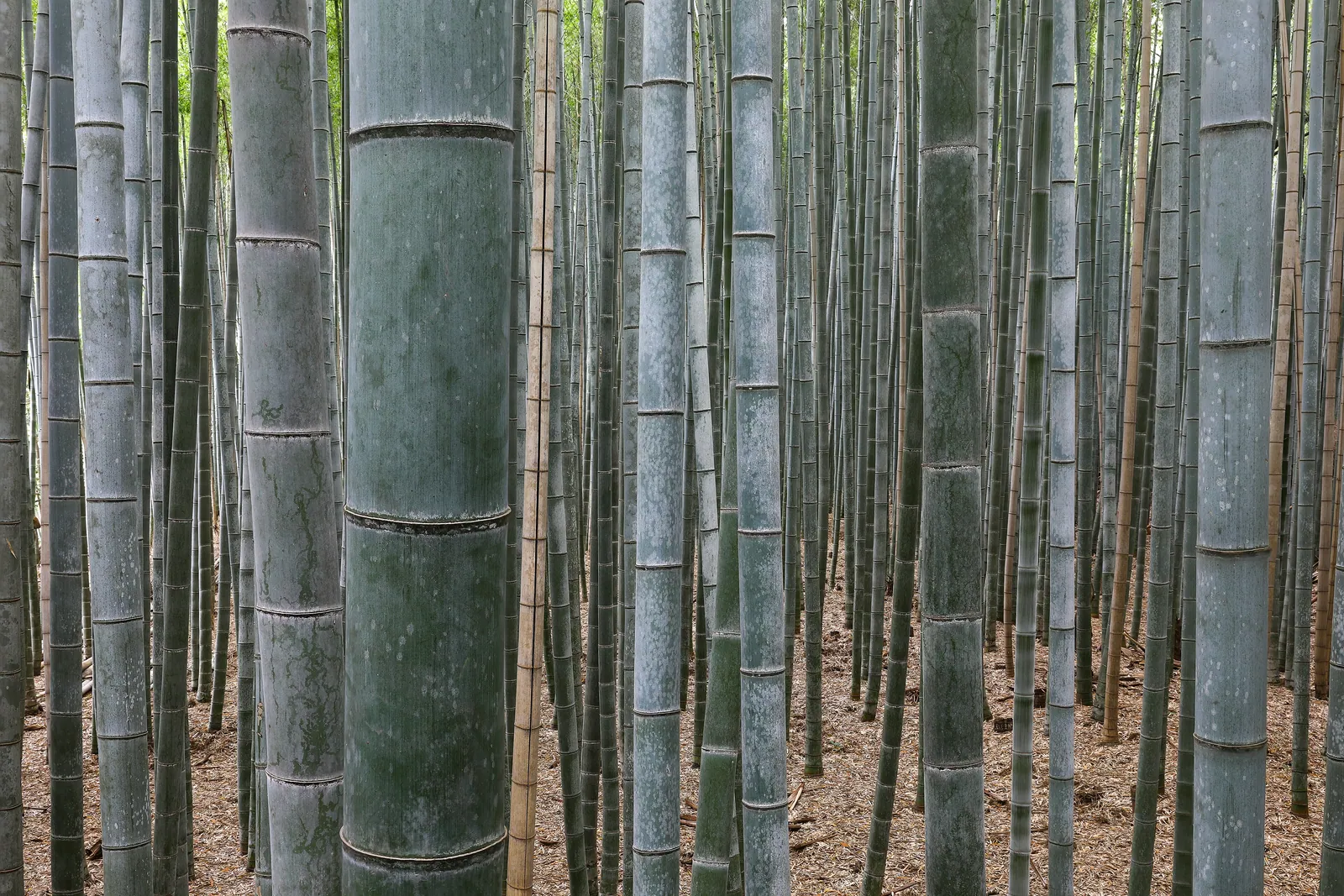
The remedy is the same for both seasons and runs through this whole series: start early. The bamboo grove, Kiyomizu-dera and Fushimi Inari are transformed by a 7am arrival. Evening illuminations, staged at many temples in both spring and autumn, also shift visitors away from the daylight hours. A well-built itinerary uses the edges of the day, not the middle.
The case for the quieter months
If you can be flexible, the seasons between the two peaks have real virtues. Late April and May bring fresh green maple — shinryoku — soft and luminous, with thinner crowds and the irises and azaleas in flower. Early summer is humid but quiet. Winter, from December to February, is crisp and clear, the temples hushed, and a dusting of snow on a moss garden or a temple roof is one of Kyoto’s rarest and loveliest sights.
These are the months when Kyoto feels most like itself rather than like a stage. A traveller who has seen the famous photographs of pink and red sometimes arrives expecting them and is disappointed by green or bare branches — but the green-maple and snow seasons reward exactly the slow, contemplative looking that Kyoto is built for.
How we time the Kyoto leg
On The Long Way East, the Kyoto and Arashiyama chapter is positioned to fall, where the journey’s overall calendar allows, within one of the two great seasons — and travellers booking a private departure can often choose. Spring departures are timed against the official blossom forecasts, with a few days of flexibility, since no one can promise a flower will open on a fixed date.
Whichever season you travel in, the Kyoto days are deliberately unhurried. Two glorious peaks in the year does not mean the city is dull between them; it means Kyoto rewards the traveller who comes to look closely, in any month, rather than to chase a single photograph.
Quick answers
When exactly does the cherry blossom bloom in Kyoto?
Full bloom usually falls in the first week of April, but the date moves up to a week either way with the weather, and full bloom lasts only about a week. Forecasts are published from late winter and refined as spring approaches. Build in a few days of flexibility — no one can guarantee a flower opens on a fixed date.
Is autumn colour or cherry blossom more reliable for a planned trip?
Autumn is the safer bet. The maple display builds and holds over two to three weeks in the latter half of November, so a visit in that window is very likely to catch good colour. Cherry blossom peaks for only about a week and can be cut short by rain, making it more of a gamble for a fixed itinerary.
Are the quieter seasons worth visiting?
Very much so. Late April and May bring luminous fresh-green maples and far thinner crowds; winter brings crisp, clear, hushed temples and the rare beauty of snow on a moss garden. These months reward the slow, contemplative looking that Kyoto is built for, without the peak-season crowds and prices.
Let the reading become a route.
When an article sparks something, our planners are the next step. Tell us what you are dreaming of.