Fierce Sun, Hard Frost: The Other Hazards of High Country
Altitude sickness gets the attention, but the high mountains test travellers in quieter ways — punishing ultraviolet light, a forty-degree swing between noon and midnight, dry air and brilliant glare. A field guide to staying comfortable up high.
Ask what to fear at altitude and most travellers say altitude sickness. But on a clear day in the high Andes or Patagonia, the sun and the cold are the hazards you will actually feel — and they are entirely manageable once you understand them. The thin, dry air that makes acclimatisation necessary also makes the light fiercer and the temperature swings extreme.
This field guide covers the everyday environmental side of high-mountain travel: the ultraviolet, the cold, the glare and the dryness. None of it is dangerous to a prepared traveller. All of it can quietly spoil a day for an unprepared one.
Why the high-altitude sun is so much stronger
Ultraviolet radiation climbs sharply with altitude — a widely cited figure is roughly a 10 to 12 percent increase for every 1,000 metres of elevation, because there is less atmosphere overhead to absorb it. At Cusco’s 3,400 metres or on the Bolivian altiplano above 3,600, that adds up to a sun far harsher than its mild temperature suggests, and it is harsher still near the equator and over snow or water, which reflect light back at you.
The trap is that high air often feels cool, so the burn arrives unannounced. Travellers are caught out crossing a snowfield, drifting on Lake Titicaca, or simply walking a Cusco street at midday. Treat the high sun as strong regardless of how warm the day feels.
Protecting skin and eyes
Use a high-factor broad-spectrum sunscreen, apply it generously and early, and reapply through the day — paying attention to the places the mountain sun finds from below, the underside of the nose, the ears, the lips. A wide-brimmed hat earns its space in any bag bound for high country.
Eyes deserve equal care. Strong ultraviolet over bright ground can cause photokeratitis — snow blindness — a painful, temporary sunburn of the cornea that may not be felt until hours later. Good wraparound sunglasses with proper UV protection, or glacier glasses on snow, are not an accessory at altitude; they are basic equipment, and worth a spare pair.
The great temperature swing
High, dry air holds little heat. The same thin atmosphere that lets the sun blaze by day lets warmth escape fast at night, so high-altitude deserts and plateaus swing dramatically — a pleasant, even hot afternoon can give way to a hard frost by dawn. On the altiplano and across the Tibetan plateau, a 20-degree-Celsius swing between midday and the small hours is routine; in places it is greater.
Direct sun and shade can feel like different seasons within a single minute. The lesson is that the temperature you pack for is not the daytime one — it is the range, and the cold end of it deserves the most respect.
Dressing for both extremes in one day
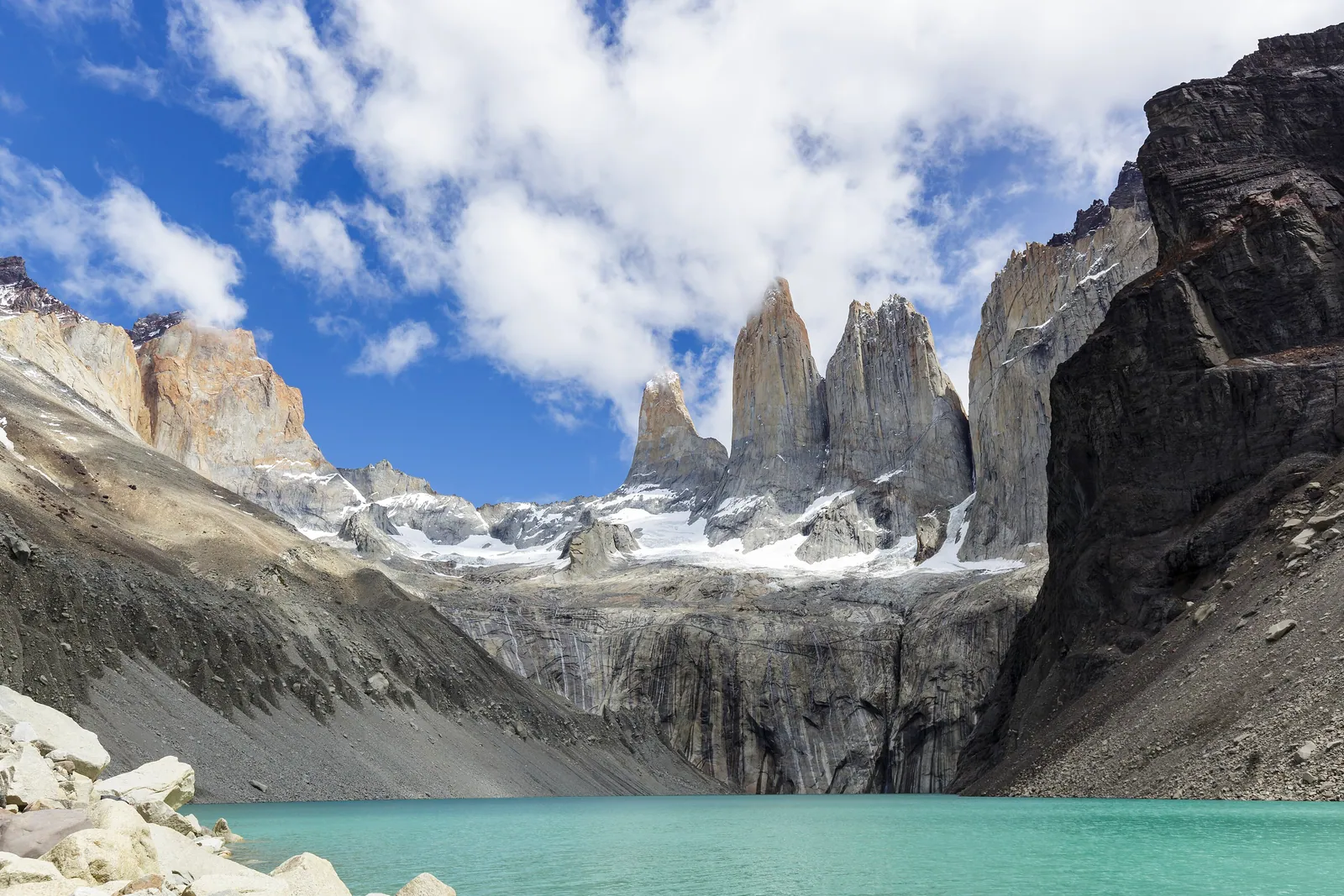
Layering is the whole answer. Build outfits you can open and close through the day: a warm base, an insulating mid-layer, and a windproof outer shell, with a hat and gloves that live in a daypack even when the morning is mild. Patagonia, on Andes to Antarctica, adds wind to the equation — the Torres del Paine country can deliver sun, cloud, gale and sleet inside an hour, and is dressed for as a moving target.
Cover the extremities, since hands, ears and head lose heat fastest, and never rely on a single thick garment when several thinner ones let you fine-tune. The traveller who can shed layers at noon and rebuild them at dusk stays comfortable; the one committed to a single jacket spends half the day wrong.
Dry air, and looking after the small things
High mountain air is strikingly dry, and it works on you constantly — chapped lips, a dry cough, cracked skin, a sore nose, and a steady, invisible loss of body water through the breath that also makes altitude sickness more likely. A high-altitude cough, sometimes called the khumbu cough in the Himalaya, is often simply the airways protesting at cold, dry air.
The remedies are small and unglamorous and make a real difference: lip balm with sun protection, hand cream, generous water through the day, and warm non-alcoholic drinks, which both hydrate and comfort. Looking after these minor things is not fussiness — it is the difference between a day enjoyed and a day merely endured in spectacular surroundings.
Quick answers
Is sunburn really a serious risk at altitude even when it is cold?
Yes. Ultraviolet radiation rises roughly 10 to 12 percent per 1,000 metres of elevation, and snow and water reflect still more of it. Because high air often feels cool, travellers underestimate the sun and burn without warning. Use high-factor broad-spectrum sunscreen, a wide-brimmed hat and proper UV sunglasses regardless of the temperature, and reapply sunscreen through the day.
How cold does it get at altitude on these journeys?
It depends on place and season, but the striking feature is the swing rather than the extreme. On the altiplano and the Tibetan plateau a warm afternoon can fall to a hard frost by dawn — a 20-degree-Celsius range in a day is common. Pack for the cold end of the range and dress in layers you can open and close as the day moves.
What is the dry cough some travellers get at high altitude?
It is usually the airways reacting to cold, very dry mountain air — sometimes called the high-altitude or khumbu cough — and is generally harmless, eased by hydration and warm drinks. A cough is more concerning if it is persistent and accompanied by breathlessness at rest or frothy sputum, which can signal fluid in the lungs and should be reported to your guide at once.
Let the reading become a route.
When an article sparks something, our planners are the next step. Tell us what you are dreaming of.