Earth's Most Extreme Places, Compared
The driest, the highest, the coldest, the darkest, the deepest — the planet's records cluster in a handful of wild places. A comparative tour of Earth's extremes, and why so many of them lie on a single journey.
Earth's superlatives are not scattered at random. The driest place, the clearest skies, the coldest recorded temperatures, the deepest ocean and the thinnest air sit in a small number of remarkable regions — and several of them can be reached in sequence. The driest desert and the darkest sky are the same place; the highest dry plateaus and the most pristine night are close cousins.
This is a comparison rather than a list: a way of holding the planet's extremes side by side to see what they share. Almost all of them are wild places in the fullest sense — empty, demanding, and stripped to the elemental. It is exactly that thread that Beyond the Blue follows, from the driest desert to the polar ice to the edge of the atmosphere itself.
The driest — the Atacama Desert
The Atacama in northern Chile is the driest non-polar place on Earth. Some weather stations in its core have never recorded measurable rainfall, and parts of the desert may go years between meaningful rain. The dryness comes from a precise stack of causes: the cold Humboldt Current offshore, the rain shadow of the Andes, and a persistent ridge of sinking, drying air overhead.
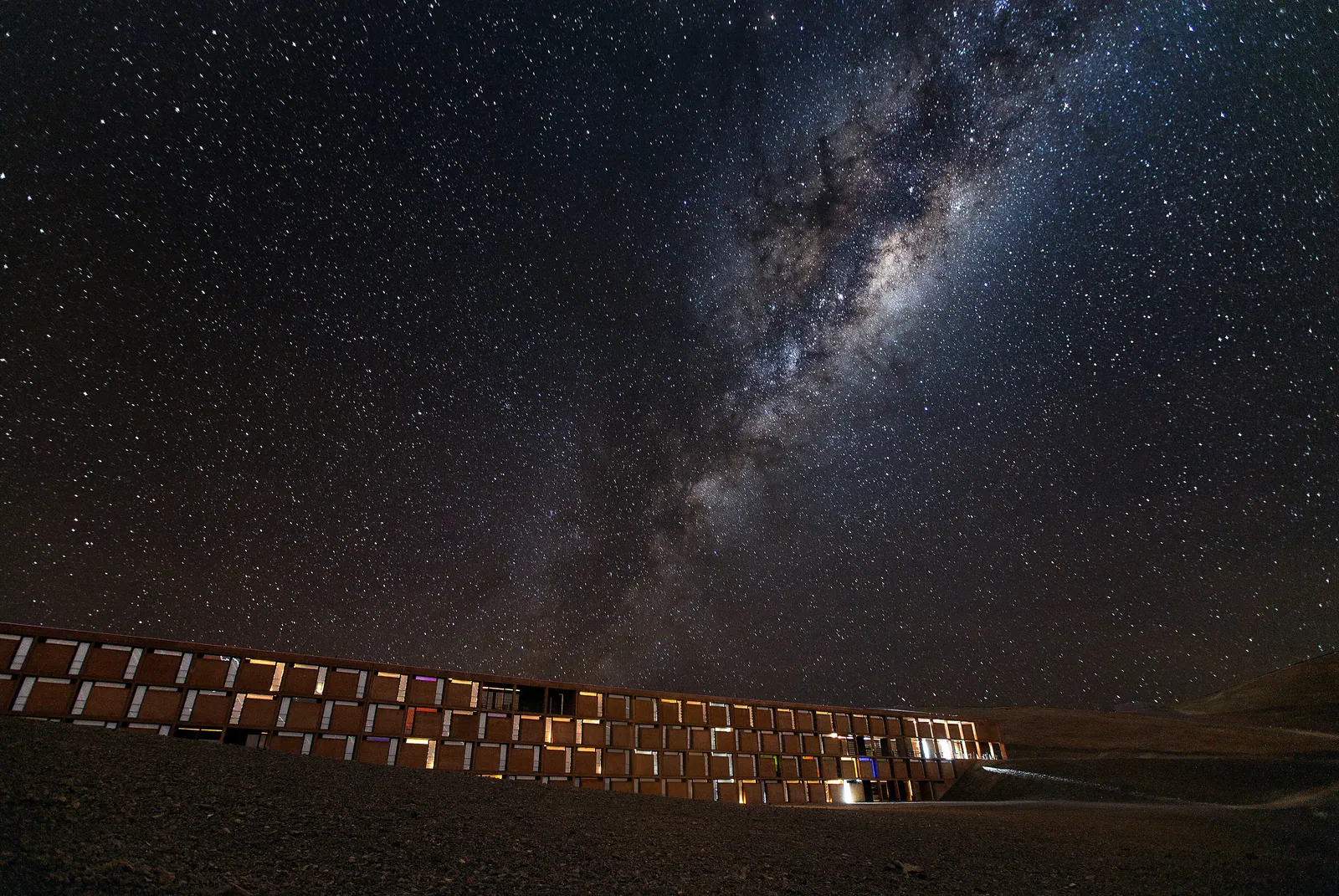
Dryness has a consequence that matters far beyond meteorology. With almost no water vapour or cloud in the air, the Atacama also has the clearest skies on Earth — which is why the world's great observatories are built there. The driest place and the darkest sky turn out to be one and the same.
The highest and the thinnest air — the great plateaus
The Tibetan plateau and the Andean altiplano are the planet's great high tablelands, vast regions sustained above 3,500 and 4,000 metres. The air there holds a third to nearly half less oxygen per breath than at sea level, which is why travellers must acclimatise gradually. The highest permanent human settlements cling to the Andes above 5,000 metres.
Altitude also buys darkness and clarity: every thousand metres of climb leaves more of the atmosphere's haze beneath you. The ALMA observatory sits on the Chajnantor plateau above 5,000 metres for exactly that reason. The highest places and the clearest skies, again, overlap.
The coldest — Antarctica
Antarctica holds the record for the lowest natural air temperature ever measured at the surface — around minus 89 degrees Celsius, recorded at the Russian Vostok station on the high polar plateau. Satellite measurements of the ice surface have detected even lower readings. The continent is also, on average, the windiest and, despite all that ice, technically one of the driest, since almost no precipitation falls in its frozen interior.
Yet the Antarctica most travellers experience — the peninsula in the austral summer — is comparatively mild and astonishingly alive: tabular icebergs, calving glaciers, penguin colonies and seals. The extreme and the abundant sit closer together than the records alone suggest.
The deepest and the darkest below — the open ocean
Downward, the extremes are just as stark. Below a few hundred metres the last sunlight fades and the ocean enters the bathyal zone — the midnight zone — where the only light is the cold glow of the animals themselves. The deepest point of all, the Challenger Deep in the Mariana Trench, lies nearly 11 kilometres down, deeper than Everest is tall.
The deep ocean is also one of the darkest places a person can reach, and one of the least explored. Beyond the Blue descends about a kilometre into the bathyal Pacific by crewed submersible — a deliberate counterpoint to the bright, dry heights of the Atacama. From the clearest sky to the darkest water in a single journey.
The edge — where the atmosphere thins to nothing
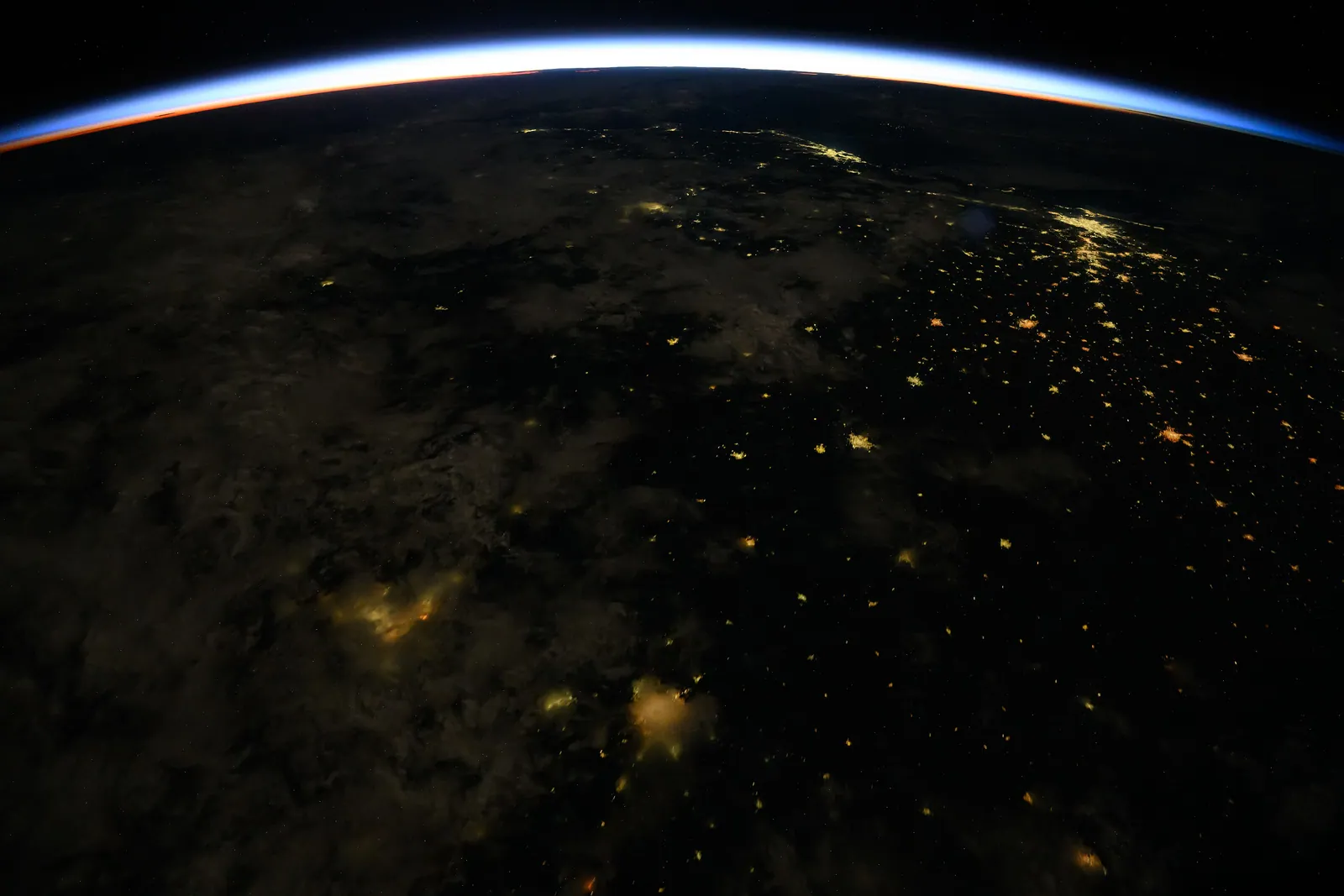
The final extreme is vertical. Climb high enough and the air simply runs out. By around 35 kilometres you are above 99 percent of the atmosphere; the sky overhead turns black even in daylight, and the curvature of the Earth becomes plainly visible. This is the stratosphere — not space, but the threshold of it.
Beyond the Blue ends here, with a slow, crewed balloon ascent to roughly that altitude. It is the logical summit of a journey through extremes: having stood in the driest desert and descended into the darkest water, you rise until the blue of the Earth thins to a painted line beneath you.
Why the extremes belong together
Held side by side, Earth's extremes share a clear logic. They are almost all places of emptiness — of absence rather than abundance: no water, no oxygen, no warmth, no light, no air. That is precisely what makes them wild, and precisely what makes their few inhabitants and their rare phenomena so striking.
It is also why a single journey can string them together. Beyond the Blue is built on the recognition that the driest desert, the deepest ocean, the polar night, the frozen continent and the edge of space are not unrelated curiosities but points on one continuous map of the planet's limits.
Quick answers
What is the driest place on Earth?
The Atacama Desert in northern Chile is the driest non-polar place on Earth — some weather stations in its core have never recorded measurable rain. Parts of Antarctica's interior, the McMurdo Dry Valleys, are arguably even drier, but the Atacama is the driest place that is not frozen. Its dryness is also why it has the clearest night skies in the world.
Where was the coldest temperature on Earth recorded?
The lowest natural surface air temperature ever directly measured was about minus 89 degrees Celsius, recorded in 1983 at the Vostok research station on the high Antarctic plateau. Satellite readings of the ice surface have since detected even colder spots in East Antarctica. The continent is also among the windiest and, in its dry interior, one of the driest places on the planet.
How high is the 'edge of space'?
There is no sharp boundary. The internationally cited Karman line sits at 100 kilometres, while other definitions place the edge lower. What matters for a traveller is that by around 35 kilometres you are above more than 99 percent of the atmosphere — the sky is black, the stars are out by day, and the Earth's curvature is clearly visible. That is the altitude Beyond the Blue's stratospheric balloon reaches.
Let the reading become a route.
When an article sparks something, our planners are the next step. Tell us what you are dreaming of.