Fiordland and Milford Sound: The Drowned Valleys of the South
Milford Sound is the most photographed corner of New Zealand, and the wettest. Here is how its cliffs and waterfalls were made, how to read its restless weather, and why the rain is the point.
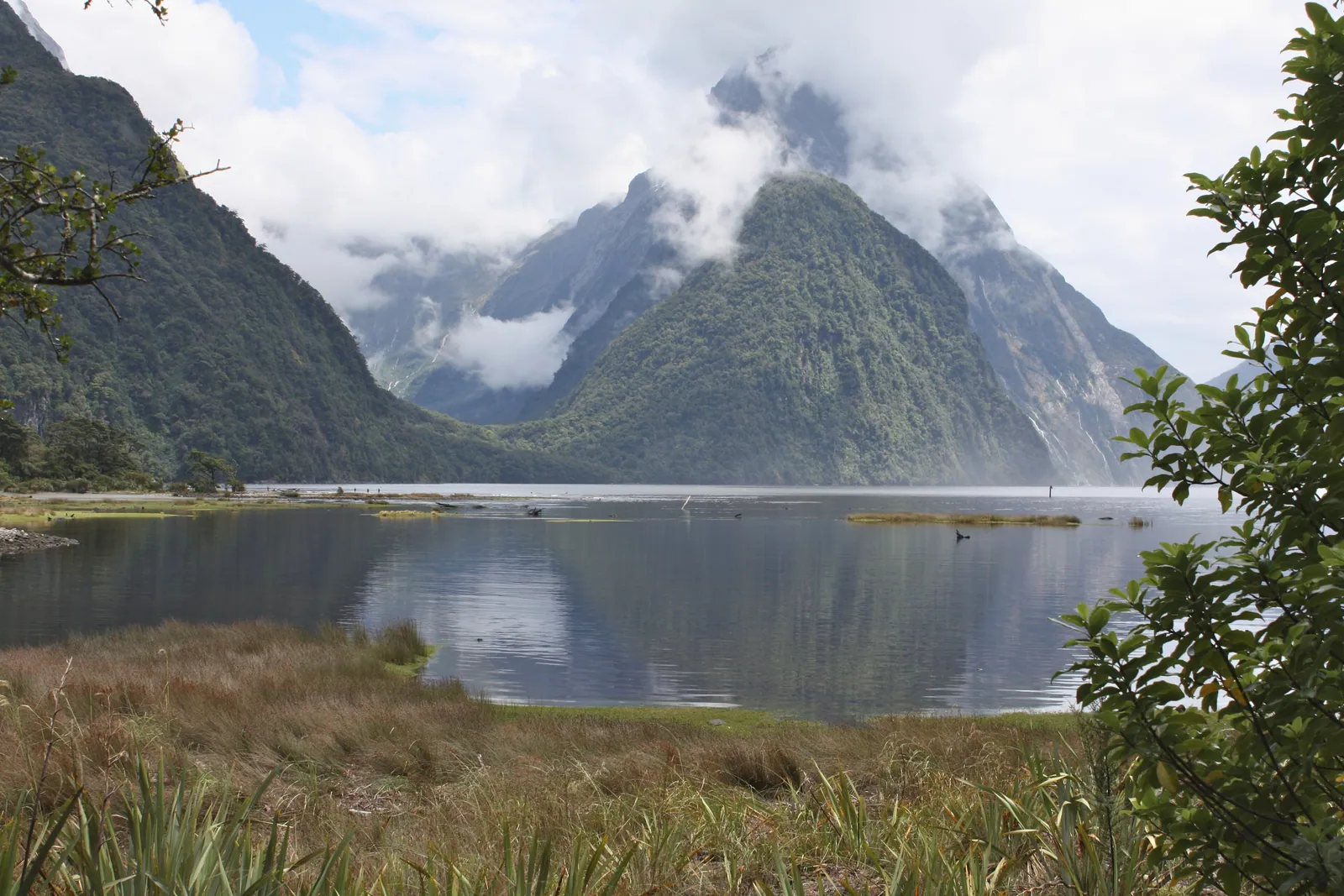
Fiordland is the largest of New Zealand's national parks and one of the emptiest places in the country: a 12,500-square-kilometre wedge of granite, beech forest and deep water in the far south-west of the South Island. Its centrepiece, Milford Sound, is not a sound at all but a fiord — a glacier-carved valley flooded by the sea — and on a clear morning it is arguably the single most dramatic view a traveller can reach by road in the Southern Hemisphere.
The honest first thing to know is that clear mornings are not the norm. Milford receives rain on roughly two days in three and around 6.4 metres of it a year, which makes it one of the wettest inhabited places on Earth. That rain is not a flaw in the experience; it is the experience. It feeds the hundreds of temporary waterfalls that pour off the cliffs and gives the fiord its brooding, cinematic character.
How a fiord is made
During the last ice ages, immense glaciers ground their way down pre-existing river valleys here, gouging them far deeper and steeper than running water ever could. Where a river carves a V, a glacier carves a U — a flat floor and near-vertical walls. When the ice retreated and sea levels rose, the ocean flooded these troughs, and the result is a fiord: a sea inlet with sheer sides and surprising depth.
Milford Sound runs about 15 kilometres inland from the Tasman Sea, and in places the water is over 290 metres deep. The cliffs do not so much rise from the water as continue beneath it. Mitre Peak, the pyramidal mountain that defines every photograph of the fiord, climbs some 1,690 metres almost straight up from the waterline.
The dark water and its strange marine life
Fiordland's heavy rainfall does something remarkable. Freshwater, stained tea-brown by tannins leached from the forest, runs off the mountains and floats on top of the denser seawater, forming a permanent layer several metres thick. This dark freshwater lens filters out sunlight, tricking deep-sea species into living unusually close to the surface.
The effect is that creatures normally found in cold, lightless depths — most famously black coral, which is in fact white when alive — thrive at snorkelling and shallow-diving depths inside the fiords. There is an underwater observatory in nearby Doubtful Sound's Hall Arm region that lets visitors see this inverted world without getting wet. Bottlenose dolphins, fur seals and, in season, Fiordland crested penguins are all regularly encountered on the water.
Reaching Milford, and the road that gets you there
Most travellers come from Te Anau, the lakeside town that serves as Fiordland's gateway. The Milford Road is itself one of the great alpine drives: it climbs through beech forest and tussock to the Homer Tunnel, a rough-hewn, single-lane passage bored through solid rock that emerges into the hanging Cleddau Valley on the far side.
On The Pacific Arc journey we travel this road slowly and on purpose, stopping at the mirror lakes, the chasm and the high tussock flats rather than rushing the bus to the boat. The road can close briefly after heavy snow or in avalanche conditions, which is one of several reasons an escorted itinerary builds in flexibility around the Fiordland weather rather than fighting it.
At the fiord itself, a cruise of one to two hours runs the length of the water to the open sea and back, passing Stirling and Bowen Falls and nosing in beneath the cliffs so the spray reaches the deck.
Doubtful Sound: the quieter alternative
Milford is the famous one; Doubtful Sound is the one that travellers often remember more fondly. It is larger, longer and far less visited, reached only by a boat across Lake Manapouri followed by a coach over the Wilmot Pass. The extra effort thins the crowds dramatically.
Doubtful is also where the silence is most striking. Boat operators will sometimes cut their engines mid-fiord so passengers can stand in what is called the sound of silence — no traffic, no aircraft, only water, birdsong and wind on rock. For travellers who have time for only one fiord and want solitude over fame, Doubtful is the considered choice.
When to come, and what to expect
There is no dry season in Fiordland, so the choice is really about temperature and daylight. The southern summer, from December to February, brings the longest days and the warmest air, but also the most visitors and the worst of the sandflies — Fiordland's famously persistent biting insect, for which repellent and covered ankles are essential.
Autumn, from March to May, often delivers the most settled spells and clear, cold air; winter brings snow low on the peaks and a stark beauty, with the fewest people of all. Whenever you come, pack a genuine waterproof and accept that you may not see Mitre Peak's summit. A fiord in cloud, its waterfalls in full spate, is not a consolation prize.
Quick answers
Is it worth visiting Milford Sound if it is raining?
Yes — many guides will tell you rain is the best time to come. Heavy rain activates hundreds of ephemeral waterfalls that vanish within hours of the sky clearing, and the low cloud wrapping the cliffs gives the fiord its most atmospheric character. A bright blue day is beautiful but comparatively quiet on the cliffs. Bring full waterproofs and embrace it.
What is the difference between Milford Sound and Doubtful Sound?
Both are glacier-carved fiords, despite the name 'sound'. Milford is shorter, more dramatic and far easier to reach by road, which makes it busier. Doubtful is larger, longer and reached only by a lake crossing and a mountain pass, so it sees a fraction of the visitors and offers deeper solitude. Many travellers with time for both find Doubtful the more moving.
Do I need to worry about sandflies in Fiordland?
Sandflies are a real feature of Fiordland, especially near water and in calm, warm weather. They are an irritation rather than a danger, but they are persistent. Insect repellent, long sleeves and covered ankles make a substantial difference, and they are far less of a problem out on the water than on shore.
Let the reading become a route.
When an article sparks something, our planners are the next step. Tell us what you are dreaming of.