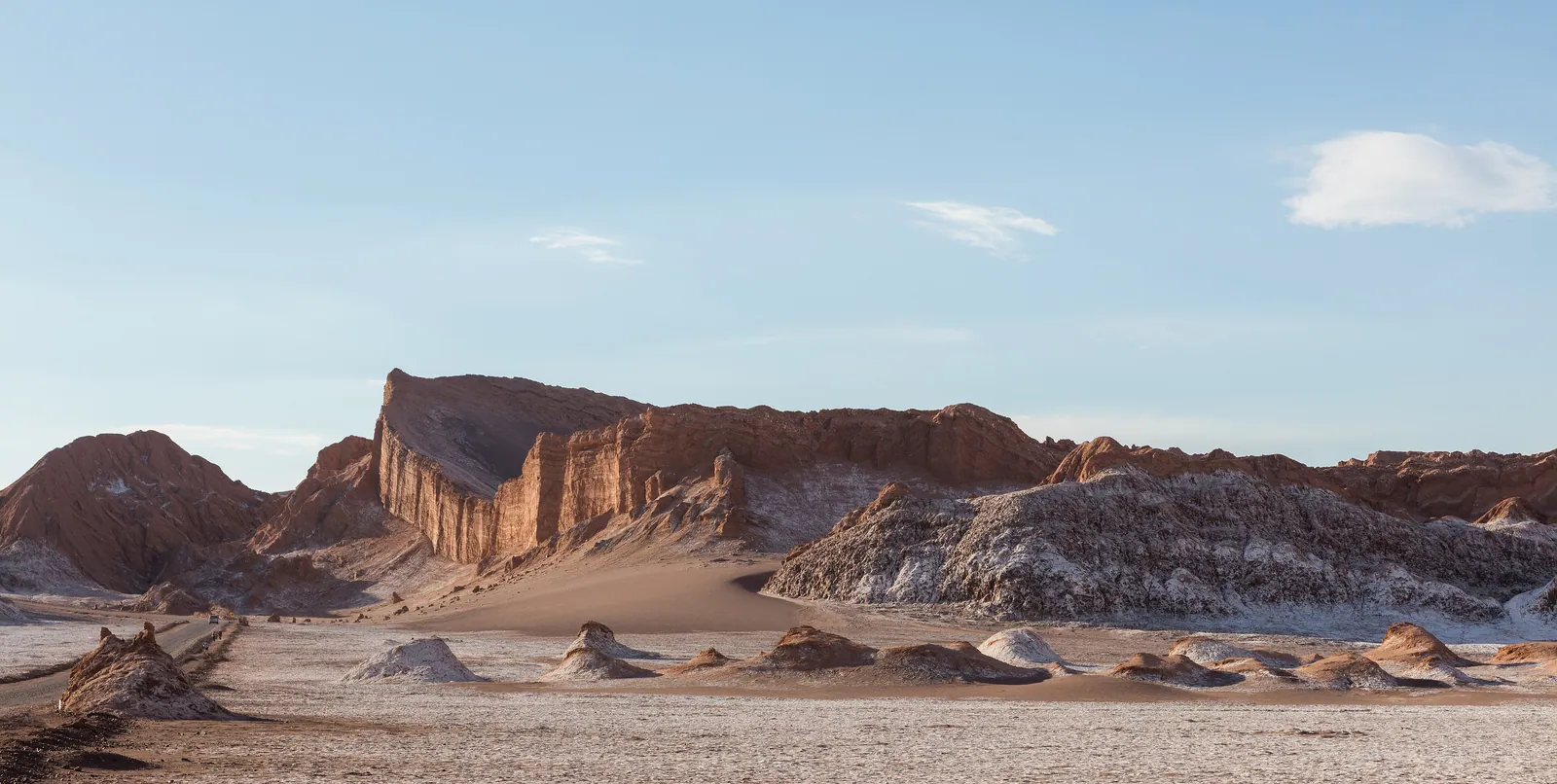
Flamingos and Blue Water: The Altiplanic Lagoons of the Atacama
Above 4,000 metres the driest desert on Earth holds deep-blue lakes and feeding flamingos. A guide to the altiplanic lagoons, the three flamingo species, and how life survives in such a hostile place.
It is one of the Atacama's great contradictions. In the driest non-polar desert on Earth, a full-day drive up onto the altiplano brings you to deep-blue lakes set above 4,000 metres, ringed by volcanoes — and stalking their shallows, three species of flamingo. The desert that has no rain still finds a way to hold water and to feed life.
These are the altiplanic lagoons, and a trip to them is the Atacama at its highest and, for many, its most beautiful. This is a guide to what the lagoons are, why the flamingos are there, and how a traveller visits them well — because at over 4,000 metres, how you go matters as much as where.
What the altiplanic lagoons are
The altiplano is the high plateau where the Andes broaden into a vast tableland straddling Chile, Bolivia and Argentina. Across it lie shallow lakes fed by snowmelt and underground springs, sitting in basins with no outlet to the sea. Water flows in, but it can only leave by evaporating, and so the lakes are salty, mineral-rich and often startlingly coloured.
On the Chilean side, the classic pair is Miscanti and Miñiques — two deep-blue lagoons set above 4,000 metres against a backdrop of volcanic cones, often paired on a full-day trip with the rust-red mineral shores of Piedras Rojas. Lower down, in the heart of the Salar de Atacama, the Laguna Chaxa reserve protects a different kind of water: thin sheets of brine where flamingos feed against a volcanic horizon.
Three flamingos, and why they are pink
The Atacama is one of the few places on Earth where three flamingo species share the same waters: the Andean, the Chilean and the rare James's, or puna, flamingo. They can be told apart with a little practice — by leg and bill colour, and by the pattern of black on the wing — and a good guide will help you sort them at the water's edge.
Their pink is borrowed, not innate. Flamingos hatch grey and take their colour from their food: the brine shrimp and microscopic algae of these salt lakes are rich in carotenoid pigments, the same family of compounds that colour carrots and salmon. A flamingo, in effect, wears its diet. The deeper the pink, the richer the feeding has been.
How life survives a hostile place
The altiplanic lagoons look serene, but they are punishing environments — intensely salty, battered by ultraviolet light at high altitude, scorching by day and freezing by night. The life that thrives here is highly specialised. Salt-tolerant algae and tiny crustaceans form the base of the food web; the flamingos filter them from the water with their oddly down-bent bills, held upside-down as they feed.
Around the lakes, the altiplano supports its own hardy cast: vicuñas, the wild and elegant relatives of the llama, grazing the sparse bunchgrass; viscachas, rabbit-like rodents, basking on the rocks; and the occasional Andean fox. Watching flamingos feed in mineral water beneath snow-streaked volcanoes is a lesson in how tenacious life can be when a landscape offers it almost nothing.
Visiting high: pacing the day
The full-day altiplanic lagoons excursion is, with El Tatio, the highest thing most travellers do in the Atacama, and the altitude is the real consideration. Miscanti and Miñiques sit above 4,000 metres, and you spend a sustained part of the day at that height — walking gently, but breathing thin air throughout.
The standard advice applies and is built into our itineraries: schedule this trip later in an Atacama stay, after several days acclimatising at San Pedro's 2,400 metres; move slowly; keep drinking water; and let the guide set the pace. The day usually includes stops at lower altitude too, and a relaxed lunch, so it is high but not relentless. For most travellers it is simply a spectacular, easy day with a thin-air backdrop.
The lagoons on a grand journey
On Andes to Antarctica and The Pacific Arc, a full day among the altiplanic lagoons is one of the highlights of the Atacama Desert leg — a guided 4x4 trip from a San Pedro lodge, climbing slowly onto the plateau with stops to watch flamingos, vicuñas and the changing colours of the water.
It also offers a quiet bridge to the rest of the journey. Standing above 4,000 metres on the Chilean altiplano, with Bolivia's salt country just over the horizon, you feel the scale of the high Andes that these grand journeys move through. The lagoons are not only a wildlife day; they are the moment the Atacama reveals itself as part of a far larger high-country world.
Quick answers
Why are there flamingos in the Atacama Desert?
The Atacama's high-altitude salt lakes — fed by snowmelt and springs but with no outlet to the sea — are rich in brine shrimp and salt-tolerant algae, exactly the food flamingos filter from the water. Three species feed here: the Andean, the Chilean and the rare James's flamingo. Their pink colour comes from carotenoid pigments in that diet, which is why richer feeding produces deeper-pink birds.
How high are the altiplanic lagoons, and is the altitude difficult?
Miscanti and Miñiques, the classic pair, sit above 4,000 metres, and the full-day excursion keeps you at high altitude for a sustained period. It is, with El Tatio, among the highest things travellers do in the Atacama. We schedule it later in an Atacama stay, after acclimatising at San Pedro's 2,400 metres, and the day includes lower-altitude stops, so for most people it is a spectacular but manageable outing.
What is the difference between Laguna Chaxa and the Miscanti lagoons?
They are two different kinds of water. Laguna Chaxa lies in the Los Flamencos reserve at the heart of the Salar de Atacama — thin sheets of brine on the salt flat at a lower altitude, excellent for close flamingo watching. Miscanti and Miñiques are deep-blue freshwater-fed lagoons up on the altiplano above 4,000 metres, ringed by volcanoes. Many itineraries visit both, on separate excursions.
Let the reading become a route.
When an article sparks something, our planners are the next step. Tell us what you are dreaming of.