How Polynesians Settled the Pacific
Long before the European Age of Sail, voyagers from the western Pacific found and settled nearly every habitable island across a third of the globe — including Rapa Nui, the hardest of all to find. This is how they did it.
The settlement of the Pacific is one of the great achievements in human history. Over several thousand years, seafaring peoples expanded from island Southeast Asia out into the open ocean, ultimately reaching the points of the vast triangle whose corners are Hawai'i, Aotearoa New Zealand and Rapa Nui — a region of water larger than any continent. They did it deliberately, in oceangoing canoes, navigating without instruments.
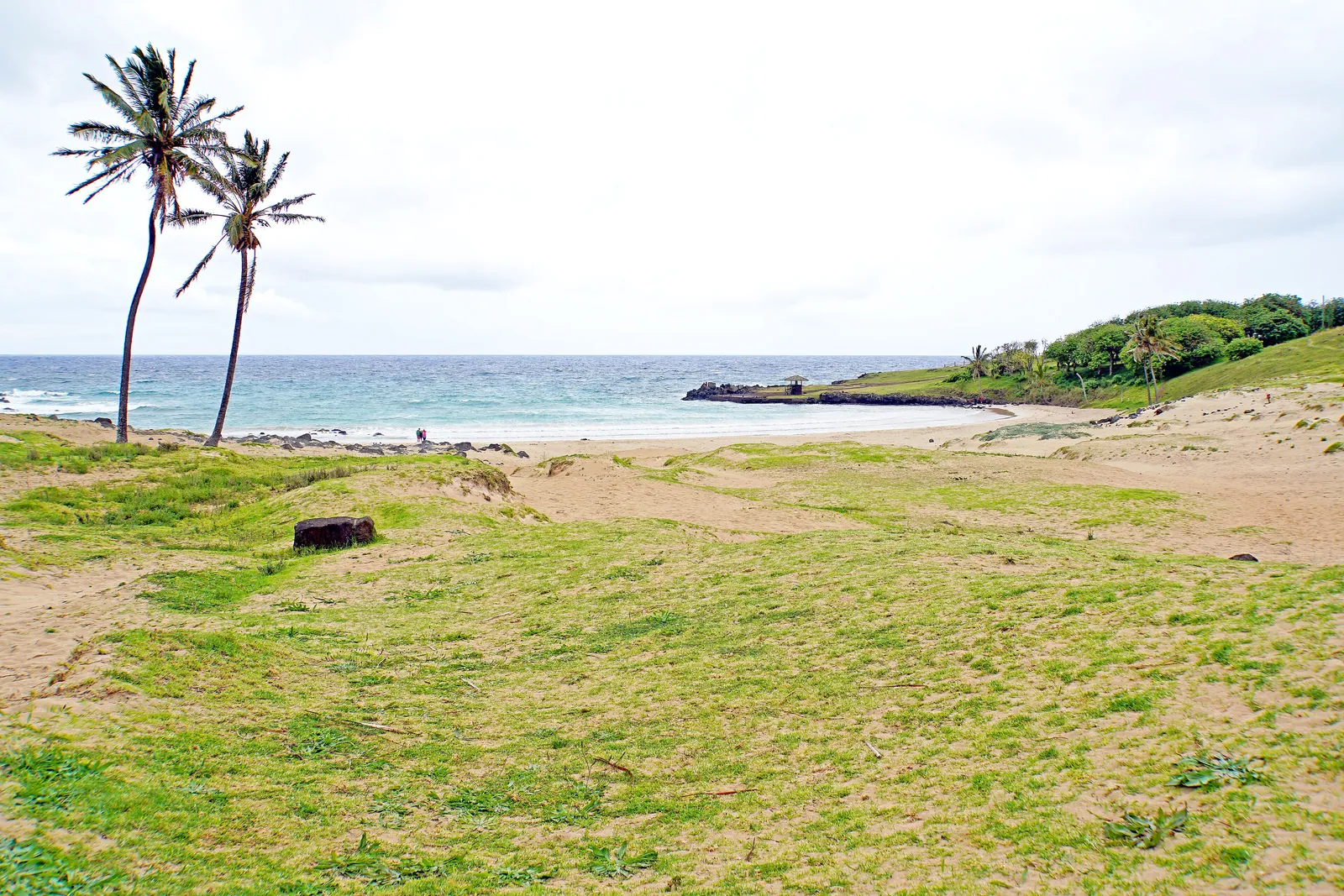
Easter Island sits at the far eastern apex of that triangle, the last and most isolated link in the chain. To stand on the beach at Anakena, the likely landing place of the island's first settlers, is to stand at the end of the longest voyage of exploration any people had attempted. On The Pacific Arc, the moai are part of a far larger story — the story of how the Pacific came to be a Polynesian world.
The long expansion from the west
The deep roots of the migration lie with Austronesian-speaking peoples who, beginning thousands of years ago, moved seaward from the region of Taiwan and island Southeast Asia. Their distant descendants, carrying the archaeological signature known as the Lapita culture, pushed into the previously unpeopled islands of the southwest Pacific around three thousand years ago, reaching Fiji, Tonga and Samoa.
From this western Polynesian heartland, after a pause of centuries, came the final and most astonishing phase: the settlement of the scattered islands of eastern Polynesia — the Society Islands, the Marquesas, the Tuamotus, and from there the far corners. Hawai'i, Rapa Nui and Aotearoa were among the last large places on Earth that humans reached, settled within roughly the last 1,200 years.
The canoes that made it possible
These were not rafts blown off course. Polynesian voyagers built sophisticated craft: large double-hulled canoes, two hulls lashed together with a deck between, carrying a sail, capable of holding a course to windward and of carrying people, water and cargo across open ocean for weeks. The double hull gave stability and load capacity that a single hull could not.
A voyaging canoe was, in effect, a mobile colony. It carried not only settlers but the means of settlement — taro, yam, breadfruit, banana, the paper mulberry for cloth, and animals such as pigs, dogs and chickens, along with the inevitable stowaway rat. Founding a new island meant arriving with an entire transplantable way of life aboard.
Navigating without instruments
Polynesian navigators crossed thousands of kilometres of empty sea with no compass, no chart and no clock. Instead they read the sky and the ocean. They memorised the rising and setting points of stars and steered by a sequence of them through the night — a star compass held entirely in the mind. By day they used the sun, the prevailing swells, and the direction and behaviour of the wind.
Closer to land they read subtler signs: the flight paths of land-roosting birds at dawn and dusk, distinctive cloud formations that gather over islands, the colour of the water, and the way ocean swells bend and reflect around land far over the horizon. This was a rigorous body of knowledge, passed down orally and tested by experience, and it has been revived in our own time by navigators sailing reconstructed canoes such as the Hōkūle'a.
Finding Rapa Nui — the hardest target of all
Of all Polynesian destinations, Rapa Nui was the most difficult to find: a small, low-profile island with no neighbours, thousands of kilometres of open water on every side. Reaching it at all, most likely from the direction of Mangareva or the Marquesas, was a navigational feat at the very limit of what was possible.
Tradition recalls the founding voyage in the figure of the ariki Hotu Matu'a, the first chief, who is said to have led his people to the island and come ashore at Anakena. Once settled, the Rapa Nui were effectively alone — the isolation that shaped everything that followed, from the language to the moai, was the price of having found the unfindable.
A connected ocean, not a scattering of dots
It is tempting to picture Pacific islands as isolated specks. For the Polynesians they were nodes in a connected world. For long periods, return voyaging linked island groups, carrying people, goods, marriage ties and ideas along known sea roads. The plants and animals shared across distant archipelagos are the proof.
Easter Island's eventual isolation was therefore unusual, the result of its extreme position rather than the Polynesian norm. Understanding the Pacific as a navigated, interconnected ocean — rather than a barrier dotted with castaways — is the single shift that makes places like Rapa Nui legible. It is the frame our journey carries from island to island.
Quick answers
How did Polynesians navigate without instruments?
Polynesian navigators used a memorised star compass, steering by the rising and setting points of stars, and by day read the sun, ocean swells and winds. Near land they interpreted the flight of birds, cloud formations over islands, water colour and the way swells bend around land. The knowledge was rigorous, oral, and passed down through training.
Who were the first people to settle Easter Island?
Easter Island was settled by Polynesian voyagers, most likely arriving from the direction of Mangareva or the Marquesas. Rapa Nui tradition remembers the founding chief, the ariki Hotu Matu'a, who is said to have led the first settlers ashore at Anakena beach. It was among the last places on Earth that humans reached.
What kind of boats did Polynesians use for ocean voyaging?
They built large double-hulled voyaging canoes: two hulls lashed together with a central deck and a sail, stable and able to sail to windward. These craft carried settlers along with crops, animals and tools, effectively transporting a whole way of life so a new island could be founded on arrival.
Let the reading become a route.
When an article sparks something, our planners are the next step. Tell us what you are dreaming of.