Overtourism and the Art of Not Adding to It
When too many visitors converge on too few places, everyone loses. Here is what overtourism really is, why it happens, and how to travel so you relieve the pressure rather than join it.
Overtourism is what happens when the number of visitors to a place outgrows its capacity to absorb them well — when crowding degrades the experience, strains infrastructure, prices residents out of their own neighbourhoods, and wears down the very thing that drew the crowds. It is not caused by tourism as such. It is caused by tourism concentrated too heavily, in too few places, at too few times.
That diagnosis is also the hopeful part, because concentration is something a traveller can choose not to feed. The most useful thing to understand about overtourism is that it is a distribution problem before it is a numbers problem. Where you go, when you go, how long you stay and how you behave when you arrive all determine whether you are part of the pressure or part of the relief. This article is about landing on the right side of that line.
What overtourism actually is
The word entered common use only in the last decade, but it names something specific. Overtourism is a mismatch between visitor numbers and a destination's carrying capacity — its physical, ecological and social ability to host people without serious harm. The symptoms are consistent across very different places: congested streets and sites, transport and water systems under strain, housing converted to short-term lets until locals can no longer afford to live there, rising hostility between residents and visitors, and a hollowing-out of ordinary local life into a backdrop for photographs.
Crucially, overtourism is rarely about a country being full. A nation can receive enormous visitor numbers without the experience being ruined, if those visitors are spread across many places and seasons. The problem is concentration: a few headline sites, a few peak months, a few hours of the day, absorbing a load they were never built to carry while the country around them sees comparatively few visitors at all.
Why the crowds pile up where they do
Concentration is not an accident; it is produced by how modern travel works. A handful of sites become global icons, and the icon draws the crowd: people travel to the place they have already seen pictured, and their pictures recruit the next wave. Social media has sharpened this enormously, funnelling visitors not just to a town but to a single bridge, a single viewpoint, a single doorway.
Other forces push in the same direction. Cheap, frequent flights make short visits to famous places easy. Cruise itineraries land thousands of people in a small port for a few hours at a time. Tight holiday calendars compress demand into the same few weeks. And tour operators, including well-meaning ones, default to the proven highlights because the highlights are what sells. The result is a travel system with a strong gravitational pull toward a small number of overloaded places — and travelling responsibly means consciously resisting that pull.
How to travel so you relieve the pressure
Several choices genuinely help. Go in the shoulder seasons rather than the peak, which spreads load across the year and is usually a better experience besides. Stay longer in fewer places rather than racing between icons, so your presence is steadier and your spending deeper. Within a famous region, give time to the lesser-known towns and valleys, not only the headline site — they are often the more rewarding part and they badly need the visitors the icon hoards.
Timing within the day matters too: the famous places are emptiest early and late, and a dawn visit relieves the midday crush for everyone. Avoid the structural crowd-makers — the brief mass cruise stop, the convoy of large coaches — in favour of smaller, slower arrangements. And keep open the possibility of simply not going to a place that is visibly suffering, in the season it suffers most. Skipping one overloaded site is not a gap in a trip; it is a small contribution to the place's recovery.
Behaving well in a crowded place
Sometimes a famous, busy site is genuinely worth visiting, and the question becomes how to be there decently. Remember that you are in someone's home, workplace and neighbourhood, not a stage set: keep noise down in residential streets, do not block doorways and lanes for photographs, ask before photographing people, and respect the rhythms of local life rather than treating them as scenery.
Spend in ways that reach residents rather than only the tourist machine — local food, local shops, local guides — so that if a place is going to carry visitors, the people who carry them at least see the benefit. Follow the site's own management measures, the timed tickets and capped numbers and quiet hours, as cooperation rather than nuisance. None of this undoes overtourism. But it is the difference between being a guest a place can tolerate and a burden it comes to resent.
How a journey can be routed against the grain
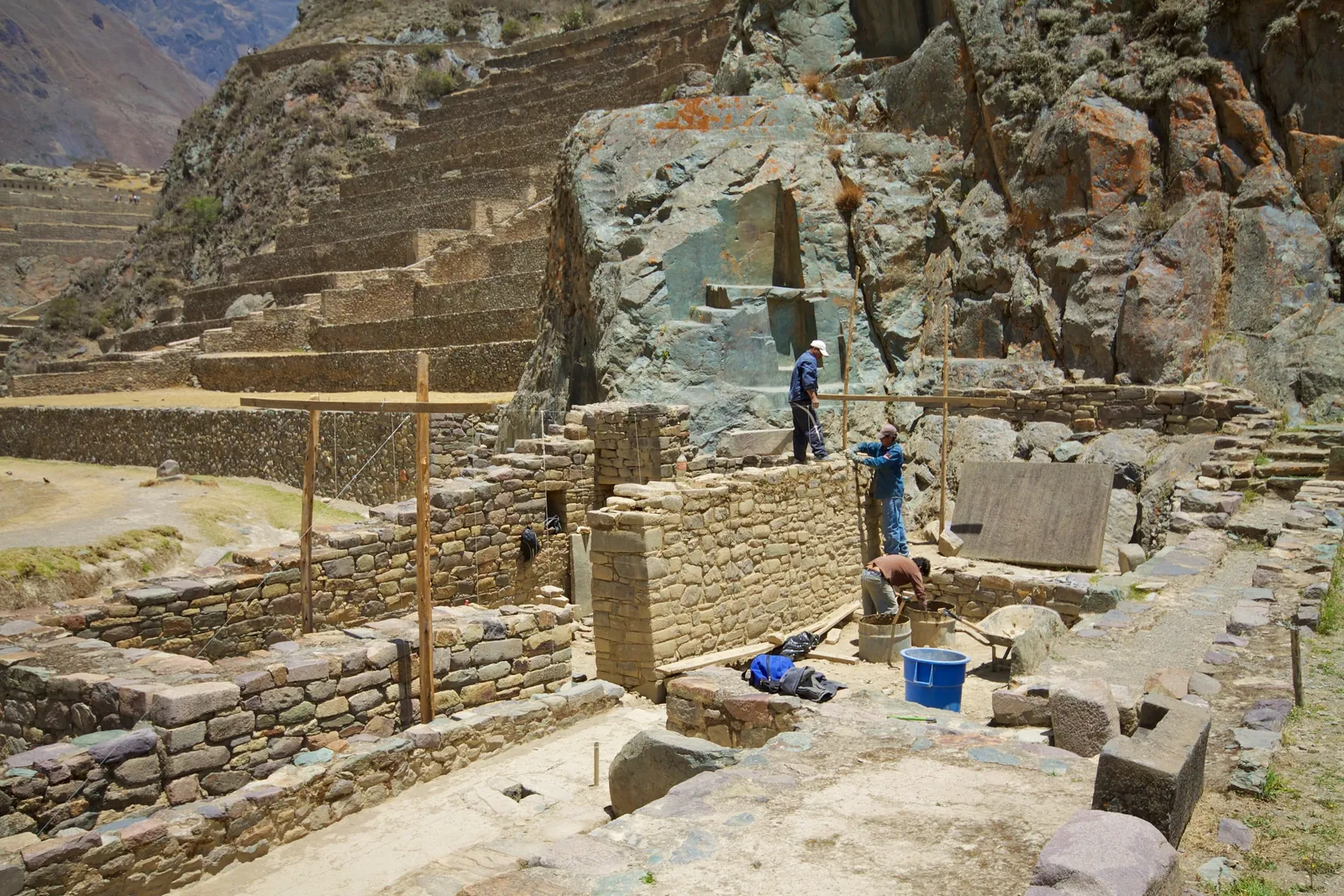
An operator shapes this more than a traveller can, through the route itself. A journey can be designed to lean away from the choke points: to visit the icons at their quietest hours and seasons, to spend real time in the regions around them, and to move in small groups that a place can absorb without strain. The Sacred Valley, on Andes to Antarctica, is a clear case — beyond Machu Picchu lie weaving towns, markets and ruins that reward a slow visitor and see a fraction of the crowds.
Our journeys are built on staying longer in fewer places, travelling overland between them, and favouring the shoulder seasons — all of which happen to spread visitor load rather than concentrate it. We will not claim a grand journey adds nothing to the world's busy places; it adds some travellers to some of them. What we can do, and do, is route deliberately against the grain of concentration, so that the trip's footprint on any single overloaded site is as light and well-timed as we can make it. The art of not adding to overtourism is, in the end, mostly the art of going where the crowd is not.
Quick answers
What is overtourism?
Overtourism is what happens when visitor numbers outgrow a destination's capacity to host them well — crowding sites, straining infrastructure, pricing residents out of housing through short-term lets, and wearing down the place's character. It is usually not caused by a country being full but by concentration: too many visitors funnelled into a few famous places, a few peak months and a few hours of the day, while the surrounding region sees comparatively few.
How can one traveller avoid making overtourism worse?
Treat it as a distribution problem. Travel in the shoulder seasons rather than the peak, stay longer in fewer places instead of racing between icons, and give real time to the lesser-known towns and valleys near a famous site. Visit the headline places early or late when they are quietest, avoid the brief mass cruise stop, and be willing to skip a site that is visibly overwhelmed. Each choice spreads load instead of concentrating it.
Is it irresponsible to visit famous, crowded places at all?
Not necessarily. Many iconic places remain genuinely worth seeing, and visiting them can be done decently — at quiet hours and seasons, in small groups, spending with local businesses, and respecting that the place is someone's home rather than a stage set. What is worth avoiding is feeding the worst pressure: peak-season crowds, mass-arrival formats, and behaviour that treats residents as scenery. Responsibility lies in how and when you go, not simply in whether you do.
Let the reading become a route.
When an article sparks something, our planners are the next step. Tell us what you are dreaming of.