Knowing the Penguins of the Antarctic Peninsula
Three penguin species dominate the Antarctic Peninsula — gentoo, chinstrap and Adelie — and learning to tell them apart deepens every landing. Here is a field guide to their looks, calls, colonies and changing fortunes.
The Antarctic Peninsula is brushtail-penguin country. Three closely related species — the gentoo, the chinstrap and the Adelie — nest along its shores and the nearby South Shetland Islands, and almost every landing brings you among one or more of them. They are not the tall emperor penguins of the deep continental interior; those live far to the south and are rarely part of a peninsula voyage.
Telling the three apart is easy once you know the marks, and it turns a crowd of black-and-white birds into individuals with distinct lives and habits. A little field knowledge also lets you read what you are seeing — courtship, incubation, the chaos of a feeding colony — and watch with the calm, respectful distance the wildlife deserves.
The gentoo: the orange-billed peninsula resident
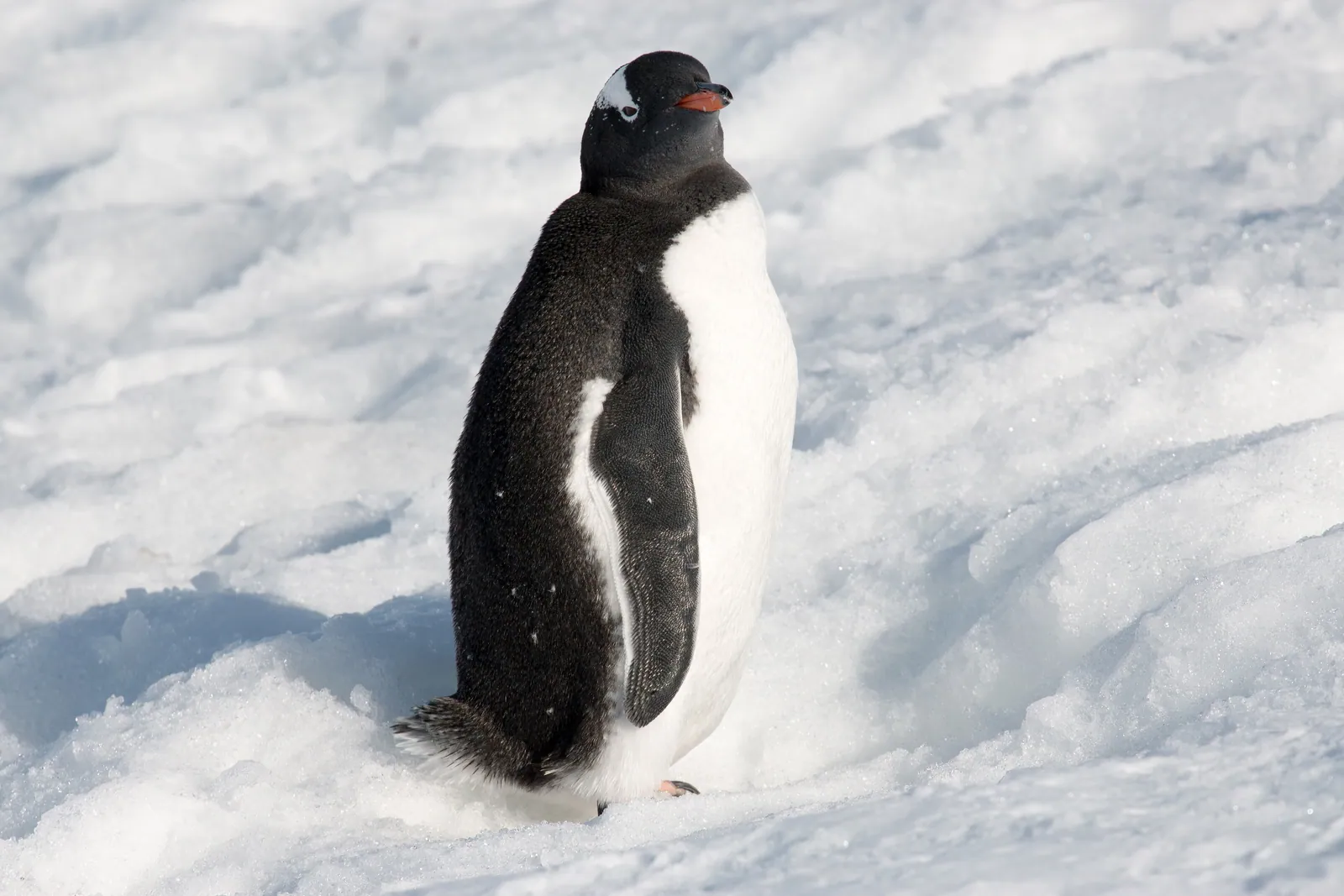
The gentoo is the easiest to identify and the one you will likely see most. Look for the bright orange-red bill and a clean white patch above and behind each eye, often meeting in a thin band across the crown. Gentoos are the largest of the three brushtails and, with their longer tail feathers sweeping the ground, the most upright and stately on land.
Gentoos nest in comparatively loose colonies, often on snow-free rises, and unusually among Antarctic penguins their numbers on the peninsula have been increasing and their range shifting south. They are widely thought to be one of the wildlife winners of a warming, less ice-bound peninsula, which makes them a living illustration of the changes underway.
The chinstrap: the helmet-strapped climber
The chinstrap is unmistakable: a thin black line runs under the white chin from ear to ear, as if the bird were wearing a helmet held by a strap. Slightly smaller than the gentoo, chinstraps are famously bold and vocal, and they nest in dense, steep, raucous colonies — sometimes climbing surprisingly high up rocky slopes to reach them.
Their colonies can be vast and pungent, alive with braying calls and the constant traffic of birds commuting to sea. Chinstraps depend heavily on krill, and at some monitored sites their numbers have declined, a pattern researchers link to shifts in sea ice and krill availability across the Southern Ocean.
The Adelie: the classic ice penguin
The Adelie is the archetypal penguin of cartoon and imagination: a tidy black head with a bold white ring around each eye and a mostly dark bill. Adelies are the most southerly breeding penguin of the three and the most tied to sea ice, which they need as a platform and which shapes where they can live.
Because of that dependence, Adelie populations are sensitive indicators of change. On the warming northern peninsula many colonies have shrunk, while farther south, in colder regions, some are stable or growing. Where you do find them, an Adelie colony in full summer swing — birds porpoising ashore, scrambling up landing beaches — is one of Antarctica's great spectacles.
Reading colony life through the season
A penguin colony tells the season at a glance. In November the birds court and build, carrying pebbles to their partners and shaping shallow stone nests; squabbles over good stones are constant and comic. Through December eggs are incubated, parents taking turns on the nest while the other feeds at sea.
From late December chicks hatch, and the colony's tempo doubles: adults shuttle endlessly between sea and nest, and growing chicks eventually gather in loose creches for warmth and safety. By February and March the chicks are large and moulting into waterproof feathers before their first swim. Knowing the stage you are watching makes a colony far more than a noisy crowd.
Watching penguins responsibly
Penguins ashore are approachable and curious, but the responsibility for good encounters rests entirely with the visitor. IAATO guidelines ask travellers to keep at least five metres from wildlife, give the birds space, never block their paths to and from the sea, and stay clear of nests and chicks. If a penguin chooses to walk toward you, the right response is to stay still and let it pass.
On our Andes to Antarctica journey, the peninsula's penguin colonies are a highlight of the Zodiac landings, always conducted in small, guided groups under those guidelines. Watched quietly and at a distance, the brushtails of the peninsula are endlessly absorbing — and they remain entirely wild, on entirely their own terms.
Quick answers
Which penguins will I see on the Antarctic Peninsula?
The Antarctic Peninsula and the nearby South Shetland Islands are home chiefly to three closely related brushtail species: the gentoo, the chinstrap and the Adelie. The tall emperor penguin lives far to the south on the deep continental ice and is generally not seen on a standard peninsula voyage.
How do you tell gentoo, chinstrap and Adelie penguins apart?
Gentoos have a bright orange-red bill and a white patch above each eye. Chinstraps have a thin black line running under a white chin, like a helmet strap. Adelies have an all-dark head with a distinct white ring around each eye. Once you know these marks, the three are quick and reliable to tell apart.
How close can you get to penguins in Antarctica?
IAATO guidelines ask visitors to stay at least five metres away from penguins and other wildlife, and farther from nesting birds. You should never approach or surround animals, never block their routes to the sea, and let curious penguins move freely. If a penguin walks toward you, stay still and allow it to pass.
Let the reading become a route.
When an article sparks something, our planners are the next step. Tell us what you are dreaming of.