Penguins of the Southern Journeys: A Field Guide to the Colonies
Penguins are the great seabirds of the southern hemisphere, and a journey from Patagonia to Antarctica passes through their world. Here are the species you will meet, the colonies that hold them, and how to watch with care.
There are no penguins at the North Pole. Every one of the world's seventeen-or-so species lives in the southern hemisphere, from the Galápagos at the equator to the deep ice of Antarctica — and a southbound grand journey threads through the heart of their range. To meet penguins well is to understand that they are not comic figures but consummate ocean predators that happen to nest on land.
On Andes to Antarctica you may encounter five or six species across very different settings: burrowing penguins on a Patagonian sheep estancia, and ice-loving penguins on the Antarctic Peninsula itself. This field guide covers who is who, where the colonies are, and how to behave so the birds barely notice you have come.
How penguins live: built for the sea, awkward on land
A penguin's whole body is a swimming machine. Its wings have evolved into stiff flippers, its bones are dense rather than light, and it is counter-shaded dark above and white below to hide from predators and prey alike. In the water it is fast, agile and utterly at home; on land its upright waddle and tobogganing slides are simply the price of having to come ashore to breed and moult.
Penguins feed on fish, squid and krill, and many species are superb divers — emperors can descend over 500 metres and stay under for many minutes. Most are colonial nesters, gathering in their thousands, and most form strong pair bonds, sharing the long work of incubation and feeding between two parents.
The Magellanic penguin: Patagonia's burrowing bird
The penguin most travellers meet first in South America is the Magellanic, a medium-sized banded penguin that nests in burrows dug into coastal scrub and grassland along the shores of Argentina and Chile. Great colonies — at sites such as Punta Tombo on the Atlantic coast — can hold hundreds of thousands of pairs.
Magellanic penguins are present at their colonies roughly from September to March or April, arriving to breed in the southern spring and departing to sea for the winter. Walk a marked path among them and you will hear the braying call that gives the related African species its old name of jackass penguin — penguins are far noisier than their dignified looks suggest.
The penguins of the Antarctic Peninsula
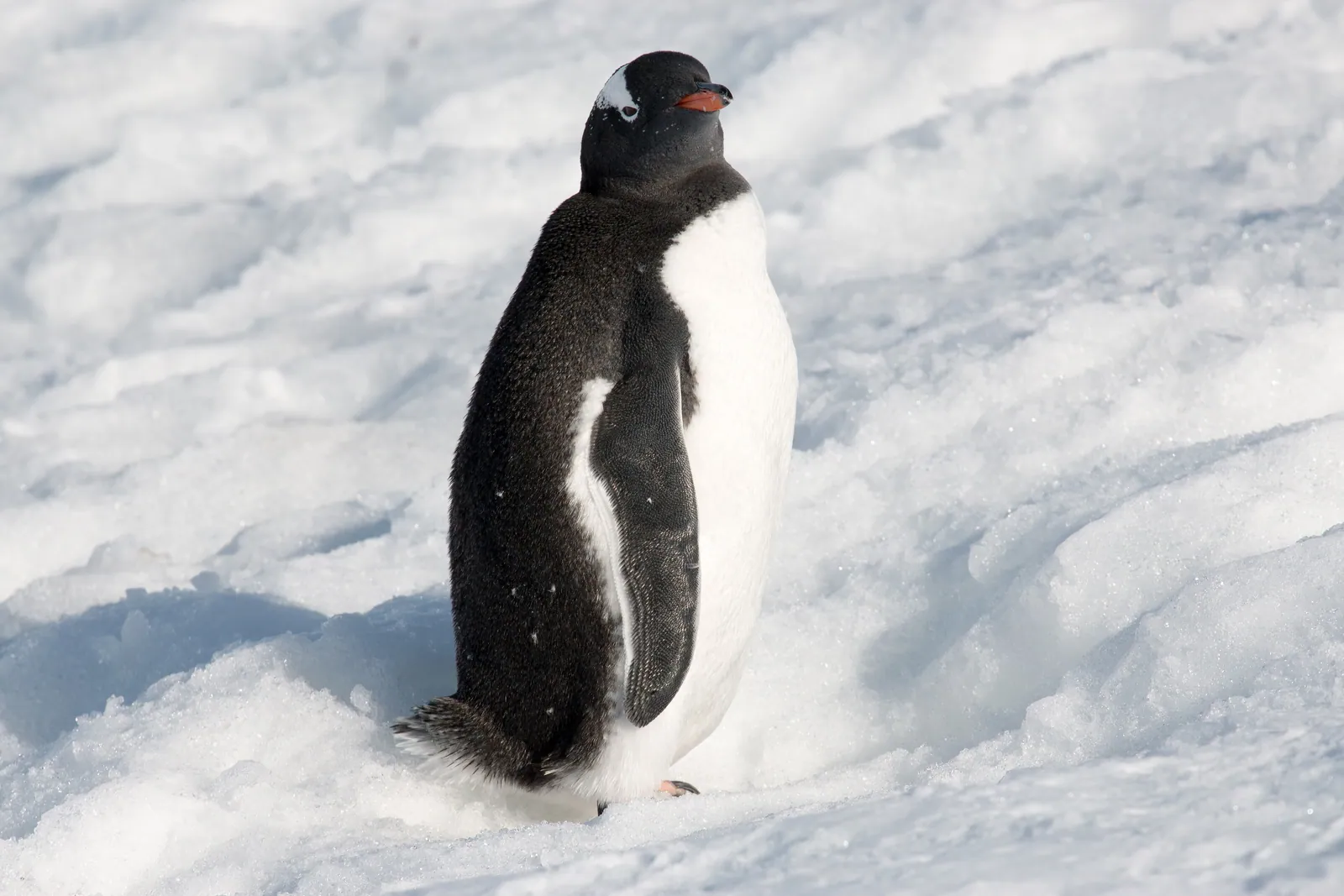
Cross the Drake Passage and the cast changes. Three brush-tailed penguins dominate the Peninsula: the gentoo, with its bright orange bill and white head-flash, the world's fastest underwater swimmer; the chinstrap, named for the thin black line under its chin; and the Adélie, a small, classic black-and-white penguin of the colder, ice-fringed coasts.
Antarctic colonies are at their busiest in the austral summer, December to February, when chicks are growing fast and parents shuttle constantly to the sea. The colonies are loud, pungent and stained pink with krill-rich guano — and watching a gentoo porpoise out of a turquoise bay, or chicks chasing a parent for food, is among the great wildlife experiences anywhere on Earth.
The king penguin and the far southern islands
The second-largest penguin, the king, with its sweep of golden-orange at the neck and breast, breeds not on the Antarctic continent but on cool sub-Antarctic islands such as South Georgia and the Falklands. Some itineraries that include South Georgia reward travellers with king colonies hundreds of thousands strong — one of the planet's truly overwhelming wildlife gatherings.
King penguins have an extraordinary breeding cycle that takes more than a year to raise a single chick, so a colony always holds eggs, small chicks and the shaggy brown juveniles once mistaken for a separate species. The true emperor penguin, larger still, breeds on the sea ice deep in the Antarctic winter and is seen only on specialist expeditions.
Watching penguins without disturbing them
Penguins at established colonies can seem indifferent to people, but that calm depends on visitors behaving predictably. Keep to marked paths and the distances your guides set — in Antarctica the long-standing guidance is to stay at least around five metres from any penguin and never to block its route between nest and sea. If a bird wants to pass, the bird has right of way.
Stay low, move slowly, keep your voice down and never surround an animal. Do not touch, feed or chase, and watch where you step near burrows. The reward for restraint is the best possible view: a colony going about its life as if you were simply another quiet feature of the shore.
Quick answers
When is the best time to see penguins on a southern journey?
The austral spring and summer, roughly October to March. Magellanic penguins occupy their Patagonian colonies from about September; Antarctic species are busiest from December to February, when chicks are growing. This window also brings the kindest weather and the longest daylight for watching.
How many penguin species might I see on Andes to Antarctica?
Typically five or six, depending on the exact route. Magellanic penguins in Patagonia, then gentoo, chinstrap and Adélie on the Antarctic Peninsula. Itineraries that include South Georgia or the Falklands can add king penguins and others. The emperor penguin is seen only on specialist deep-ice expeditions.
Why are there no penguins in the Arctic?
Penguins evolved entirely in the southern hemisphere and never spread north across the warm tropics. The Galapagos penguin reaches the equator, helped by cold ocean currents, but no species crossed into northern waters. The Arctic's ecological equivalent — the now-extinct great auk — was an unrelated bird that simply looked and lived in a similar way.
Let the reading become a route.
When an article sparks something, our planners are the next step. Tell us what you are dreaming of.