Pumas, Guanacos and Condors: The Wildlife of Patagonia
Patagonia's open steppe is one of the best places on Earth to watch large wild animals in plain sight. Meet the guanaco herds, the recovering puma, the soaring condor and the birds of the far southern grasslands.
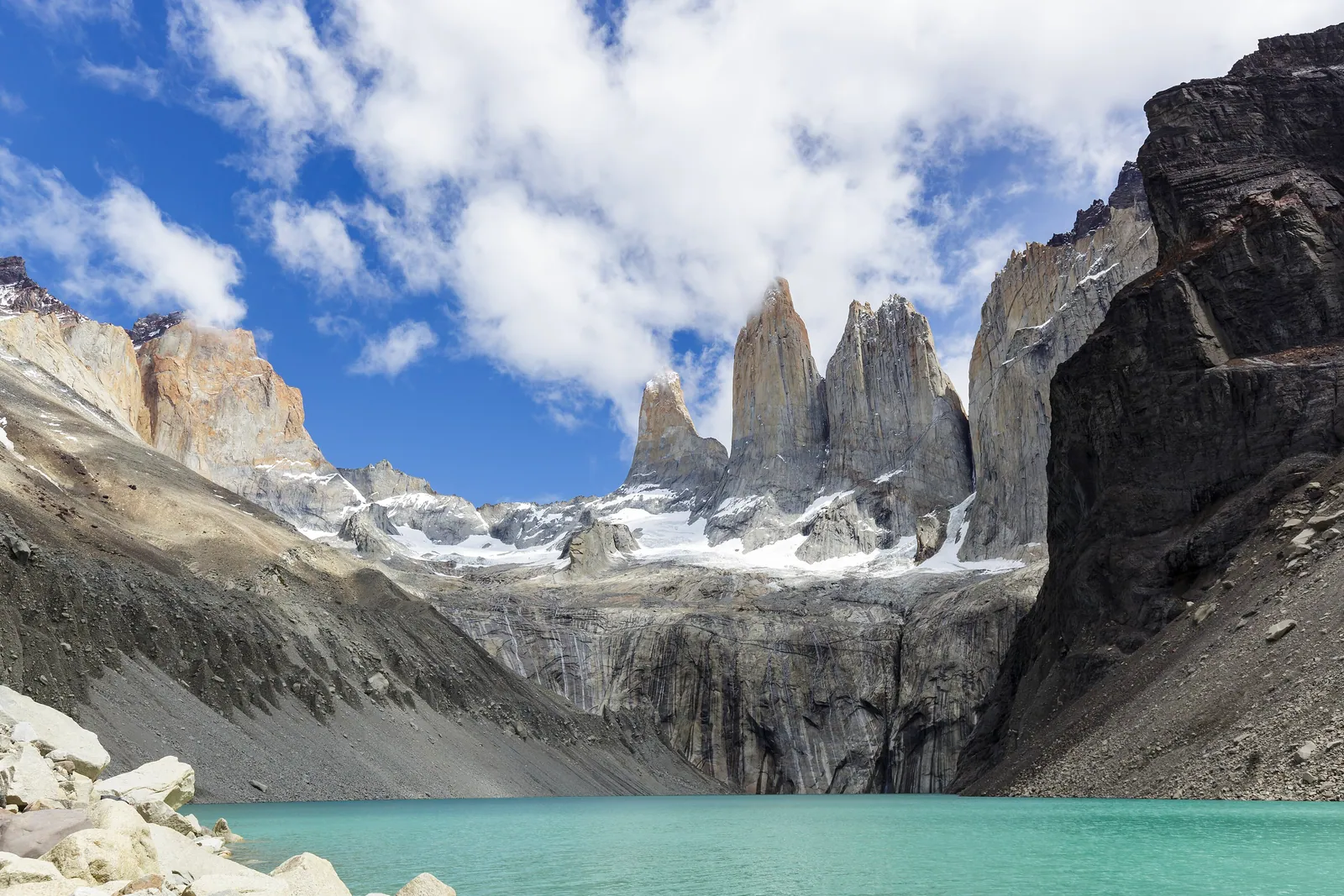
Patagonia is not a rainforest, and that is exactly why its wildlife is so rewarding to watch. The southern steppe and the open valleys of Torres del Paine are vast, treeless and clear-sighted, so the animals that live there are visible at a distance rather than hidden in canopy. A traveller with binoculars and patience can, in a few days, see most of the region's signature species.
Three animals dominate the imagination: the guanaco, the wild camelid that grazes the grasslands in herds; the puma, South America's great cat, which Torres del Paine has become one of the finest places in the world to see; and the Andean condor, among the largest flying birds alive. This article introduces those three and the wider cast of the southern grasslands, all part of the Patagonian leg of our Andes to Antarctica journey.
The guanaco: the animal you will see first
The guanaco is a wild relative of the llama, a slender camelid with a tan coat and a pale underside, and it is the most abundant large animal of the Patagonian steppe. Herds graze the open grasslands, and in places such as Torres del Paine they are an almost constant presence, watching walkers with calm, upright curiosity.
Guanacos are superbly adapted to this hard country: they endure cold, wind and thin grazing, and they can run fast over rough ground. Listen for their alarm call, a strange high-pitched bleat — it often means a puma is somewhere near, and a herd that suddenly stands rigid and stares in one direction is worth following with your eyes. The guanaco is, in effect, the steppe's early-warning system.
The puma: Patagonia's great cat
The puma — also called cougar or mountain lion — is the apex predator of the region, and Torres del Paine has become one of the most reliable places on the planet to see one in the wild. Decades of reduced hunting on land around the park, combined with abundant guanaco prey, have allowed a visible population to establish.
Pumas are most active around dawn and dusk, and seeing one is never guaranteed — they are wild, wide-ranging cats. Dedicated puma-tracking outings, led by specialist trackers who know individual animals and read guanaco behaviour, greatly improve the odds. Sightings are made at a respectful distance with guides who never approach or crowd an animal, which keeps both the traveller and the puma safe.
The Andean condor overhead
Look up over a Patagonian ridge and the broad black silhouette riding the wind is very likely an Andean condor. With a wingspan that can approach three metres, it is among the largest flying birds in the world, and it is a vulture — a scavenger that soars vast distances on rising air, barely beating its wings, scanning the ground for carrion.
Condors favour cliffs, ridgelines and updraughts, so the rocky escarpments of Torres del Paine and the canyon walls of the steppe are good places to watch for them. Adults show a striking ruff of white feathers at the neck and, in males, a fleshy comb on the head. Seeing a condor wheel against a mountain face, motionless on the air, is one of the quiet highlights of any day in the park.
The wider cast of the steppe
Beyond the famous three, the southern grasslands hold a rich supporting cast. The South Andean deer, or huemul, is a rare and protected native deer and a great prize for a patient watcher. The grey fox and the larger culpeo fox hunt the steppe. The lesser rhea, a flightless bird also called the Darwin's rhea, runs in small groups across the open ground.
Birdlife is abundant and easy to enjoy. Upland geese graze the grass in pairs, black-necked swans and flamingos gather on the shallow lakes, and caracaras and other raptors patrol the verges. On the coasts and channels further south you move into a different world again — penguins, sea lions, cormorants and seabirds — so a journey through Patagonia layers grassland, mountain and shore wildlife into one trip.
Watching well, and watching kindly
Good wildlife watching in Patagonia rests on a few simple disciplines. Carry binoculars — the animals are visible but often distant — and go out around dawn and dusk, when the steppe is most active. Move quietly, scan rather than march, and read the guanacos: their posture and alarm calls reveal what else is on the hill.
Above all, keep your distance and let the animals set the terms. Never approach, feed or surround wildlife, give pumas in particular a wide and respectful margin, and follow your guide's lead on where to stand. On our journeys, wildlife outings are timed for the best light and run with trackers and naturalists, so you see more while disturbing less — which is how the watching stays good for the travellers who come after you.
Quick answers
Am I likely to see a puma in Torres del Paine?
Torres del Paine is one of the best places in the world to see a wild puma, thanks to decades of reduced hunting nearby and an abundant guanaco prey base, but sightings are never guaranteed — these are wild, wide-ranging cats. Your chances rise sharply on a dedicated puma-tracking outing led by specialist trackers, and around dawn and dusk when pumas are most active.
What is the difference between a guanaco and a llama?
Both are South American camelids, but the guanaco is a wild animal native to the Patagonian steppe and the Andes, while the llama is its domesticated relative, bred over millennia as a pack and fleece animal. Guanacos live in wild herds, are leaner and uniformly tan with a pale underside, and are a key prey species for the puma.
When is the best time of day for wildlife watching in Patagonia?
Dawn and dusk are best. Pumas, foxes and many other animals are most active in the low light of early morning and evening, and the soft light is also kinder for watching and photographing. Guanacos, condors and grassland birds can be seen through the day, but a journey that includes early starts will reward you with far more.
Let the reading become a route.
When an article sparks something, our planners are the next step. Tell us what you are dreaming of.