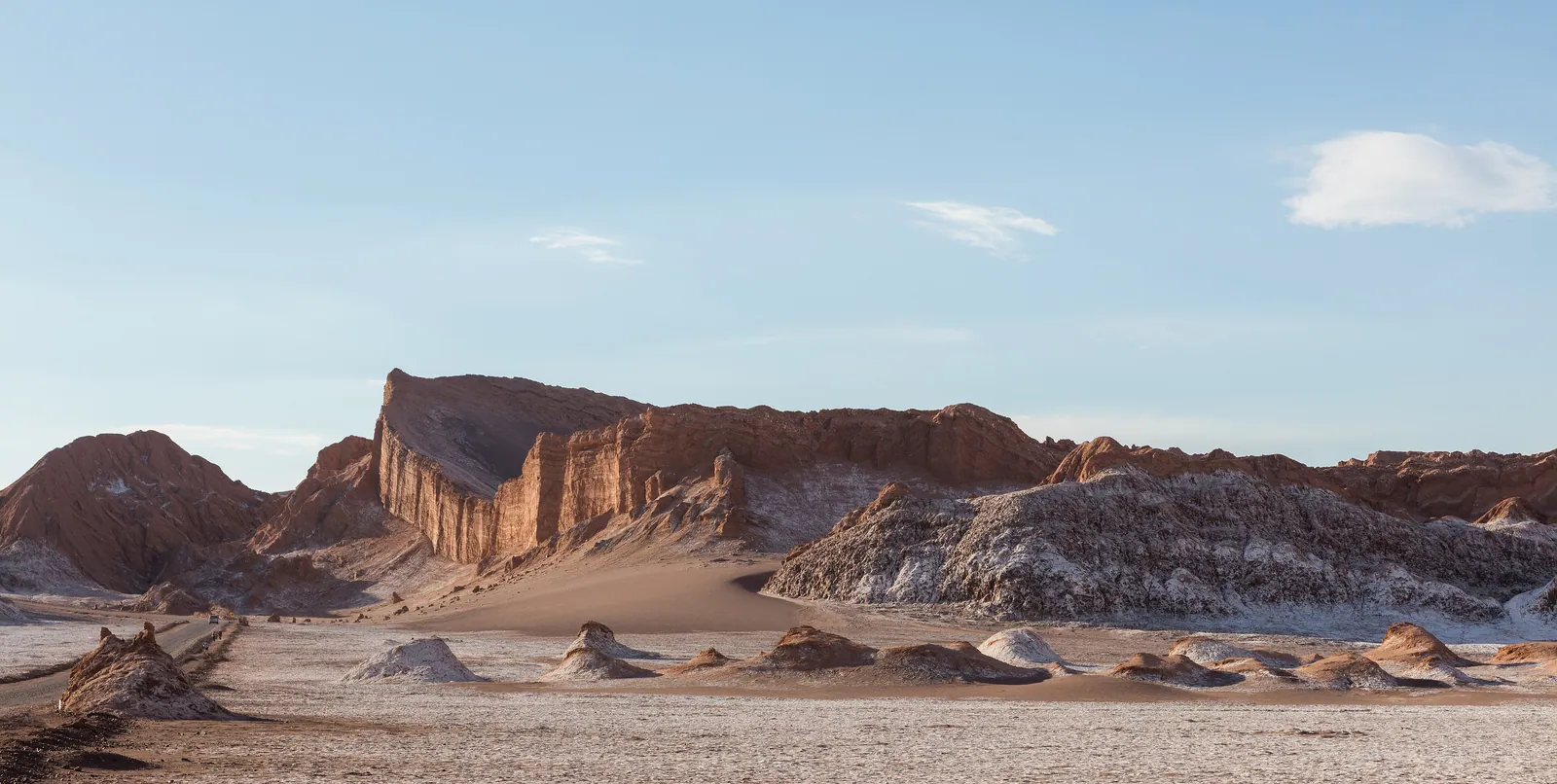
San Pedro de Atacama: Base Camp for the High Desert
Every Atacama journey turns on one small adobe village. Here is how San Pedro works as a base — its altitude, its rhythm, where to eat, and why you radiate out from it rather than rush through it.
Almost everything a traveller does in the Atacama begins and ends in San Pedro de Atacama, a low village of adobe walls and pepper trees set at roughly 2,400 metres on the eastern edge of the desert. It is not a place you pass through; it is a place you stay, and from which you drive out each day to the geysers, the salt flat, the lagoons and the wind-carved valleys before returning to the same warm courtyard at dusk.
Understanding San Pedro as a base — rather than a destination in its own right — is the key to a good Atacama week. It sits low enough to sleep comfortably, central enough to reach the great sights in a morning, and slow enough that the days between excursions feel like rest. Get the base right and the desert opens up around it.
Why the village sits where it does
San Pedro grew where it did for the oldest reason in the desert: water. The San Pedro and Vilama rivers, fed by Andean snowmelt, meet here to create an oasis on the otherwise barren Salar de Atacama basin. The Atacameño people farmed this green seam for millennia, and the village has been a crossroads of high-desert trade for far longer than Chile has existed as a country.
For the modern traveller, that history translates into a happy accident of geography. The oasis sits at about 2,400 metres — high enough to begin acclimatising, low enough to sleep well — while the desert's headline excursions, El Tatio and the altiplano lagoons, lie above 4,000 metres within a couple of hours' drive. You sleep low and travel high, which is exactly the pattern a sensible itinerary wants.
The rhythm of an Atacama day
Atacama days are bookended by the desert's two best hours, and a base in San Pedro is built to serve them. The geyser run leaves in the cold dark, well before dawn, to reach El Tatio as the sun lifts; the Valle de la Luna trip leaves in the late afternoon to catch the sunset. The hours in between — the harsh, bright middle of the day — are for the courtyard, the pool and a long lunch.
This is why four or five nights suits the Atacama so well. It is enough to fold in a gentle arrival day, the four essential excursions and a clear night for stargazing, without ever stacking two demanding mornings back to back. The desert rewards a measured pace, and San Pedro, with its shaded patios and unhurried streets, all but enforces one.
Where to stay, from lodge to village
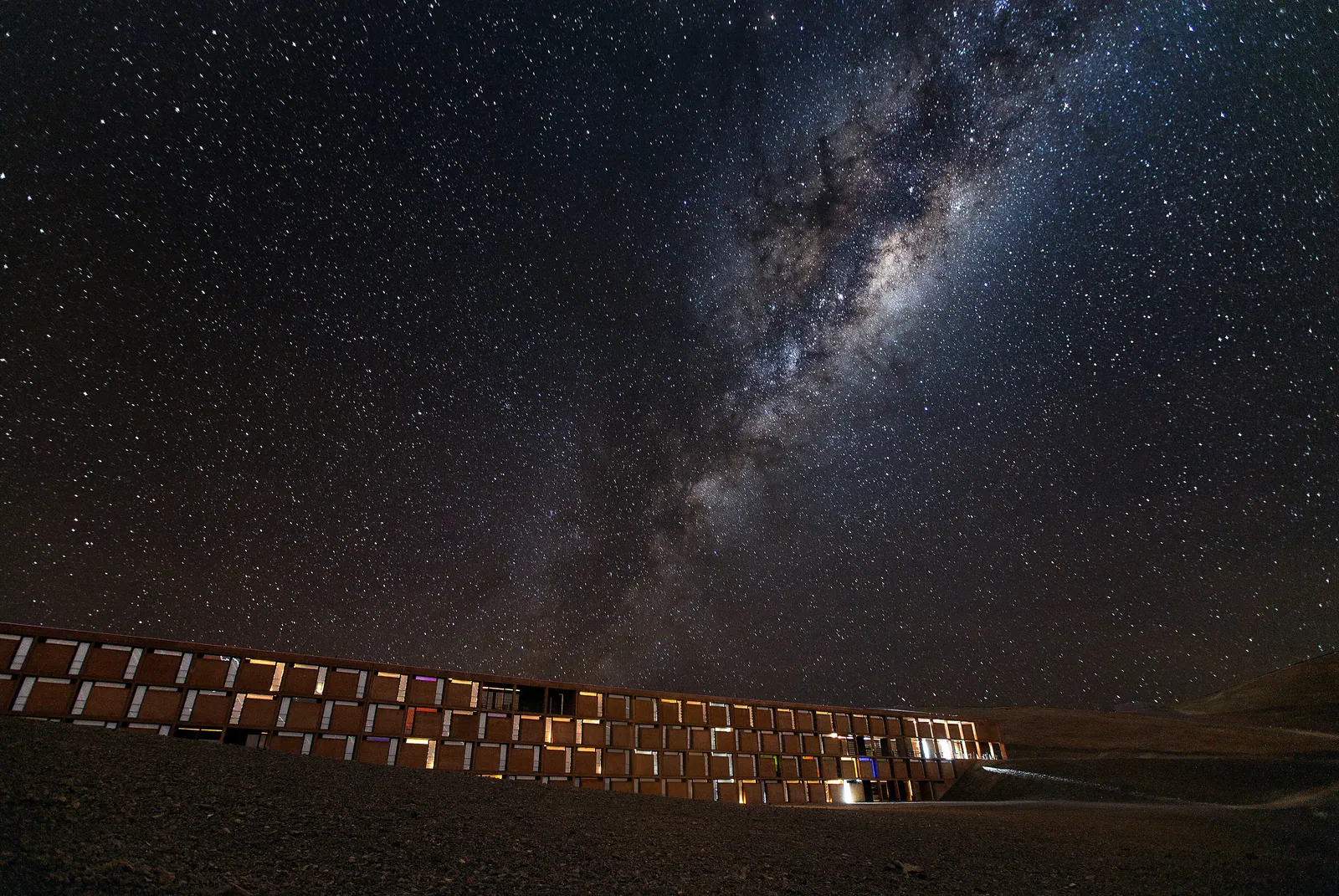
San Pedro's finest lodges sit on the edges of the village, where the adobe gives way to open desert. Explora Atacama is the pioneering all-inclusive house, with its own observatory and a daily roster of guided hikes and rides; Tierra Atacama is a serene, design-led property framed by views of the Licancabur volcano; and Awasi Atacama, a Relais & Châteaux house of only eight suites, assigns a private guide and 4x4 to each one for fully bespoke days.
What these lodges share is a model that fits the desert: they bundle the guiding with the room, so your days are planned, paced and led by people who read the altitude and the weather for you. On Andes to Antarctica and The Pacific Arc, the Atacama leg is built around exactly this kind of base — a calm house from which the desert is explored in small, well-guided groups.
Eating and resting in the village
The main street, Caracoles, is the social spine of San Pedro — a run of low adobe frontages housing the village's restaurants and craft shops. Baltinache is the most refined kitchen, with a small tasting-style menu of contemporary Chilean cooking; Adobe is the long-running institution, with an open fire and a sociable courtyard; and Las Delicias de Carmen serves warm, generous home cooking for a relaxed lunch.
Beyond the food, the village is simply a good place to do very little. The whitewashed church of San Pedro, one of the oldest in the region, anchors a quiet plaza; the streets are unpaved and car-free in their heart; and the dry, bright air makes an afternoon in the shade feel like genuine recovery before the next early start.
Getting there, and the first day
The Atacama is reached by flying from Santiago to Calama (airport code CJC), a flight of roughly two hours, then transferring by road to San Pedro — about ninety minutes across open desert. The drive is no mere shuttle: it is a slow, widening introduction to the scale of the place, the Andes rising ahead and the salt basin opening below.
Treat the first day in the village gently. At 2,400 metres most travellers feel only a little breathless, but the body is already adjusting, and the highest excursions are best saved for later in the stay. Drink more water than feels necessary, ease off alcohol, walk the village rather than climb anything, and let San Pedro do what it does best — slow you down.
Quick answers
How many nights should I spend in San Pedro de Atacama?
Four to five nights is the sweet spot. That allows a gentle first day to acclimatise to the 2,400-metre altitude, then time for the four essentials — Valle de la Luna, El Tatio, the Salar de Atacama and the altiplano lagoons — without rushing two hard mornings together, plus at least one clear night set aside for stargazing. A longer stay opens up quieter valleys and high-desert hikes.
Is San Pedro de Atacama high enough to cause altitude problems?
At about 2,400 metres, San Pedro itself rarely causes more than mild breathlessness, and it is a good height at which to sleep while you adjust. The care is needed on the excursions: El Tatio and the altiplano lagoons climb above 4,000 metres. The standard approach is to take the first day or two gently and schedule the highest trips later, which is how we pace every Atacama itinerary.
Do I need a car in San Pedro de Atacama?
No. The village itself is small and walkable, and every major sight lies outside it on a guided excursion, with transport included. On Andes to Antarctica and The Pacific Arc the Atacama leg is run from a lodge that arranges all the driving and guiding, so you never need to navigate the desert yourself.
Let the reading become a route.
When an article sparks something, our planners are the next step. Tell us what you are dreaming of.