Sleeping on Salt: The Hotels Built from the Salar
On the edge of the Salar de Uyuni, a handful of hotels are built almost entirely of salt — walls, floors, furniture and all. How the salt-block hotels work, what a night in one is like, and why they exist.
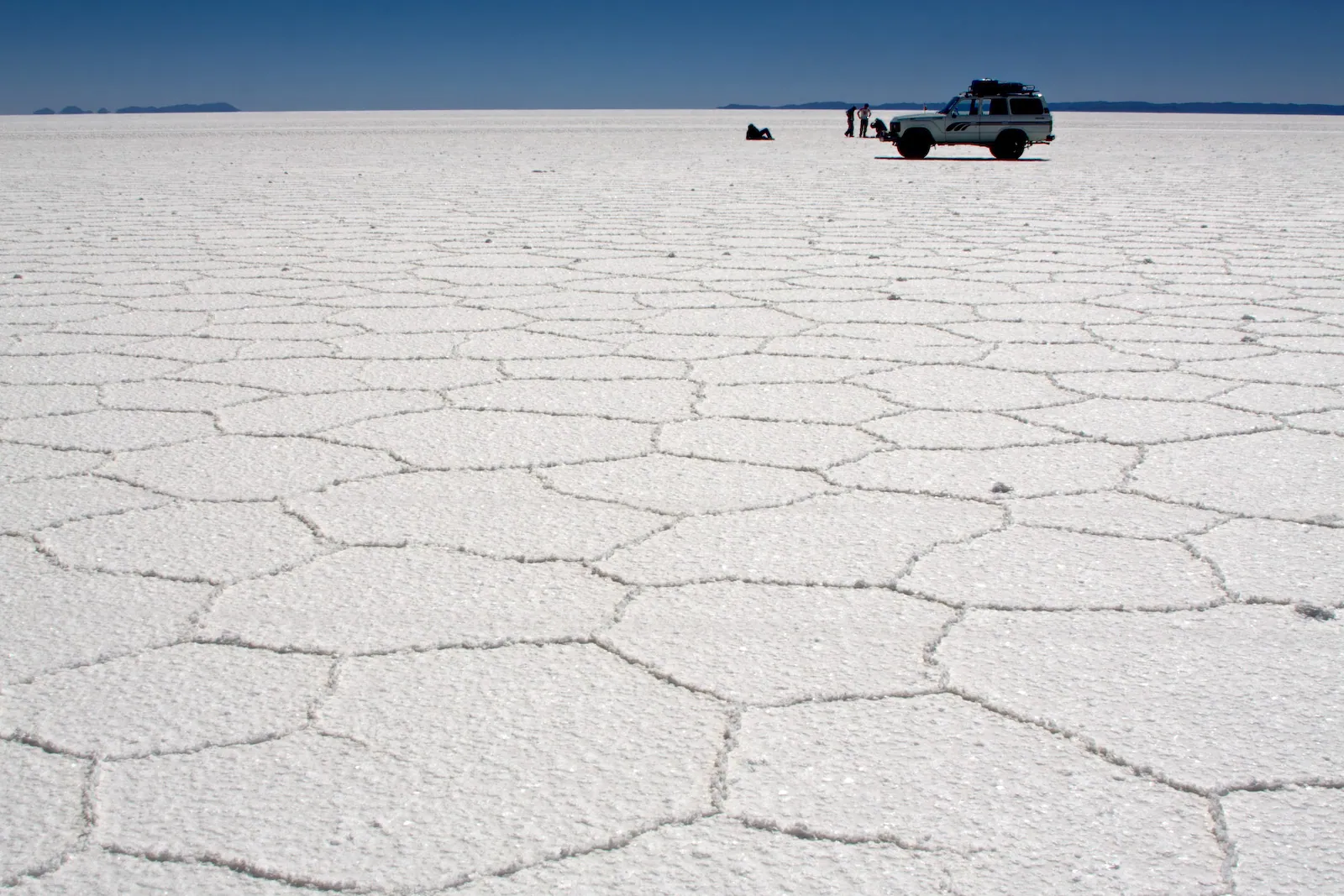
Along the rim of the Salar de Uyuni stand several hotels constructed from the salt flat itself: walls of compacted salt blocks, floors of loose salt crystals that crunch underfoot, and beds, tables and chairs carved or built from the same material. They are among the most distinctive places to spend a night anywhere in the Andes, and they exist because the salar offers one building resource in genuinely limitless supply.
The idea began in the early 1990s with a small, now-legendary salt hotel built out on the flat itself; environmental concerns later pushed construction to the salar’s edge, where the hotels stand today. The blocks are cut from the crust, stacked like masonry and bonded with a wet-salt mortar. The result is a building that is warm, quiet, faintly luminous — and, by the rules of the house, not to be licked.
How you build a hotel out of a salt flat
The crust of the Salar de Uyuni is salt many metres thick. Builders saw it into uniform blocks — much as one might cut blocks of stone or ice — and lay them up into walls, bonding the courses with a paste of salt and water that dries hard. Floors are spread with loose salt grains; furniture is fashioned from blocks or slabs of the same material.
Salt is a surprisingly capable building medium in this climate. It insulates well, helping to even out the altiplano’s extreme day-to-night temperature swing, and it is bone dry, because there is almost no humidity to dissolve it. The main hazard is liquid water, so the hotels are roofed conventionally and rain is kept firmly outside.
What a night in a salt hotel is actually like
Inside, the effect is calm and slightly otherworldly. The salt-block walls glow softly, the loose-salt floor crunches gently as you cross the room, and the building is notably quiet, the thick salt deadening sound. Rooms are warmer than the freezing night outside would suggest, and beds are conventional, dressed with ordinary linens and plenty of blankets.
Comfort levels vary widely. Some salt hotels are simple, basic lodgings on the standard overland route; others, particularly those built for travellers wanting more, offer heating, en-suite bathrooms, good food and proper insulation. The unifying experience is the material itself — sleeping inside walls quarried from the salt sea outside.
From the original flat hotel to today’s edge hotels
The first salt hotel was built in the mid-1990s out on the salar itself and became famous as a curiosity. Over time, concerns about waste and sanitation on the pristine flat — there is nowhere for water and refuse to go on an unbroken salt crust — led authorities to discourage building on the salar proper.
Newer salt hotels were therefore sited around the salar’s perimeter, near villages such as Colchani and along the flat’s edges, where they can manage water and waste responsibly while still being made of, and looking out over, the salt. The shift is a small lesson in how a fragile landscape reshapes the way it can be visited.
Practicalities of staying out here
The salar sits at about 3,656 metres, and the salt hotels share that altitude, so travellers should already be acclimatised and prepared for cold nights — heating ranges from minimal to good depending on the property. The dry air can be dehydrating, so drinking plenty of water helps.
House rules are gentle but real: do not lick or chip the walls and furniture, however tempting, and keep liquids off the salt surfaces. Power and hot water can be limited at simpler hotels, so it is worth knowing the standard of your particular lodging in advance rather than assuming.
A salt hotel on the Andes to Antarctica journey
On Andes to Antarctica, a night in a salt hotel is one of the journey’s small set-pieces — a way to be inside the salar’s story rather than merely passing across its surface. It places travellers on the edge of the flat for sunrise, when the light first touches the salt.
We choose hotels matched to the comfort the journey promises, with the heating and facilities a high, cold night requires, so the novelty never comes at the expense of a good sleep. Waking inside walls of salt, then stepping straight onto the flat, is the kind of detail a slow journey is built to make room for.
Quick answers
Are the salt hotels really made entirely of salt?
Largely, yes. Walls are built from compacted salt blocks cut from the flat, floors are spread with loose salt crystals, and much of the furniture — beds, tables, chairs — is made of salt. Roofs, plumbing, glazing and bedding are conventional. The salt provides good insulation in the altiplano’s extreme climate.
Is it comfortable to sleep in a salt hotel?
It can be, though standards vary. Simpler salt hotels on the overland route are basic, while others offer heating, en-suite bathrooms and good food. Salt insulates well, so rooms are warmer than the freezing night outside, and beds use ordinary linens. Check the standard of your specific hotel beforehand.
Why aren’t salt hotels built on the salt flat itself anymore?
Building on the open salar created waste and sanitation problems — there is nowhere for water and refuse to drain on an unbroken salt crust — and raised environmental concerns. Newer salt hotels are therefore built around the flat’s edge, near villages like Colchani, where waste can be managed responsibly.
Let the reading become a route.
When an article sparks something, our planners are the next step. Tell us what you are dreaming of.