The Islands of the South Pacific, Compared
Fiji, French Polynesia, the Cook Islands, Samoa, Tonga, Vanuatu — the South Pacific is not one destination but many. Here is how its island groups differ, and which suits which traveller.
The South Pacific is often pictured as a single idea — palms, lagoon, hammock — but it is in fact a vast scatter of island nations and territories, each with its own character, culture, cost and rhythm. The distances between them are oceanic: Fiji and French Polynesia are nearly 3,000 kilometres apart, and the cultural differences are just as wide.
The useful short answer is that choosing a South Pacific destination is mostly about matching an island group to what you want — overwater glamour, family-friendly ease, deep cultural immersion, diving, hiking or simple quiet. This guide compares the main groups so the choice rests on character rather than postcard alone.
Fiji: the accessible all-rounder
Fiji is the most visited and most accessible of the South Pacific nations, an archipelago of more than 300 islands with a major international airport at Nadi. It offers an unusually wide range, from large resorts on the main island of Viti Levu to tiny barefoot island lodges in the Yasawa and Mamanuca groups, and prices that span backpacker to luxury.
Its appeal is breadth and ease. Fiji suits families and first-time visitors, has well-developed diving — the Somosomo Strait is famed for soft corals — and is celebrated for the warmth of its welcome, expressed in the ubiquitous greeting 'bula'. For travellers who want the South Pacific without a complicated itinerary, Fiji is the natural starting point.
French Polynesia: the iconic and the remote
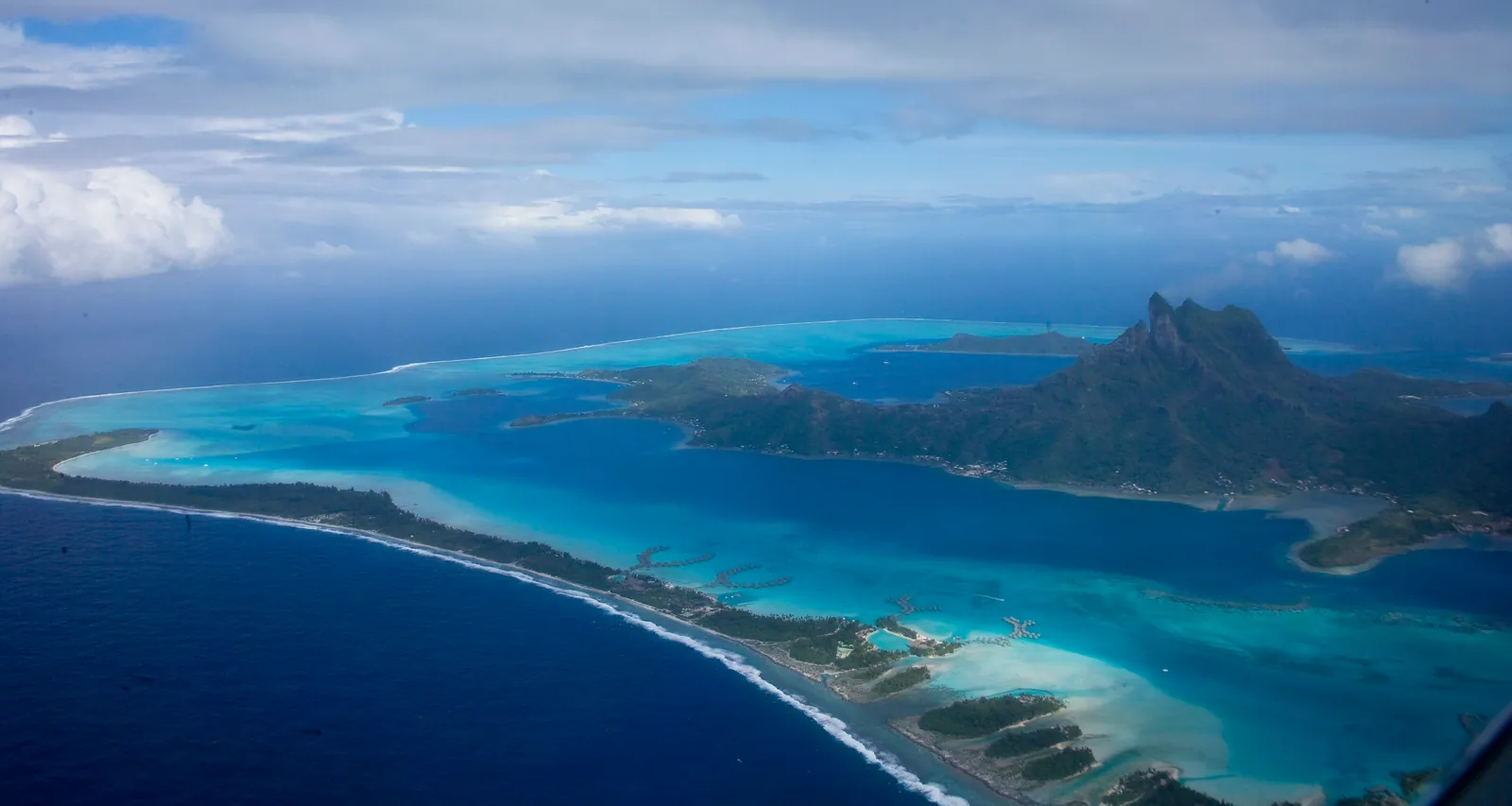
French Polynesia, an overseas collectivity of France, contains the images most people carry of the South Pacific: the jagged green peaks and electric-blue lagoon of Bora Bora, the overwater bungalows, the pearl farms. Tahiti is the gateway; the Society Islands, including Moorea and Bora Bora, are the classic circuit.
It is the most expensive part of the region, and deliberately upmarket in much of its accommodation. But it is also far more varied than Bora Bora suggests: the Tuamotu atolls offer world-class diving in coral-ringed lagoons, and the remote, dramatic Marquesas Islands are among the most striking and least-visited landscapes in the Pacific. French Polynesia rewards travellers willing to look beyond the headline island.
The Cook Islands, Samoa and Tonga
The Cook Islands, in free association with New Zealand, are smaller-scale and relaxed. Rarotonga is a compact, mountainous island ringed by a road and a reef; Aitutaki has one of the most beautiful lagoons anywhere. The Cooks suit travellers who want Polynesian culture and natural beauty without the expense or scale of French Polynesia.
Samoa offers perhaps the most accessible deep cultural experience, with fa'a Samoa — the Samoan way of life — strongly intact, traditional village stays in open beach houses called fale, and dramatic waterfalls, lava fields and ocean trenches to swim. Tonga, the only Pacific nation never formally colonised, is quieter and more traditional still, and is one of the few places in the world where, in season, travellers can responsibly swim near humpback whales.
Vanuatu and the Melanesian islands
Vanuatu, to the west, belongs to Melanesia rather than Polynesia, and feels distinct: a chain of some 80 islands with extraordinary cultural diversity and over a hundred languages. Its signature experiences are adventurous — standing at the rim of the accessible active volcano Mount Yasur on Tanna, exploring custom villages, diving a famous wartime wreck off Espiritu Santo.
Melanesia more broadly — including the Solomon Islands and, further still, Papua New Guinea — offers the region's most rugged landscapes, richest reefs and most varied cultures, but with less tourism infrastructure. These are destinations for travellers drawn to depth and adventure over polish, and they reward time and flexibility.
Choosing, and combining
A simple way to decide: for ease and value, Fiji or the Cook Islands; for the iconic lagoon and luxury, French Polynesia; for living culture, Samoa or Tonga; for volcanic adventure and Melanesian diversity, Vanuatu. Diving is excellent across the region, but Fiji's soft corals, the Tuamotu atolls and Melanesia stand out.
Because ocean distances are large and inter-island flights limited, most travellers focus on one island group rather than hopping between several. A grand journey such as The Pacific Arc treats the South Pacific as one considered chapter — a single, well-chosen archipelago experienced unhurriedly — rather than a rushed sampler of many.
Quick answers
Which South Pacific island is best for a first visit?
Fiji is the most common and easiest first choice: it has direct international flights, a wide range of accommodation at every price point, well-developed activities and a famously warm welcome. The Cook Islands are a good alternative for travellers wanting something smaller and quieter while still being straightforward to organise.
Where in the South Pacific can I see whales?
Tonga is the best-known destination for responsible humpback whale encounters. Between roughly July and October, humpbacks gather in Tongan waters to breed and calve, and regulated operators run swim-with-whale experiences under strict guidelines. Other parts of the region see whales seasonally, but Tonga is the established centre for in-water encounters.
Is the South Pacific expensive?
It varies enormously by destination. French Polynesia is among the most expensive island regions in the world, particularly Bora Bora. Fiji, Samoa, Tonga and the Cook Islands offer a much wider range, including genuinely affordable options. Flights to and between the islands are a significant cost everywhere, given the oceanic distances involved.
Let the reading become a route.
When an article sparks something, our planners are the next step. Tell us what you are dreaming of.