The Balloon Safari at Dawn
Lifting off the Serengeti plains in the first light of day is the rarest perspective a safari can offer. Here is how a dawn balloon flight works, what it shows you that a vehicle cannot, and what to expect from the experience.
A hot-air balloon safari is the one moment on a Serengeti journey when you leave the road entirely. Before sunrise, a balloon is inflated on the plains; as the light comes up it lifts away silently, drifting wherever the morning air carries it, perhaps a hundred metres above the grass, perhaps several hundred. For roughly an hour you watch the savannah from a vantage no vehicle can reach.
The flight is short, weather-dependent and a genuine extra expense, and it is not the way to tick off close-up animal sightings — for that, a game vehicle is far better. What the balloon offers is something else entirely: scale, silence, and an understanding of the landscape's vast geometry that you simply cannot get from the ground.
Why dawn, and why the Serengeti
Balloon flights happen at first light for sound physical reasons. The air is coolest and most stable in the early morning, before the sun heats the ground and stirs up the thermals and wind that make ballooning difficult; calm, cool air gives the smoothest and safest flight. It is also when the light is loveliest and the animals most active.
The Serengeti is near-perfect balloon country. Its name comes from the Maasai word siringet, meaning roughly 'the place where the land runs on forever', and that endless, gently rolling plain is exactly the terrain a balloon reveals best. Drifting over it, you see the true sweep of the ecosystem — the kopjes, the riverine forests, the herds strung across the grass like filings.
What a flight actually looks like
The morning begins very early, often well before dawn, with a drive to the launch site. There, in the dark, the crew unrolls the envelope and inflates it — a process worth watching in itself — and passengers climb into the compartmented wicker basket. The take-off is gentle; balloons rise rather than lurch.
Once aloft, the balloon goes where the wind goes; the pilot controls altitude, not direction, climbing or descending to find the air currents that serve the flight. You may skim low over a river or rise high for the panorama. After about an hour the pilot picks a landing spot and brings the basket down, where a chase vehicle is waiting. Landings can be a bump and a tilt — part of the fun, and nothing to fear.
What you see from the air
From a balloon the Serengeti reads as a system rather than a series of sightings. You see how the herds use the land, how the rivers thread through the plains, how the granite kopjes rise like islands, how the patterns of grazing and burning map across the grass. Light flares low and gold across it all, and your own balloon's shadow slides over the plain beside you.
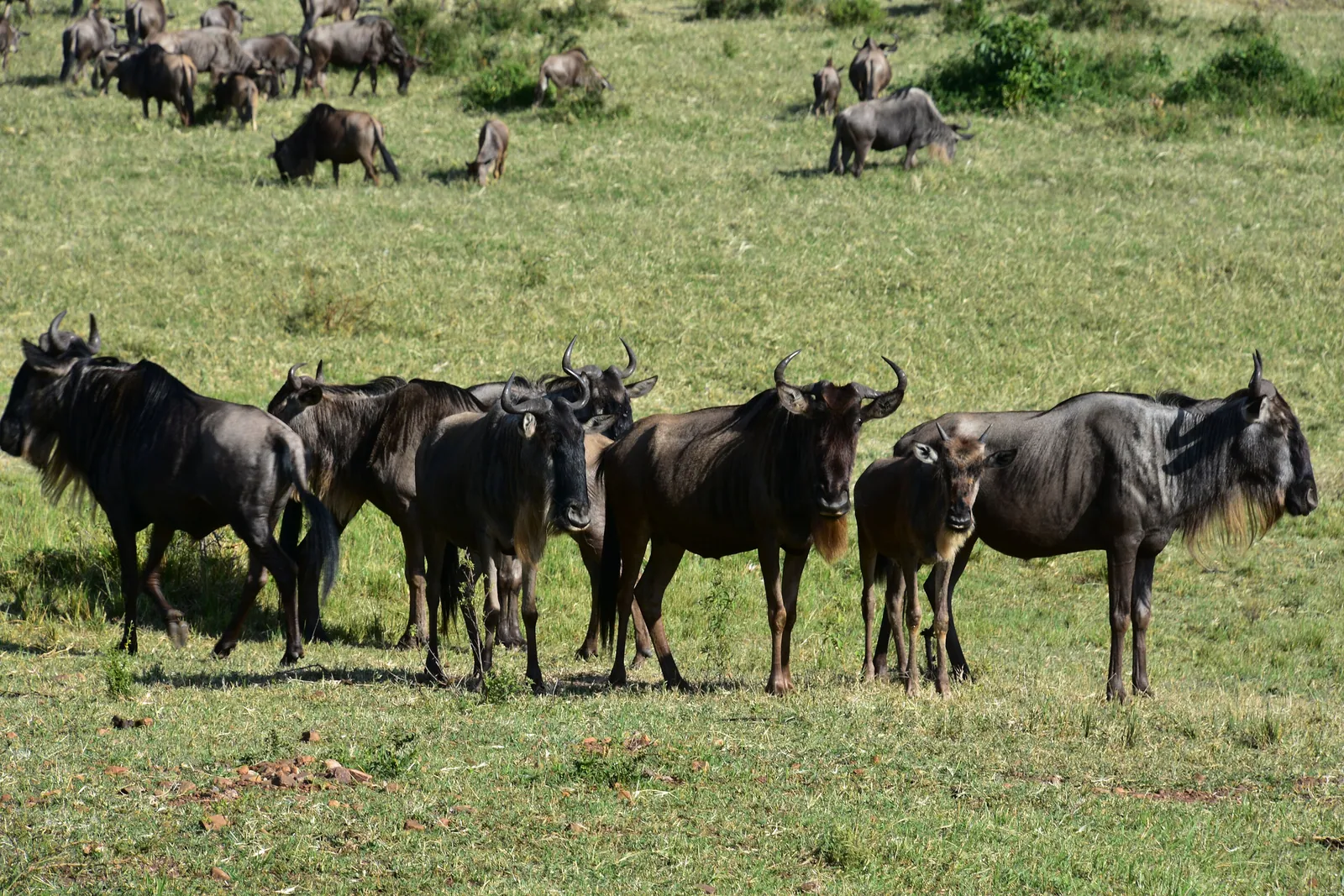
Wildlife from the air is a different pleasure than from a vehicle: you will likely see elephant, giraffe, herds of wildebeest and zebra, perhaps hippo in the rivers, but generally at a distance and from above rather than eye to eye. Treat the balloon as landscape theatre and the ground game drives as your wildlife close-ups, and each does what it is best at.
The bush breakfast and the cost
By long tradition, a balloon safari ends with a celebratory breakfast laid out on the plains near the landing site — a full meal at a table set in the open grassland, often finished with a glass of sparkling wine and a champagne-toast ritual borrowed from the early days of ballooning. It is unashamedly theatrical and quietly memorable.
A flight is a significant additional cost, typically several hundred US dollars per person, and is usually arranged as an optional extra rather than included in a safari. Whether it is worth it is personal — but few travellers who take the flight regret it.
Practicalities, weather and who should fly
Dress in layers: the pre-dawn plains are cold, the burners overhead are warm, and the day heats quickly. Closed shoes are sensible for the landing. Passengers generally need to be reasonably mobile to climb in and out of the basket, and operators set minimum-age and other requirements, so it is worth checking in advance.
Flights are entirely weather-dependent and can be cancelled at short notice for wind or storms — a decision that is always about safety and should be welcomed, not resented. On The Great Rift journey, a dawn balloon flight over the Serengeti is offered as an optional morning, a chance to see from the air the same plains you cross by vehicle below.
Quick answers
Is a balloon safari worth the extra cost?
It depends what you want. A balloon flight is not the best way to see animals up close — a game vehicle is far better for that. What it offers is the landscape itself: the vast scale of the Serengeti, the silence, the dawn light, and a perspective no vehicle can give. Most travellers who take the flight consider it a highlight.
Why do balloon safaris take off so early?
The air is coolest and most stable just before and after dawn, before the sun creates thermals and wind that make ballooning rough or unsafe. Early morning gives the smoothest, safest flight, the best light, and the most active wildlife. Expect a very early start, often well before sunrise.
What happens if the flight is cancelled?
Balloon flights are weather-dependent and can be cancelled at short notice for wind or storms. This is always a safety decision and should be welcomed. Operators typically refund or attempt to rebook the flight, though rebooking depends on the rest of your itinerary, so it is wise to treat the flight as a hoped-for extra rather than a fixed event.
Let the reading become a route.
When an article sparks something, our planners are the next step. Tell us what you are dreaming of.