The Great Festivals of the Andes: Inti Raymi and Beyond
Across the Andean year, the highlands stage festivals that braid Inca cosmology with Catholic liturgy into something wholly their own. A guide to the calendar — from the sun festival of Cusco to the great pilgrimage of the glaciers.
The Andes keep one of the richest festival calendars on earth, and the reason is historical layering: when the Spanish arrived, they did not erase the Inca ritual year so much as build the Catholic one on top of it. The result, five centuries on, is a cycle of festivals in which a saint's day and a solstice, a Mass and a mountain offering, are celebrated as a single event without contradiction.
For a traveller, the headline is Inti Raymi, the Festival of the Sun, staged in Cusco every 24 June. But the Andean year holds far more — Candelaria in Puno, Corpus Christi in Cusco, the glacier pilgrimage of Qoyllur Rit'i — and understanding the calendar is the first step to timing a journey well.
Inti Raymi: the Festival of the Sun
Inti Raymi was the most important ceremony of the Inca year, a celebration of the winter solstice and of Inti, the sun, held when the sun is at its weakest and the new agricultural year begins. The Spanish banned it in 1572, and for nearly four centuries it survived only in fragments. The modern festival is a deliberate revival, staged since 1944 and based on the chronicle of the mestizo writer Garcilaso de la Vega.
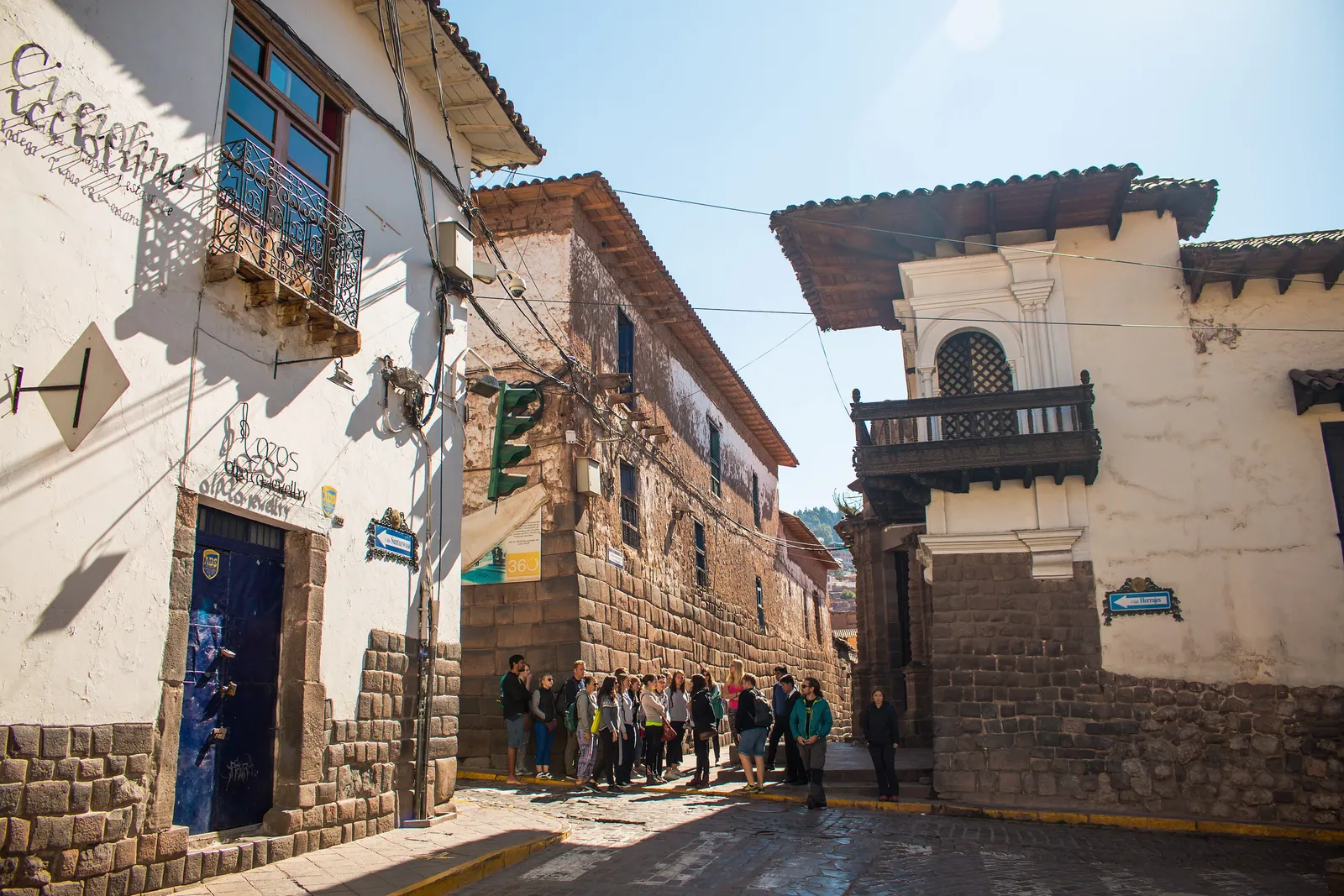
Today's Inti Raymi unfolds across Cusco on 24 June in three acts: a ceremony at the Qorikancha, the Inca sun temple beneath the church of Santo Domingo; a procession through the Plaza de Armas; and the principal pageant on the great terraces of the Sacsayhuamán fortress above the city, where hundreds of costumed performers enact the Inca rite. It is theatre rather than secret ceremony, but it is theatre with deep roots, and the city around it is genuinely festive for days.
Practically, 24 June falls in Cusco's dry, bright winter, and the city is at its busiest. Accommodation books out months ahead and the Sacsayhuamán pageant has paid seating. On the Andes to Antarctica journey, a Cusco chapter timed to late June can be built around the festival, but it must be planned early.
Candelaria: Puno's two weeks of dance
If Inti Raymi is the Andes' most famous festival, the Fiesta de la Virgen de la Candelaria in Puno, on the shore of Lake Titicaca, may be its most exuberant. Held across the first half of February and centred on 2 February, it is one of the largest festivals in South America and is inscribed on UNESCO's list of Intangible Cultural Heritage.
Candelaria's heart is dance. Tens of thousands of dancers and musicians, organised into troupes representing the city's neighbourhoods and communities, perform in long parades — the morenada with its barrel-shaped costumes, the diablada with its elaborate devil masks, and dozens more. The festival honours the Virgin of Candelaria, the patron of Puno, but the dances carry older Aymara and Quechua meaning, and the mask workshops of Puno are an art form in themselves.
Corpus Christi and the saints of Cusco
Corpus Christi, falling in late May or June, is Cusco's other great festival and in some ways its most revealing. Fifteen statues of saints and virgins, each belonging to a different parish, are carried in procession into the cathedral, where they are said to 'gather' and converse before being returned to their churches. The custom is widely understood to echo a pre-Hispanic practice of bringing the mummified ancestors of the Inca into the plaza on ceremonial days.
Corpus Christi is also a food festival. The signature dish is chiriuchu, a cold plate that assembles guinea pig, chicken, sausage, cheese, seaweed, fish roe and maize — an edible map of the old Inca world, drawing ingredients from coast, highland and jungle onto a single plate. To eat chiriuchu in Cusco during Corpus Christi is to taste the festival's meaning directly.
Qoyllur Rit'i: the pilgrimage of the snow star
The most extraordinary, and the most demanding, of Andean festivals is Qoyllur Rit'i — the Snow Star — a pilgrimage held in late May or early June at a sanctuary at around 4,600 metres in the Sinakara valley, in the shadow of the Ausangate glacier. Tens of thousands of pilgrims climb to the site, and the festival is recognised by UNESCO as Intangible Cultural Heritage.
Qoyllur Rit'i fuses devotion to a painted image of Christ with reverence for the apus, the mountain spirits, and for the glacier itself. Costumed dancers called ukukus, figures who are part bear and part trickster, keep order through the night and once carried blocks of glacial ice back down the mountain as sacred water. As the glaciers retreat, that custom has changed — making the festival, among everything else, a barometer of a warming Andes.
This is a genuine high-altitude pilgrimage, not a spectator event, and it is best approached with humility, good acclimatisation and a guide who knows the community. It is not part of a standard itinerary, but for travellers on a private departure with the right preparation, it is one of the most powerful experiences the Andes offer.
How to travel a festival well
An Andean festival is not staged for tourists, even when tourists are welcome, and the traveller's job is to be a good guest. Watch where local people watch, ask before photographing dancers and especially religious images, and accept that processions run on their own time. Festival days mean closed shops, full restaurants and crowded streets — patience is part of the experience.
Timing a journey to a festival is rewarding but requires early planning, because the whole region books out around the big dates. The alternative is just as valid: arrive a little before or after, when the costumes are being made, the bands are rehearsing and the town is preparing. Some of the warmest encounters happen in the days around a festival rather than on the day itself.
Quick answers
When is Inti Raymi, and can I attend it on a journey?
Inti Raymi is held in Cusco every year on 24 June, in the dry winter season. The main pageant at Sacsayhuamán has paid seating, and the city is extremely busy. A Cusco chapter on the Andes to Antarctica journey can be timed around the festival, but accommodation and tickets must be arranged many months in advance.
Which Andean festival is best for a first visit?
For sheer accessibility and spectacle, Inti Raymi in Cusco and the Virgin of Candelaria in Puno are the easiest to plan around — both fall on fixed dates and welcome visitors. Qoyllur Rit'i is far more demanding: a high-altitude pilgrimage that asks for serious acclimatisation and is not a spectator event.
Is it acceptable to photograph Andean festivals?
Generally yes, in public processions and pageants, but with courtesy. Ask before photographing individuals, particularly dancers in costume and religious images being carried in procession, and never block a procession's path for a photograph. At Qoyllur Rit'i and other devotional events, follow your guide's lead on what is and is not appropriate.
Let the reading become a route.
When an article sparks something, our planners are the next step. Tell us what you are dreaming of.