The Great Rift Valley Explained: A Continent Pulling Apart
The Great Rift Valley is not a single valley but a continent-scale fracture where Africa is slowly tearing itself in two. Here is what is happening beneath the highlands, and why it shaped Ethiopia's lakes, volcanoes and human story.
The Great Rift Valley is the surface expression of a vast geological process: the African continent is splitting apart. Along a system of fractures running thousands of kilometres from the Red Sea down through Ethiopia and East Africa, the Earth's crust is being stretched, thinned and dropped, creating a chain of valleys, escarpments, lakes and volcanoes. In Ethiopia this takes the form of the Main Ethiopian Rift, a broad lowland trough cutting diagonally across the highlands.
Geologists describe what is forming here as an incipient plate boundary — the early, slow birth of a new ocean. The land has not parted yet, and will not within any human timescale, but the evidence is everywhere: parallel cliffs marking where blocks of crust have subsided, hot springs, fresh lava fields, and a string of lakes lying in the floor of the rift. To travel through Ethiopia is to travel through a landscape being actively rebuilt from below.
What a rift valley actually is
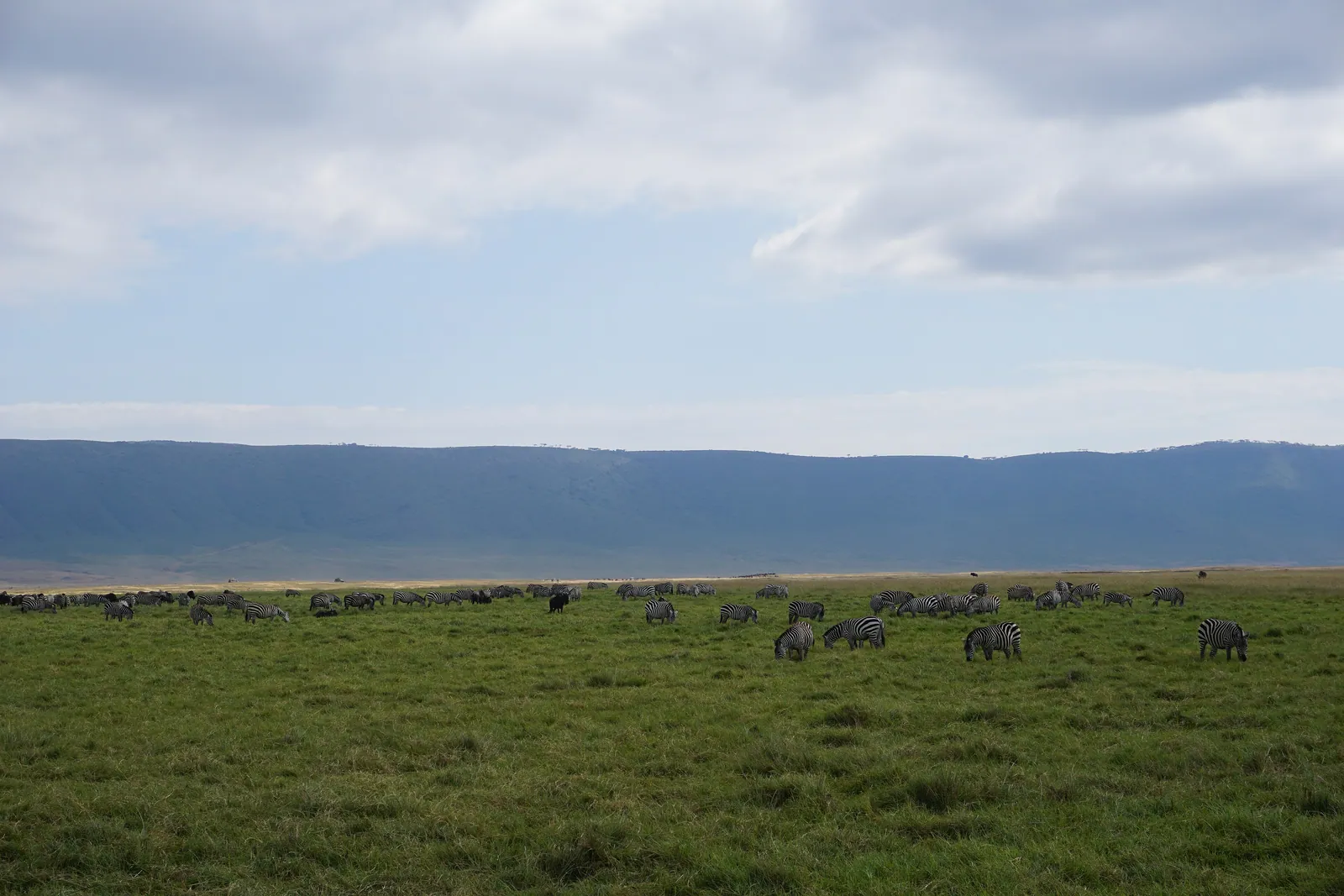
A rift valley forms where the crust is pulled in opposite directions. As it stretches, it cannot simply thin indefinitely; instead it fractures along roughly parallel faults, and the central strip of land drops down between them. That sunken corridor is the rift valley floor; the raised, fractured edges become the escarpments that wall it. The Main Ethiopian Rift shows this textbook structure clearly, with highlands standing high on either side of a lower central plain.
The driver in East Africa is the slow divergence of tectonic plates. The African plate is splitting into two smaller blocks — often called the Nubian and Somali plates — pulling apart at roughly the speed a fingernail grows. Over millions of years even that imperceptible rate adds up to a landscape utterly transformed.
From the Afar Triangle to the lakes
The Ethiopian rift is geologically dramatic because of where it sits. In the north-east lies the Afar Depression, one of the lowest and hottest places on the planet, where three arms of rifting meet at a junction of plates. Parts of Afar lie below sea level, and its volcanic landscape — lava lakes, salt flats and sulphur fields — is among the most extreme on Earth.
South-westward, the rift broadens into the Main Ethiopian Rift, where the floor is dotted with lakes and volcanoes rather than salt deserts. This is the more travelled stretch: a corridor of open country and water threading between the northern and southern highlands. The transition from molten extremity in the north to fertile lake country further south is one continuous geological story.
Volcanoes, lakes and hot ground
Where crust thins, molten rock from below finds it easier to reach the surface, so rifts are volcanic places. Ethiopia's rift floor carries numerous volcanoes, calderas and lava flows, some young in geological terms. Heat near the surface also feeds hot springs and steam vents, and it gives the region real potential for geothermal energy.
The rift's lakes occupy the lowest ground on the valley floor, sitting in basins formed by faulting. Because that floor has no outlet to the sea in many places, some lakes are closed basins where water leaves only by evaporation, concentrating dissolved salts and minerals over time. This is why neighbouring rift lakes can differ so sharply — some fresh, some highly alkaline — depending on how water enters and leaves each basin.
Why the rift matters for human history
The East African Rift is often called the cradle of humankind, and its geology is part of the reason. As the rift dropped and rivers and lakes shifted across its floor, layers of sediment and volcanic ash were laid down and later exposed by faulting and erosion. Those layers preserved and revealed the bones of early human ancestors, including the famous Ethiopian fossil known as Lucy.
The volcanic ash beds are especially valuable: they can be dated with precision, allowing scientists to place fossils in time. In a quiet sense, the same forces tearing the continent apart also created an open archive of human origins — and made Ethiopia central to the story of where we come from.
Reading the rift on The Great Rift journey
The Great Rift journey is named for this landscape, and travelling it makes the geology legible. From the highlands the rift appears as a vast lowland trough; descending into it, the parallel escarpments resolve into the literal edges of fractured crust, and the lakes line up along the valley floor like beads on a thread.
Our guides point out the features that tell the story — fault scarps, cones, hot springs, the abrupt change in vegetation between highland and rift floor — so that what could read as scenery becomes evidence. Understood this way, the rift is not merely a backdrop but the main character: a continent caught, visibly, in the act of coming apart.
Quick answers
Is the Great Rift Valley still forming?
Yes. The East African Rift is geologically active, with the crust slowly stretching and faulting as tectonic plates pull apart. Earthquakes, volcanic activity and ground deformation all continue today. Over millions of years the process may eventually split East Africa from the rest of the continent, but not within any human timescale.
Why are some Rift Valley lakes salty and others fresh?
It depends on whether a lake has an outlet. Lakes in closed basins lose water only through evaporation, which concentrates dissolved salts and minerals over time, making them alkaline. Lakes that drain onward stay fresher. Because the rift floor is a patchwork of separate basins, neighbouring lakes can differ greatly.
Why is the Rift Valley linked to human origins?
Rifting created subsiding basins where sediments and datable volcanic ash accumulated, preserving fossils, while later faulting and erosion exposed those layers. This combination made East Africa, and Ethiopia in particular, one of the richest regions in the world for the bones of early human ancestors, including Lucy.
Let the reading become a route.
When an article sparks something, our planners are the next step. Tell us what you are dreaming of.