A Field Guide to the Highest Places on Our Journeys
From a 3,400-metre Andean capital to a 5,000-metre Tibetan pass, a clear-eyed survey of where our six grand journeys climb highest — what each altitude feels like, and how the itineraries reach it kindly.
Of the six Viajes Globales grand journeys, only three climb high enough for altitude to be a real planning consideration: Andes to Antarctica, The Silk Road Reborn and The Long Way East. The rest stay low. So if you are weighing where the thin air actually lies, the answer is specific, and reassuring — the high points are known, deliberate, and approached in steps.
This field guide walks through them from gentlest to highest, with the elevations that matter and an honest sense of what each feels like. Used together with a sensible itinerary, none of these altitudes need be daunting; the point of knowing them is simply to arrive prepared.
Up to 2,500 metres: noticeable, rarely troublesome
Many travellers feel a faint difference by 2,000 to 2,500 metres — a slightly quicker pulse, marginally shorter breath on a staircase — but genuine altitude illness is uncommon here. Machu Picchu, on Andes to Antarctica, sits at 2,430 metres; the Ethiopian highlands around Lalibela on The Great Rift hover near 2,500.
At these heights the body adjusts almost invisibly within a day. The sensible habits — extra water, an easy first afternoon, sun protection — are worth keeping, but this band asks little of most healthy travellers and is best thought of as a gentle on-ramp to anything higher.
3,000 to 3,500 metres: the working altitude of the Andes
This is where altitude becomes a real, manageable presence. Cusco stands at roughly 3,400 metres — already higher than almost any peak in the Alps — and the Tian Shan pastures around Song-Köl on The Silk Road Reborn reach just over 3,000. Here, every breath carries roughly a third less oxygen than at sea level.
Acute mountain sickness is genuinely common in this band, usually mild: a headache, broken sleep, a flat appetite for the first day or two. It is also entirely answerable with a rest day on arrival and a gradual approach. On Andes to Antarctica we spend the first nights lower in the Sacred Valley precisely so that Cusco’s altitude is met from below rather than head-on.
3,600 to 4,000 metres: the Bolivian altiplano and Lake Titicaca
Higher again lies the altiplano — the high plateau shared by Peru and Bolivia. Lake Titicaca sits at about 3,810 metres; the salt flats of Uyuni at roughly 3,660; the city of La Paz spreads dramatically between 3,200 and over 4,000. Here the air delivers close to 40 percent less oxygen than at the coast.
By this altitude acclimatisation is not optional preparation but the structural backbone of the itinerary. The body that reaches the altiplano having already spent a patient week in Cusco copes far better than one arriving fresh. Nights feel longer, sleep is lighter, and the cold is sharper — all normal, all easier when the ascent has been staged rather than rushed.
Above 4,500 metres: the high passes of the Himalaya and Tibet
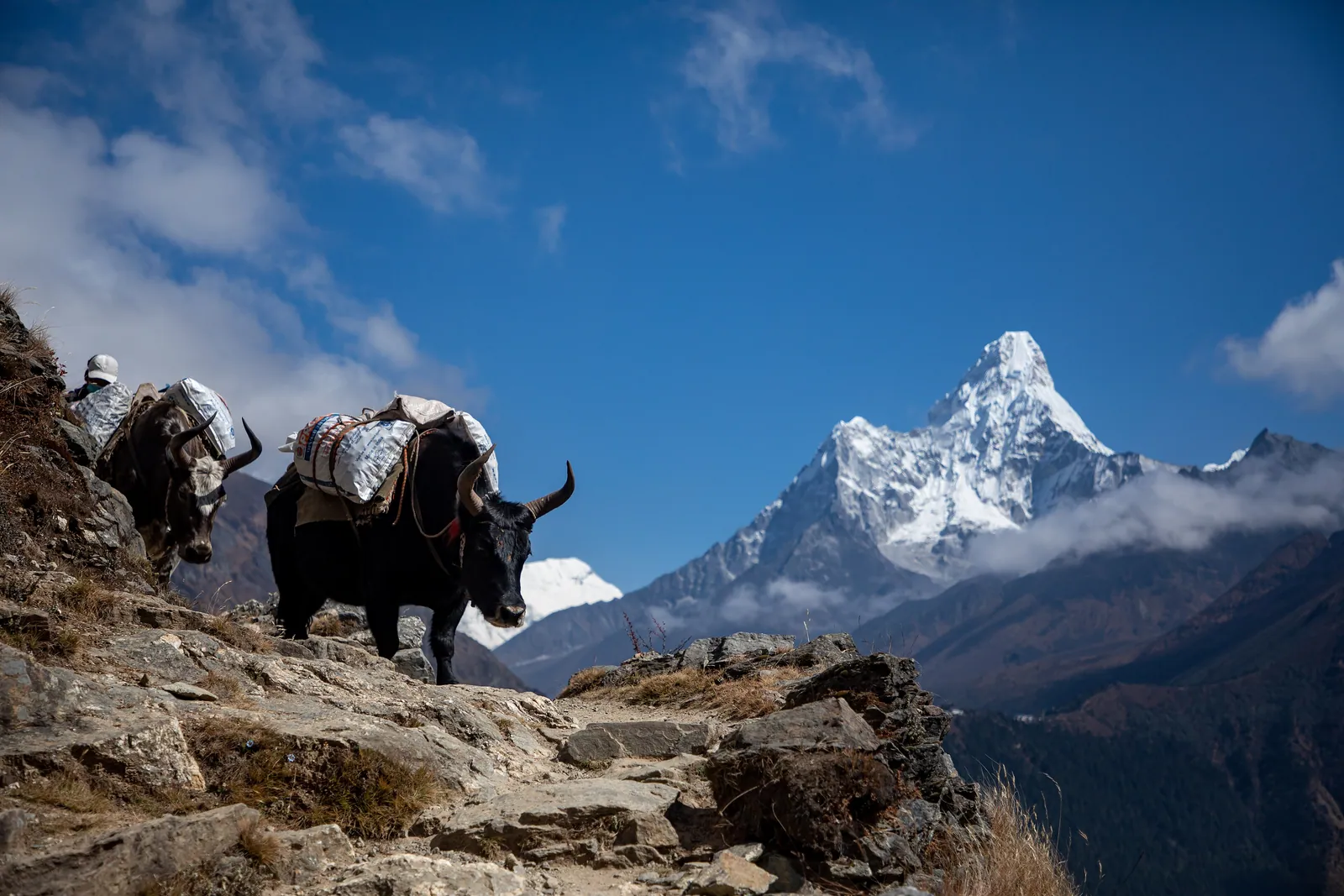
The greatest heights on any of our journeys belong to The Long Way East, where the route crosses the Tibetan plateau and the Himalaya. Lhasa lies near 3,650 metres; the plateau’s road passes climb well above 5,000, and the classic viewpoints toward Everest reach into that same rarefied band, where oxygen is roughly half that of sea level.
This is serious altitude, and the journey treats it as such. Travellers reach it only after extended acclimatisation lower down, the high passes are crossed by day rather than slept on, and guides carry oximeters and oxygen. No technical climbing is involved anywhere — but at these heights the schedule’s caution is the whole point, and descent is always the available answer if a traveller does not settle.
Reading an itinerary for its altitude profile
When you study any high journey, trace the sleeping altitudes rather than the headline summits — it is the height at which you spend the night that governs how you feel. Look for a rest day on arrival into high country, for nights placed lower than the day’s peak, and for ascent that rarely exceeds 500 metres of sleeping height a day once above 3,000 metres.
Every Viajes Globales journey publishes this profile honestly, and our pre-departure medical questionnaire exists to match it to you. If you have a heart or lung condition, the difference between a 3,400-metre journey and a 5,000-metre one is exactly the kind of thing to discuss with your doctor before you choose — and exactly the kind of thing we would rather surface early than late.
Quick answers
Which Viajes Globales journey goes highest?
The Long Way East climbs highest, crossing the Tibetan plateau and Himalayan road passes well above 5,000 metres. Andes to Antarctica reaches the Andean altiplano around 3,600 to 4,000 metres. The Silk Road Reborn tops out gently in the Kyrgyz Tian Shan at just over 3,000 metres. The Pacific Arc, The Great Rift and Beyond the Blue stay essentially low.
Is Machu Picchu a high-altitude site?
Less than many expect. Machu Picchu sits at about 2,430 metres — meaningfully lower than Cusco at 3,400. Because our itineraries reach it only after time spent acclimatising in Cusco and the Sacred Valley, most travellers find the citadel itself one of the more comfortable points of the Andean leg, not one of the harder ones.
Can I choose a journey that avoids altitude entirely?
Yes. The Pacific Arc, The Great Rift and Beyond the Blue stay at low elevations throughout, with only brief, gentle highland stretches. If altitude is a concern for medical reasons, these journeys remove the question almost completely — and our team is glad to advise on the best fit before you commit.
Let the reading become a route.
When an article sparks something, our planners are the next step. Tell us what you are dreaming of.