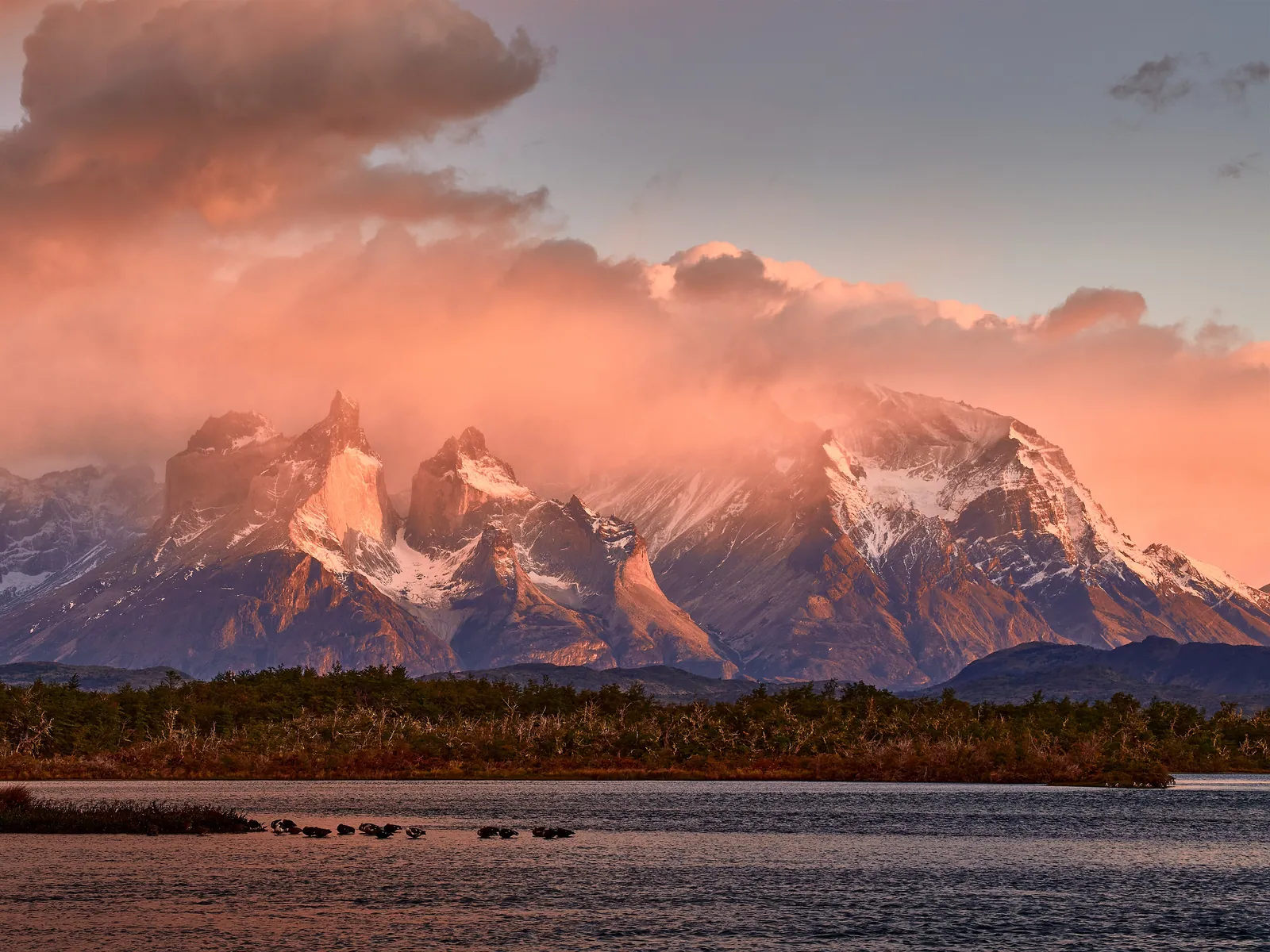
The O Circuit: The Full Loop of Paine
The O Circuit wraps the entire Paine massif — seven to nine days, a wild and lonely back side, and the John Garner Pass above the great Grey Glacier. It is the harder, quieter sibling of the W.
If the W Trek is the famous front face of Torres del Paine, the O Circuit is the whole sculpture. The O loops the entire Paine massif — roughly 110 to 130 kilometres over seven to nine days — by adding a remote northern half to the three southern valleys of the W. Walkers who complete it see the towers, the Cuernos and Grey Glacier, and also a back country that most park visitors never glimpse.
It is a step up in commitment rather than in technique. The trails are longer, the refugios sparser, the weather lonelier to meet, and one day crosses a genuine mountain pass. For a fit traveller with multi-day trekking behind them, the O is among the great walks of the Americas — and a natural extension of the Patagonian leg of our Andes to Antarctica journey for those who want the deeper version.
How the O differs from the W
The O Circuit contains the W inside it. You walk the same three southern valleys — Base Torres, the French Valley, Grey Glacier — but you also complete the northern arc that closes the loop, passing through the Seron and Dickson sectors and crossing the John Garner Pass. Where the W is four or five days, the O is seven to nine.
The northern half changes the character of the trip entirely. The W is sociable and well-travelled; the back side of the O is quiet, exposed and committing, with long stretches between shelters and far fewer walkers for company. The park requires the O to be walked in one direction only — anticlockwise — which keeps trekkers spaced out and the narrow pass descent flowing one way.
The John Garner Pass and the great glacier
The crux of the circuit is the John Garner Pass, at roughly 1,200 metres the high point of the route. The climb to it is steep and frequently muddy; the pass itself is fully exposed and can be brutally windy or snowbound even in summer, and rangers will close it in bad weather.
What waits on the far side is the reward that defines the O. As you begin the long descent, the Southern Patagonian Ice Field opens beneath you and Grey Glacier unfurls — a vast river of ice running to the horizon, far larger than the tongue you later see from the lakeshore. Many walkers call this the finest single view in the park, and it is reachable only on the full circuit.
A representative day-by-day
A typical anticlockwise O begins from the Laguna Amarga sector and heads north into the Seron sector, an easy rolling first day. From there it continues to the Dickson sector beside its pale lake, then up the Los Perros valley past a glacier and moraine lake to the campsite below the pass.
The pass day is the hardest: the John Garner crossing and the long, knee-testing descent to the Grey sector. From Grey the route rejoins the W — Paine Grande, the French Valley to the Británico lookout, the Cuernos shore, and finally the dawn climb to the Base Torres lookout. Daily distances range from gentle 15-kilometre days to demanding stretches above 20 kilometres with serious ascent.
Logistics, permits and the booking reality
The O is more logistically demanding than the W. Accommodation on the northern side is a mix of basic refugios and campsites run by the park concessionaires and CONAF, and there are fewer of them, so every night must be booked and slots are scarce. The park caps numbers, checks reservations at entry, and will not let anyone start the circuit without proof of every booking.
There is also a daily start cut-off for the pass and the northern sectors, intended to keep walkers from being caught out late on exposed ground. This is precisely the kind of trip where guiding earns its keep: on our journeys the full chain of refugios and campsites, the entry permits and the transfers are arranged in advance, and a guide reads the weather window for the pass so the group crosses on a sensible day.
Who the O is for
The O suits travellers who already enjoy multi-day walking, are comfortable with long days, rough trails and basic accommodation, and want solitude rather than the busier rhythm of the W. It is not a beginner's trek, and the northern half is no place to discover that your boots do not fit.
If you are unsure, the honest middle path is to walk the W first — many of our travellers do exactly that — and save the O for a return journey. But for those ready to give Patagonia a full week on foot, circling the entire massif and meeting its wild side is an experience the front-country simply cannot offer.
Quick answers
How hard is the O Circuit compared with the W?
Noticeably harder. The O adds two to four days, a remote and exposed northern section, and the John Garner Pass at around 1,200 metres with a long steep descent. Distances per day are similar to the W but sustained over more days, accommodation is more basic, and the weather is lonelier to face. It suits experienced multi-day walkers.
Can the O Circuit be walked in either direction?
No. The park requires the O to be walked anticlockwise. This spaces walkers out, manages the one-way descent from the John Garner Pass, and keeps the narrow back-country trails flowing in a single direction. There is also a daily cut-off time for starting the northern sectors and the pass.
Do I need a guide for the O Circuit?
It can be walked independently, but the logistics are demanding: limited northern refugios and campsites sell out far ahead, every night must be pre-booked and verified at entry, and the pass can close in bad weather. A guided trip handles the bookings and permits and judges the weather window for the pass, which removes the riskiest variables.
Let the reading become a route.
When an article sparks something, our planners are the next step. Tell us what you are dreaming of.