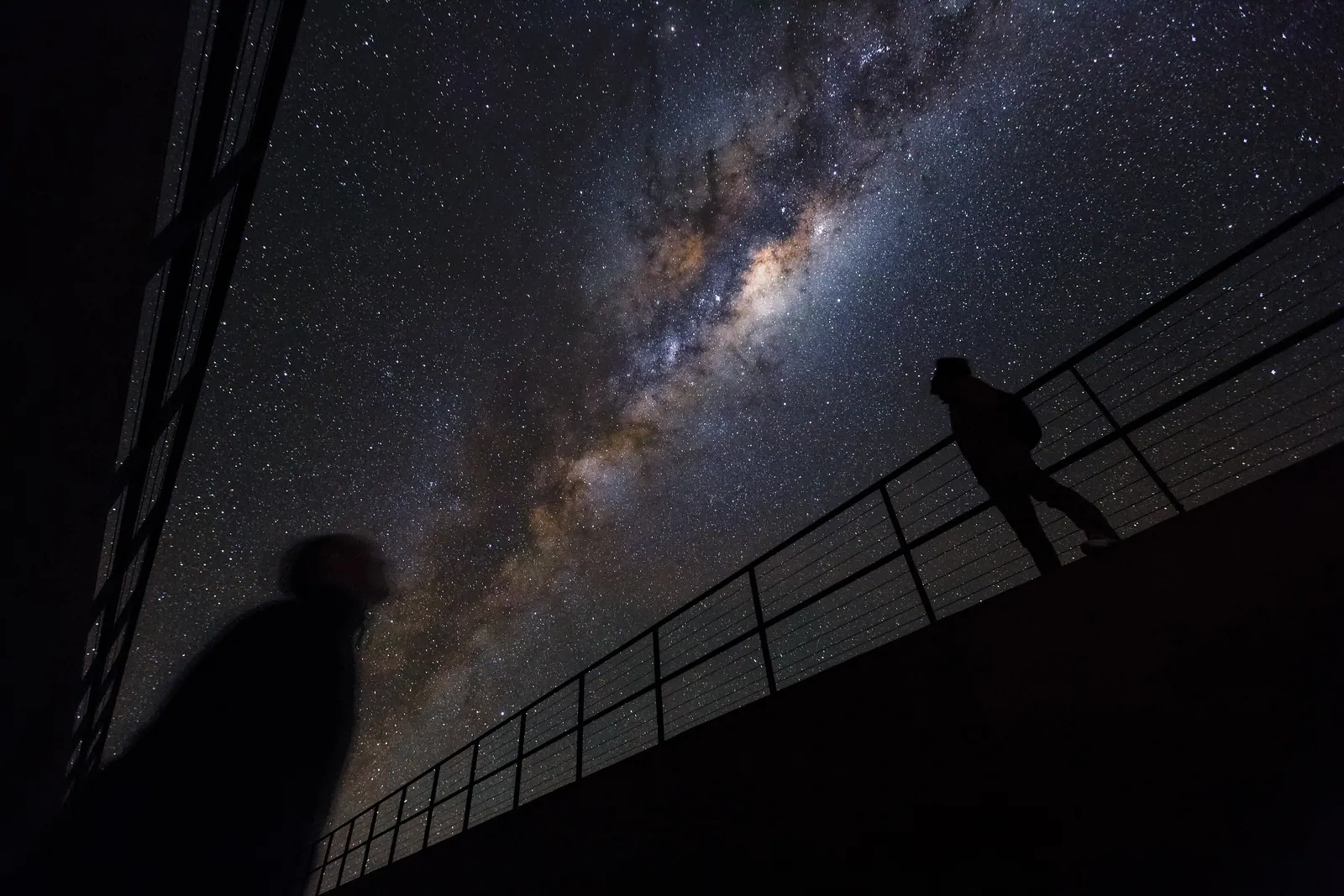
The Other Side of the World
It is one of the oldest phrases in travel and one of the least examined. What do we really mean by the far side of the Earth, and why does it still pull at us in the jet age?
Every traveller has used the phrase, and almost no traveller has stopped to ask what it means. The other side of the world. It is shorthand for somewhere distant, somewhere foreign, somewhere it would take real effort to reach. But it is also, if you sit with it, a strange thing to say about a sphere — because a sphere has no sides, and every point on it is the centre of its own horizon.
This essay takes the phrase seriously. It argues that the other side of the world is not a place on a map but a relationship between two places, and that the modern traveller, who can reach any coordinate in a day, has not abolished the far side so much as forgotten where it is. Finding it again is one of the quiet aims of a slow journey.
A phrase older than the round Earth
The expression carries a flat-Earth ghost inside it. To speak of the world having sides is to imagine a thing with edges, a vast table over which one might travel to the far rim. The ancient and medieval imagination did exactly that, and the language never quite caught up with the geometry.
Even after the Earth was known to be round, the idea of an opposite side survived in the word antipodes — literally the people with feet pointing the other way, those who stand, relative to you, upside down. The antipodes were long imagined as a kind of mirror-world, everything reversed. The phrase persists because it answers a need the globe does not satisfy: the need for somewhere that is not merely far but opposite.
Distance is a relationship, not a coordinate
Here is the heart of it. No place is intrinsically the other side of the world. A village in the Andes is the centre of the world to the people who live there and the far side of it to someone in Spain — and the reverse is equally true. Farness is not a property of a destination. It is a measurement taken from where you happen to stand.
This is why a grand journey from Latin America or Spain has a particular shape. To set out from Cusco or Madrid toward Xi'an, or from Cairo toward Cape Town, is to travel along a real and specific line of increasing strangeness — your strangeness, measured from your own doorstep. The other side of the world is wherever the line from home runs out.
Speed hid the far side without removing it
The modern traveller is tempted to believe the far side is gone. If Tokyo is a day away and Antarctica a charter flight, what is left of opposite? But speed did not abolish distance. It only stopped letting us feel it. The kilometres are all still there; the aeroplane simply passes over them too fast and too high for the body to register.
A slow journey gives the far side back its size. The Long Way East crosses the entire breadth of Asia from Spain by land and sea; somewhere in the middle of that passage there is a day when you are demonstrably as far from home as the route will ever take you — and on a slow journey, unlike a flight, you actually arrive at that day, and feel it, rather than skipping over it in your sleep.
Why opposite still matters to us
There is a reason the phrase has outlived the cosmology that produced it. Human beings seem to need an antipodes — a place defined less by its own qualities than by its difference from home. We use the far side of the world as a measuring stick for ourselves. We go there partly to find out which of our habits are human and which were only local all along.
The traveller who stands in a Kyrgyz summer pasture on The Silk Road Reborn, or watches the polar night over Arctic Norway on Beyond the Blue, is not only seeing an unfamiliar landscape. They are standing at the far end of their own line and looking back. The other side of the world is, in the end, the best vantage point we have on the side we came from.
Reaching the far side on purpose
If the far side is a relationship, it can be honoured or it can be wasted. Fly there overnight and you have technically reached it while imaginatively skipping it; you stand on the opposite point without ever having felt the opposition. The distance was real but you were not present for it.
To travel the far side slowly — overland where the land allows, by sea where the sea does — is to let the relationship between home and not-home unfold at a pace the mind can follow. By the time you reach the journey's farthest point, you have earned the word opposite. You know, in your body, exactly how much world is folded into the phrase, and that knowledge is itself a kind of arrival.
Quick answers
Where is the actual other side of the world from where I live?
Strictly, your antipode is the point diametrically opposite your own — for much of Spain and southern Latin America that falls in the Pacific or in New Zealand. But the phrase has always meant something looser and more human: the far end of the line that runs from your own doorstep into the most unfamiliar country you can reach. That end moves with you.
If a flight can reach anywhere in a day, hasn't the far side of the world disappeared?
Only the feeling of it has. The kilometres are unchanged; the aeroplane simply crosses them too fast and too high to register. A slow journey restores the far side its true scale by making you present for every stage of the distance, so that you arrive having genuinely crossed the world rather than merely landed on the other side of it.
Let the reading become a route.
When an article sparks something, our planners are the next step. Tell us what you are dreaming of.