The Patagonian Wind, Explained
Travellers remember Patagonia's wind long after the glaciers blur. It is not bad luck or freak weather — it is geography. Here is why the far south blows so hard, and how to walk with it rather than against it.
Ask anyone who has walked in southern Patagonia what surprised them most, and a striking number will say the wind. It is a near-constant presence — a steady pressure on exposed trails, rising at times to gusts that can stop a walker mid-stride or send spray sheeting off a lake. It is the region's defining weather, and it shapes everything from the lean of the trees to the timing of a day's hike.
The good news is that the wind is not random misfortune. It is the predictable result of where Patagonia sits on the planet, and once you understand the cause you can plan around it. This article explains the mechanism behind the famous Patagonian wind and offers the practical habits our guides rely on across the southern legs of the Andes to Antarctica journey.
The roaring forties and the screaming fifties
Patagonia lies in the band of latitudes that sailors long ago named the Roaring Forties and, further south, the Furious Fifties. In these latitudes a powerful belt of westerly winds circles the entire globe, driven by the temperature difference between the warm tropics and the cold polar region and bent into a steady west-to-east flow by the Earth's rotation.
What makes the Southern Hemisphere version so relentless is the lack of land. North of the equator, continents constantly interrupt and slow the westerlies. In the far south there is almost nothing — a near-unbroken ring of ocean around Antarctica — so the wind builds and runs without obstruction. Patagonia is one of the very few inhabited landmasses that sits squarely in its path.
Why the Andes make it worse
Into that already windy latitude, geography adds a second amplifier: the Andes. The mountain chain runs roughly north to south, directly across the path of the west-to-east winds, forcing the moving air to rise, squeeze and accelerate as it crosses the barrier.
On the windward Chilean side the rising air cools and dumps its moisture as rain and snow — which is why the Southern Patagonian Ice Field exists. Having shed its water, the air spills down the eastern, Argentine side warmer, drier and often faster, a phenomenon related to what meteorologists call a foehn wind. This is why the Argentine steppe is so dry, so brown and so famously gusty, and why a clear, sunny day there can still be fiercely windy.
When the wind is strongest
The wind blows year-round, but it is generally at its strongest in the southern spring and summer, roughly November to February — which is, inevitably, the main trekking season. Afternoons are typically windier than mornings, as daytime heating energises the air.
Within a single day the wind is also intensely local. It funnels and accelerates through valleys, across passes and over open water, so a sheltered forest trail can be calm while the lakeshore a kilometre on is barely walkable. Knowing where a route is exposed — and timing those sections for the calmer early hours — is a large part of walking Patagonia comfortably.
Walking with the wind
A few habits make an enormous difference. Start the big, exposed days early, before the afternoon strengthening. Use trekking poles — in strong Patagonian gusts they are a genuine balance and safety aid, not a comfort. On exposed traverses, especially near drop-offs or lake edges, slow down, widen your stance and brace for the gust rather than fighting it.
Dress for it, too. Wind strips heat from the body far faster than still cold air, so a properly windproof shell matters as much as an insulating layer, and a hat, gloves and buff protect the parts the wind finds first. Eye protection helps against grit and spray. And accept the wind as part of the place: secure loose items, hold your phone and hat firmly near water, and let the forecast guide which valley you choose for the day.
The wind as part of the landscape
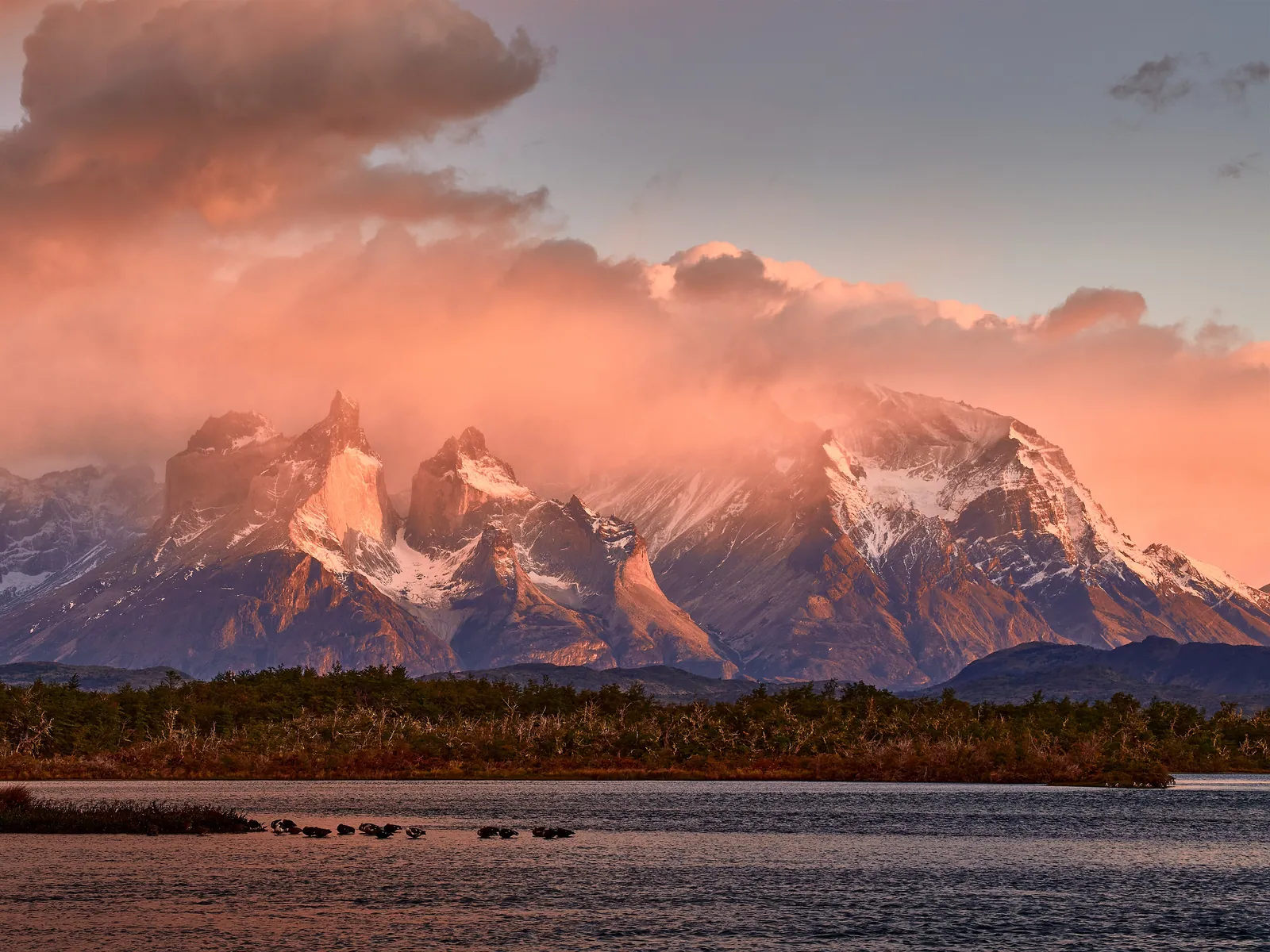
It helps to see the wind not as an obstacle but as the force that made the scenery. The flagged, one-sided shape of Patagonian trees, the scoured grasslands, the ice field fed by moisture wrung from the westerlies, even the streaming cloud that gives Mount Fitz Roy its Tehuelche name, the smoking mountain — all of it is the wind's signature.
Travellers who arrive expecting calm are frustrated; those who arrive expecting wind tend to be exhilarated by it. On our journeys we plan the southern days around it deliberately — exposed walks early, sheltered options held in reserve — so the wind becomes part of the story of Patagonia rather than a complaint about it.
Quick answers
Why is Patagonia so windy?
Patagonia sits in the Roaring Forties and Furious Fifties, a latitude band where strong westerly winds circle the globe almost unobstructed because there is so little land in the far Southern Hemisphere to slow them. The Andes then force this moving air upward and accelerate it as it crosses the range. The combination of an exposed latitude and a mountain barrier makes the wind unusually persistent and strong.
What time of year is the wind worst?
The wind blows all year but is generally strongest in the southern spring and summer, roughly November to February, which is also the main trekking season. Within any given day, afternoons are usually windier than mornings because daytime heating energises the air. This is why guided treks tend to start exposed sections early.
How should I prepare for hiking in strong wind?
Carry a properly windproof, waterproof shell — wind strips body heat fast — plus a hat, gloves and a buff. Use trekking poles for balance in gusts, start exposed days early before the afternoon strengthening, and slow down and widen your stance on exposed traverses near drop-offs or water. Treat the wind as expected weather and plan the day's route around sheltered and exposed sections.
Let the reading become a route.
When an article sparks something, our planners are the next step. Tell us what you are dreaming of.