The Lost City That Was Never Lost: A History of Machu Picchu
Built in the fifteenth century, abandoned within a hundred years and famously brought to the world's attention in 1911 — yet local families farmed its terraces all along. The real story of Machu Picchu.
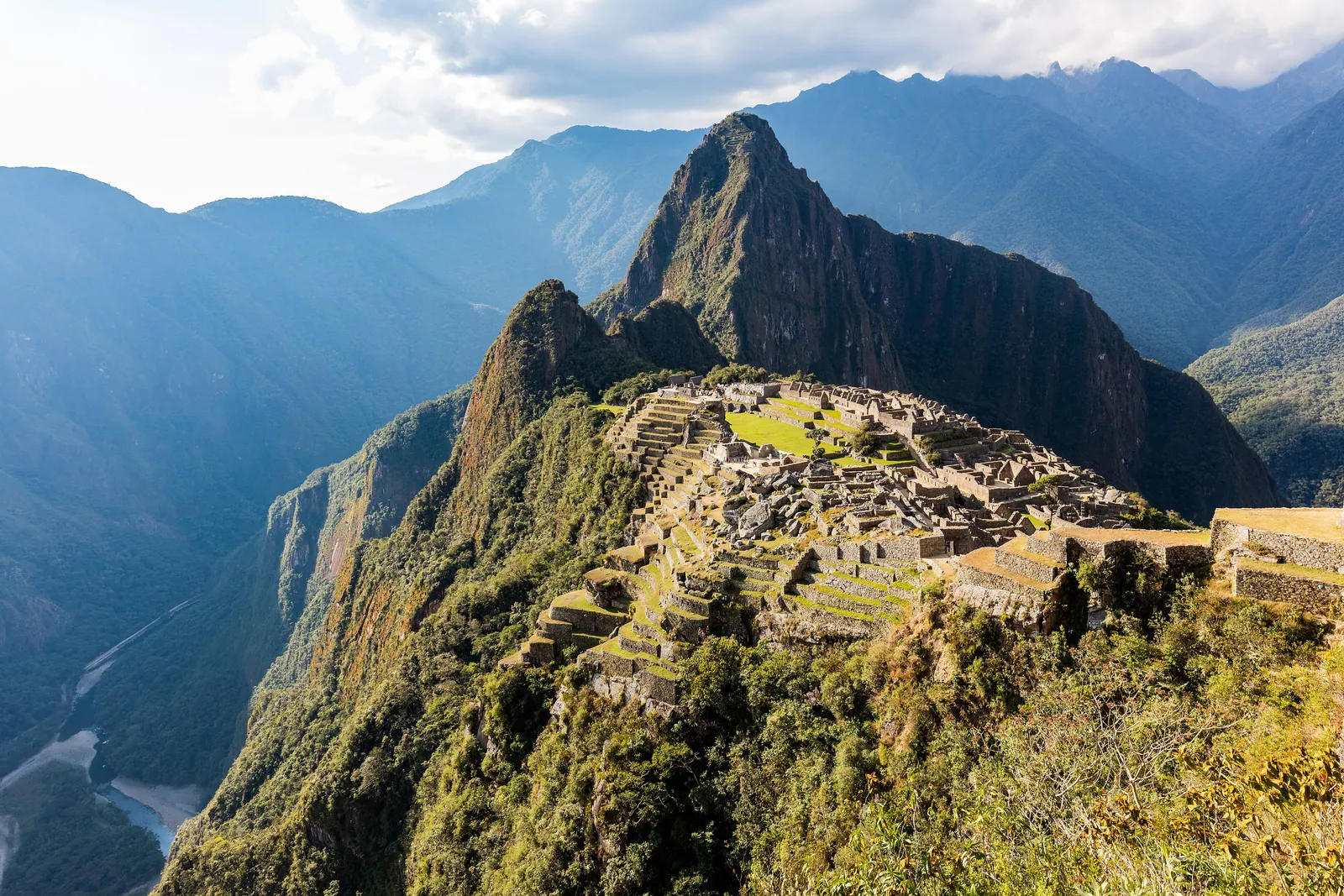
Machu Picchu was built around the middle of the fifteenth century, most likely as a royal estate of the Inca ruler Pachacuti, and was used for only about a hundred years before it was abandoned in the turbulent decades around the Spanish conquest. It sits on a high ridge at roughly 2,430 metres above the Urubamba river.
It is often called the lost city, but that phrase is misleading. The Spanish never found it, so it escaped destruction — yet it was never truly lost. Local Andean families knew of it and farmed parts of it for generations. What happened in 1911 was its arrival into global awareness, not its discovery.
An Inca royal estate
Machu Picchu was almost certainly commissioned by Pachacuti, the ninth Sapa Inca, the expansionist ruler who transformed the Inca state into an empire. Scholars read the site as a royal estate — a retreat and ceremonial centre for the ruler and his household — rather than a city in the ordinary sense.
Its construction is a masterclass in Inca engineering. The famous dry-stone masonry, with blocks shaped so precisely that no mortar was needed, was built to flex and settle in an earthquake-prone landscape. An elaborate system of terraces, channels and drainage allowed the steep ridge to be farmed and kept the buildings stable through the heavy mountain rains.
Astronomy, agriculture and the sacred landscape
The site weaves together the practical and the sacred. Stone structures such as the Intihuatana and the Temple of the Sun align with solar events, marking solstices and the agricultural year — the Inca calendar written into architecture.
The terraces were not merely decorative. They created cultivable land, managed erosion and drainage, and may have been used to grow a range of crops at different microclimates on the slope. The mountains themselves were sacred — apus, the revered peaks — so the placement of Machu Picchu within this dramatic ridge of summits was an act of devotion as much as design.
Abandonment
Machu Picchu was abandoned roughly a century after it was built, in the chaotic years surrounding the Spanish conquest of the 1530s. The reasons were probably layered: the collapse of the imperial system that sustained such an estate, the upheaval of conquest and civil war, and very likely the catastrophic spread of European diseases.
Because the conquistadors never located the site, it was spared the looting and dismantling that befell so much of the Inca world. It was left instead to the cloud forest, which slowly grew over its plazas and terraces while a handful of local families continued to live and farm nearby.
1911 and the wider world
In July 1911 the American explorer and historian Hiram Bingham, guided by local residents, reached Machu Picchu and recognised what he had found. His subsequent expeditions, surveys and writing — amplified by the National Geographic Society — brought the site to international attention and made its image famous worldwide.
The accurate way to describe this is scientific documentation and global publicity, not discovery. Local Quechua-speaking families had long known the ruins; some were farming its terraces when Bingham arrived. His expeditions also removed thousands of artefacts to Yale University, which after a long dispute were eventually returned to Cusco — a reminder that the history of Machu Picchu includes the history of how it has been studied and claimed.
Machu Picchu today
Machu Picchu was inscribed as a UNESCO World Heritage Site in 1983 — the Historic Sanctuary of Machu Picchu, recognised for both its cultural and its natural value — and it remains one of the most visited and most studied archaeological sites in the Americas. The capped tickets and circuits exist precisely because its fame now threatens the fragile thing that fame is built on.
To stand among its walls is to read four centuries at once: Inca ambition and engineering, abandonment and forest, and a modern story of rediscovery, dispute and conservation. On Andes to Antarctica we set the visit in that context — with time in Cusco, the former Inca capital, and the Sacred Valley first — so the citadel is understood, not merely photographed.
Quick answers
Who built Machu Picchu, and when?
Machu Picchu was built around the mid-fifteenth century, most likely as a royal estate of the Inca emperor Pachacuti. It was used for roughly a hundred years before being abandoned in the upheaval surrounding the Spanish conquest in the sixteenth century.
Did Hiram Bingham really discover Machu Picchu?
Not in the strict sense. Bingham reached and scientifically documented the site in 1911 and brought it to global attention, but local Andean families already knew of it and were farming nearby. It is more accurate to say he publicised and surveyed the site rather than discovered it.
Why was Machu Picchu abandoned?
It was abandoned about a century after construction, in the chaotic decades around the Spanish conquest. The likely causes combine the collapse of the Inca imperial system that sustained the estate, the disruption of conquest and civil war, and the devastating spread of introduced European diseases.
Let the reading become a route.
When an article sparks something, our planners are the next step. Tell us what you are dreaming of.