The World's Great Multi-Day Walks: A Field Guide
Some trails have become shorthand for the regions they cross. Here is a working guide to the canonical multi-day walks of the world — what each one is, how long it takes, and the season that suits it.
There is a small group of multi-day walks that have become famous enough to stand for whole landscapes — the W for Patagonia, the Inca Trail for the Andes, the trails of the Khumbu for the Himalaya. Most are between three and twelve days long, most are walked hut to hut or lodge to lodge or with a support team, and most are within reach of a fit, ordinary traveller rather than only a mountaineer.
This is a field guide to that group: what each walk actually is, how many days and kilometres it asks, and when to go. None of these is a technical climb. What they share is scale, a clear narrative arc, and the particular satisfaction of crossing a great landscape under your own power.
The W and the O, Torres del Paine
Chilean Patagonia's Torres del Paine holds two of the most loved walks in the southern hemisphere. The W Trek is a four- or five-day route of roughly 70 to 100 kilometres that climbs into three valleys — to the granite towers, up the French Valley, and out to Grey Glacier — sleeping in a chain of refugios. The O Circuit adds the wild, quieter northern back of the massif and the high John Garner Pass, making a seven- to nine-day loop.
Neither is technical, but both involve long days on rocky, root-laced trails and Patagonia's famous wind, which can genuinely unbalance a walker. The season runs roughly November to March. The W forms the Patagonian heart of our Andes to Antarctica journey, walked refugio to refugio with a light daypack.
The Inca Trail and its alternatives, Peru
The classic Inca Trail is a four-day, roughly 43-kilometre walk along original Inca paving from the Sacred Valley to Machu Picchu, crossing the 4,215-metre Warmiwanusca, or Dead Woman's Pass, and arriving through the Sun Gate at dawn. It is permit-limited, closed each February for maintenance, and books out months ahead.
When permits are gone — or when walkers want fewer people — the Salkantay, Lares and Choquequirao routes offer superb alternatives, higher and wilder, often walked over four to five days. All sit at real altitude, so they belong late in a journey that has already climbed gradually. They feature on Andes to Antarctica as the walking approach to Machu Picchu.
The teahouse treks of the Himalaya, Nepal
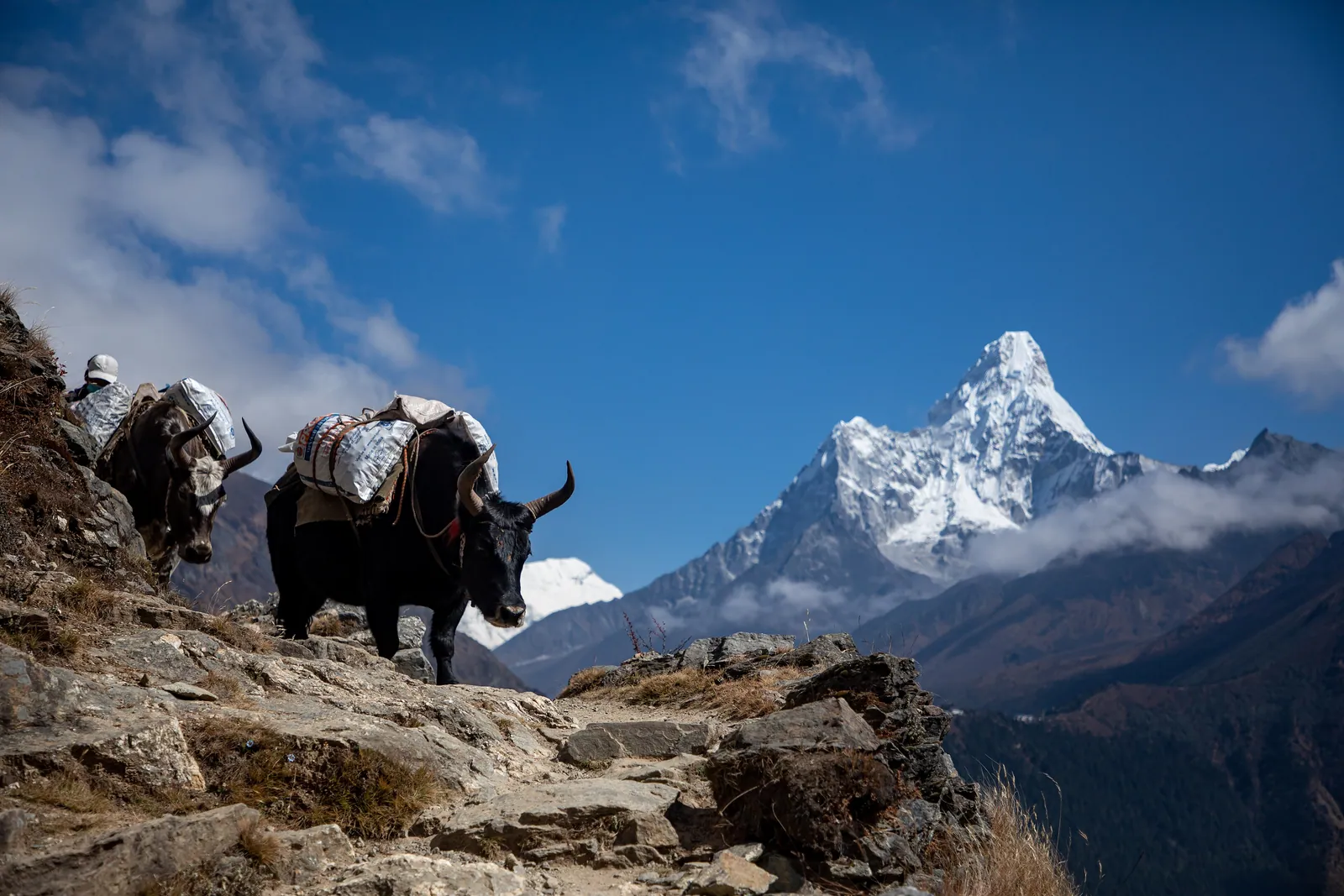
The Himalayan trekking regions of Nepal are walked lodge to lodge, sleeping each night in a family-run village inn. The Everest, or Khumbu, region brings you beneath the highest peaks on Earth; the Annapurna region offers everything from gentle valley walks to the high Thorong La. Routes range from a week to a fortnight, with modest daily distances — in the Himalaya it is the ascent, not the kilometres, that counts.
The defining constraint is altitude, so a sensible itinerary caps each day's climb and builds in rest days. The seasons are pre-monsoon spring (March to May) and post-monsoon autumn (late September to November), the latter prized for clear, stable skies. Gentle Himalayan walking days are woven into The Long Way East.
The Simien traverse, Ethiopia
Africa's great walking secret runs along the escarpment of the Simien Mountains in northern Ethiopia, a UNESCO World Heritage range of grass plateaus that break away in thousand-metre cliffs. A typical traverse is three to six days, walked at 3,000 to 4,000 metres or higher, with the option to climb Ras Dashen, Ethiopia's highest summit at 4,543 metres.
The walking is non-technical and the wildlife extraordinary: troops of gelada — found nowhere else on Earth — graze the cliff edges, indifferent to passing walkers. The dry season, October to March, offers the clearest conditions. The Simien is the walking high point of The Great Rift.
Choosing between them
These walks are not interchangeable. The W and the Simien are the most accessible in pure altitude terms; the Inca alternatives and the Himalayan treks ask the most acclimatisation. The Himalaya rewards walkers who want length and gradual immersion; Patagonia rewards those who want concentrated drama in under a week.
On a grand journey you do not have to choose only one. Each of our routes is built around the walk that belongs to its landscape, placed late enough that you reach the trailhead rested and adjusted. The art is matching the walk to the traveller — and then to a season that gives the country its best face.
Quick answers
Which of these walks is the most achievable for a first multi-day trek?
The W Trek in Torres del Paine and a short Simien traverse are often the most achievable, because neither sits at the extreme altitude of the Himalayan or high Andean routes. Both are non-technical, walked with support, and can be done in four to six days. Fitness for consecutive long days matters more than any special skill on all of these trails.
Do all of these walks require carrying a heavy pack?
No. The Himalayan teahouse treks are walked with a daypack while porters or pack animals move your main bag. The W is walked refugio to refugio with meals provided. The Inca routes and the Simien traverse are run with a support team carrying camp and gear. On a supported journey you walk light on all of them.
When is the best overall season for multi-day walking?
It depends on the hemisphere and the range. Patagonia's season is the southern summer, November to March. The Peruvian Andes are best in the dry season, roughly May to September. The Himalaya is finest in spring and autumn. The Ethiopian Simien is best from October to March. There is no single global season — the right window is specific to each trail.
Let the reading become a route.
When an article sparks something, our planners are the next step. Tell us what you are dreaming of.