The World's Great Train Journeys, and What Makes Them Great
A great rail journey is not simply a scenic one. It is a route where the train is the only honest way to understand the land it crosses — and a handful of lines truly earn the word.
Ask what makes a train journey great and the easy answer is scenery. But scenery alone does not do it: plenty of beautiful lines are merely pleasant. The journeys that travellers remember for decades share something harder to engineer — a route where the railway is not a way through the landscape but a way into it, revealing a country's geography, history and working life in a single moving sequence.
This article is a field guide to that quality. It looks at a handful of the world's genuinely great rail journeys, from the Andes to Eurasia, and draws out what they have in common. Several of them sit on Viajes Globales journeys, because we build with rail wherever a line tells the story of its land better than any road or runway could.
What separates a great line from a merely scenic one
Three things, broadly. First, necessity: the greatest lines were feats of engineering built because no easier route existed, so the railway threads the one possible path and shows you exactly why the terrain is hard. Second, transition: a great journey passes through real change — climate, altitude, language, land use — rather than circling within a single landscape. Third, legibility: the route makes sense, so that by the end you can explain how the country fits together.
Judged this way, the famous luxury trains are a separate category. A sumptuous carriage can be a delight, but opulence is not greatness. The test we apply is simpler and stricter: would you understand this region less well if you had flown over it? If the answer is clearly yes, the line is great.
The high Andes: railways that climb
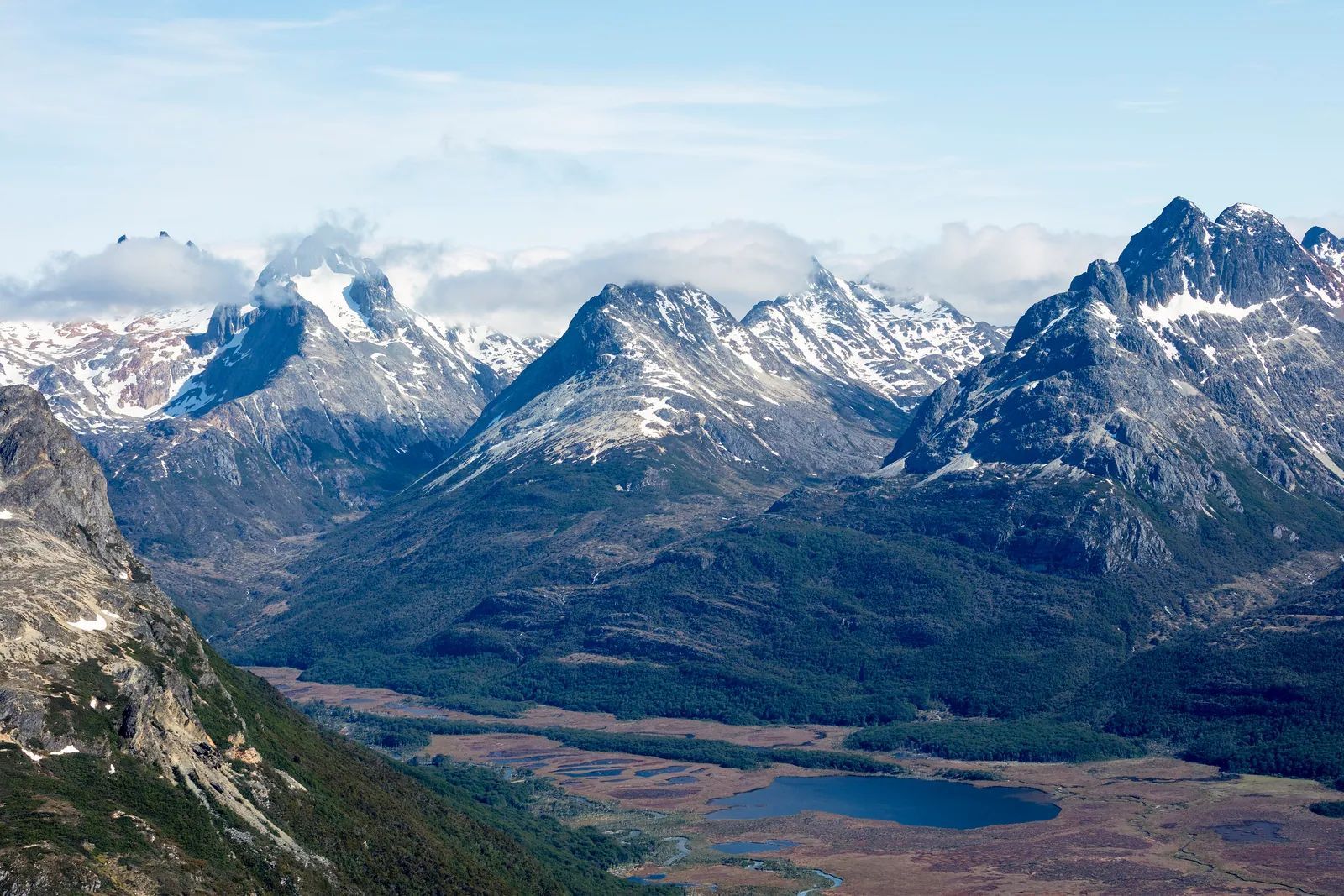
South America holds some of the most extraordinary mountain railways ever built. The Ferrocarril Central Andino, climbing from Lima into the Peruvian Andes, reaches over 4,800 metres and was for more than a century the highest standard-gauge railway in the world — a line that exists purely because someone insisted a railway could cross the Andes at all. Bolivia's altiplano routes and the tourist trains running toward Lake Titicaca and Cusco share the same drama of altitude.
These lines pass the necessity test absolutely: every switchback and tunnel is a visible answer to the mountain. On Andes to Antarctica we use Andean rail where it earns its place, because no road conveys the sheer vertical labour of the Andes the way a train hauling itself up a 1-in-25 gradient does.
Crossing a continent: the trans-Eurasian routes
The Trans-Siberian and its branches — the Trans-Mongolian and Trans-Manchurian — form the longest continuous railway journeys on Earth, the Moscow-to-Vladivostok line alone running some 9,289 kilometres across eight time zones. What makes them great is not any single view but the accumulation: taiga giving way to steppe, the slow change of faces and food and architecture, days measured in birch forests.
Central Asia carries the same idea on a shorter scale. The rail corridors linking the Silk Road cities of Uzbekistan let a traveller cross desert and oasis the way the caravans once did, only faster. Our journeys The Long Way East and The Silk Road Reborn lean on these routes precisely because a continent is best understood as a continuous line, not a series of arrivals.
Mountain crossings: short lines, total drama
Some great journeys are brief. The Alpine lines of Switzerland — the Bernina and Gotthard routes among them — pack an entire mountain range into a few hours, spiralling through tunnels that gain height in tight helical loops cut inside the rock. The point is not distance but density: every kilometre is doing visible work against gravity.
These short, intense lines teach the same lesson as the long ones. A railway is the most honest map of difficult terrain ever drawn, because it cannot cheat. A road can take a brutal gradient; a railway must find the gentle line, and in finding it, traces the true shape of the mountains for anyone watching from the window.
How to travel a great line well
Greatness rewards attention. Take the seat on the side the guidebooks recommend, but also walk the train — the view changes end to end, and the corridor window with no glare is often better than your own. Eat in the dining car if there is one; it is where the journey becomes sociable. And resist the screen: a great line gives its best to the traveller who simply watches the country change.
Most of all, give a great journey enough time. A rail leg compressed into a too-short day becomes mere transit. On our journeys we schedule the truly great lines with room to breathe, so the train is something you settle into rather than rush through — because the whole argument for rail collapses if you are not actually there to see it.
Quick answers
What makes a train journey 'great' rather than just scenic?
Scenery is necessary but not sufficient. The genuinely great lines were built out of engineering necessity, so they reveal exactly why the terrain is hard; they pass through real transitions of climate, altitude and culture; and they leave you understanding how a region fits together. Our test is simple — would you understand this land less if you had flown over it? If clearly yes, the line is great.
Are luxury trains the same as great train journeys?
Not necessarily. A luxurious carriage can make a journey more comfortable and sociable, but opulence is a separate quality from greatness. Some of the world's most rewarding rail journeys run on ordinary scheduled trains. We choose lines for what the route reveals first, and treat comfort as a welcome bonus rather than the point.
Which great train journeys do your trips include?
It depends on the journey. Andes to Antarctica uses Andean mountain rail where it best conveys the scale of the climb; The Long Way East and The Silk Road Reborn use trans-Eurasian and Central Asian rail corridors to cross the land as a continuous line. We include a rail leg whenever the train tells the story of its landscape better than any alternative.
Let the reading become a route.
When an article sparks something, our planners are the next step. Tell us what you are dreaming of.