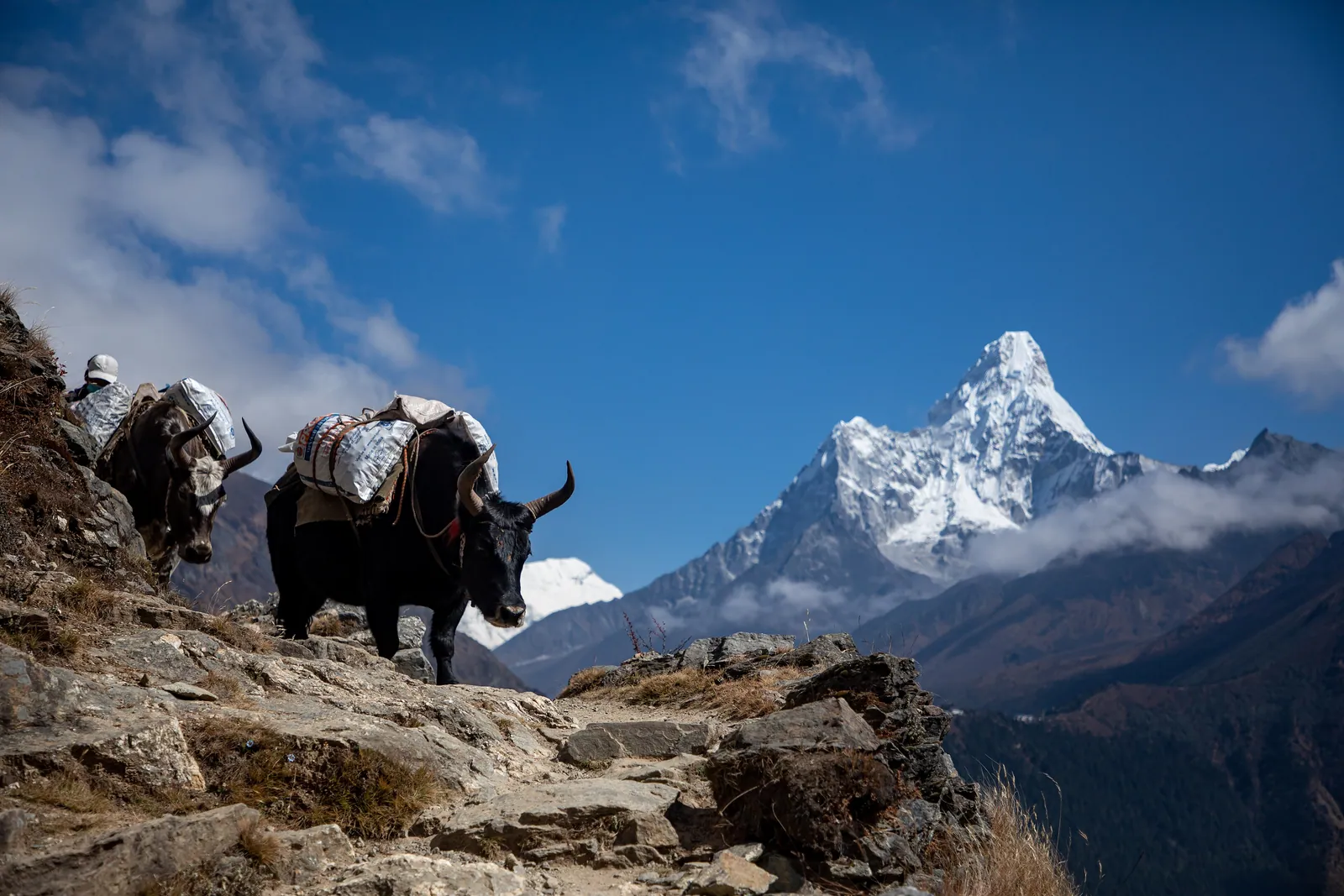
Training Your Legs and Lungs for Altitude Walking
You cannot train away thin air — but you can arrive at altitude with a body that copes with it gracefully. Here is what fitness can and cannot do for the high country, and how to build the right kind.
Walking at altitude is the same act as walking at sea level, made harder by a single fact: each breath carries less oxygen. On the Andean stretches of Andes to Antarctica or the high passes of The Silk Road Reborn, you will be working your body on a third less oxygen than it is used to. The question travellers ask is whether training helps. The answer is yes — but not in the way many expect.
Fitness will not let you skip acclimatisation, and being very fit does not make you immune to altitude sickness. What good aerobic preparation does is lower the effort cost of every step, so that when the air thins, you have margin to spare. A fit walker at altitude is not breathing easy air — they are simply doing hard breathing more efficiently. Before starting any new programme, consult your doctor.
What altitude does, and what fitness cannot change
At 3,400 metres — the altitude of Cusco — there is roughly 32 percent less oxygen in each breath than at sea level. Your body responds over days by breathing deeper, adjusting its blood chemistry and producing more red blood cells. This process, acclimatisation, runs on its own timetable and cannot be hurried by training beforehand.
It is important to be clear about this, because a dangerous myth circulates among fit travellers: that strong lungs and a low resting heart rate confer protection against acute mountain sickness. They do not. Altitude illness affects the fit and unfit alike, and the only reliable defences are gradual ascent, adequate rest and attention to symptoms — which is why our itineraries are paced as carefully as they are.
What training genuinely buys you
Here is what preparation does change. A well-trained aerobic system uses oxygen more efficiently, so the same walk costs you a smaller share of your capacity. At sea level you might not notice the difference. At altitude, where oxygen is scarce and every reserve matters, that efficiency is the gap between a walk that feels manageable and one that feels punishing.
Trained legs also fatigue more slowly, recover better overnight and let you walk within yourself rather than at your limit — and walking within yourself is exactly what altitude rewards. The fittest travellers on a high day are usually the calmest: they have the spare capacity to slow down, breathe steadily and enjoy the view, rather than grinding through every step.
Building the aerobic engine
The training that helps most at altitude is unglamorous: sustained, moderate aerobic exercise, done often. Walking is ideal and specific, but cycling, swimming, rowing and steady jogging all build the same engine. Aim for three to five sessions a week of thirty to sixty minutes, at a pace where you can talk but would not want to sing.
Once that base is established, add one weekly session of intervals — a few minutes of harder effort followed by easy recovery, repeated. Intervals improve the body’s ability to work hard and clear fatigue, which translates well to the steep, breathless pitches of a high trail. Always keep the bulk of your training easy, though; the steady mileage is what builds the durable foundation.
Practising the breath
Altitude rewards a particular walking rhythm, and you can rehearse it before you ever leave home. On your training hills, practise pressure breathing: a deliberate, slightly forced exhale that helps move stale air out and fresh air in. Practise, too, the rest step — a momentary pause on a straight back leg between strides, which lets the working muscles rest for a beat on every step.
These techniques feel odd at sea level and indispensable above 3,000 metres. Build them into your hill walks now so they are automatic later. The broader habit they teach is the most valuable of all: matching your pace to your breath rather than your breath to your pace. On a high trail, the steady, unhurried walker almost always fares best.
How our itineraries do the rest
Even the best-prepared body still needs the mountain’s own medicine: time. On Andes to Antarctica we ascend in deliberate steps — days in Cusco, nights spent lower in the gentler air of the Sacred Valley — before any demanding walking day, and Machu Picchu itself, at 2,430 metres, is lower than Cusco. The Silk Road Reborn is paced with the same patience across its high country.
Your training and our pacing are partners. You arrive with an efficient engine and rehearsed technique; the itinerary supplies the gradual ascent and the rest days that let acclimatisation happen. Neither replaces the other. Together they turn the high country from an ordeal to be survived into one of the most exhilarating landscapes a traveller can walk.
Quick answers
If I train hard, can I skip the acclimatisation days?
No. Acclimatisation is a physiological process that depends on time spent at altitude, and no amount of fitness shortens it. The rest and gradual-ascent days in our itineraries are essential for every traveller, athlete or not. Training makes the walking within those days easier; it does not remove the need for the days themselves.
Does sleeping in an altitude tent before the trip help?
Altitude tents and chambers can produce some pre-acclimatisation, and a few travellers use them, but the effect fades within days of stopping and the benefit for a paced itinerary like ours is modest. They are an expensive, optional extra rather than a necessity. Consistent aerobic training and our built-in acclimatisation days deliver the great majority of the benefit far more simply.
Will being fit stop me getting altitude sickness?
Unfortunately not. Acute mountain sickness affects fit and unfit travellers alike, and fitness is not a predictor of who will be affected. What fitness does is give you spare capacity, so you can walk gently and comfortably while acclimatising. Preventing altitude sickness itself comes down to gradual ascent, rest, hydration and heeding symptoms — never pushing on through them.
Let the reading become a route.
When an article sparks something, our planners are the next step. Tell us what you are dreaming of.