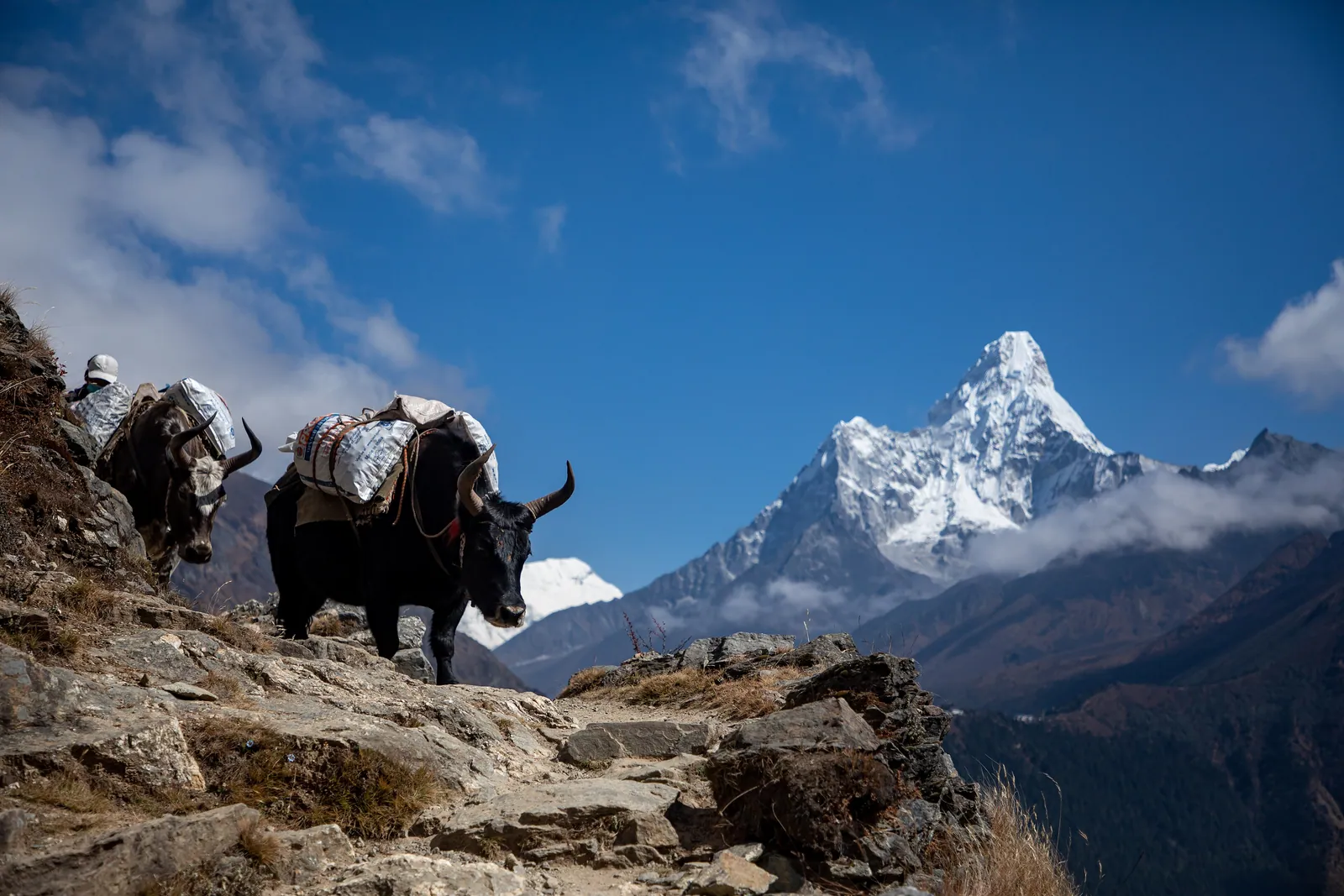
Walking the Simien Escarpment: Ethiopia's Great Traverse
Along the roof of Ethiopia runs one of the world's most extraordinary and least-walked trails — a high traverse above thousand-metre cliffs, through the home of the gelada. Here is how the Simien trek works, day by day.
The Simien Mountains in northern Ethiopia hold one of Africa's truly great walks, and one of its quietest. A multi-day traverse follows the edge of a vast escarpment — grass plateaus that end, abruptly, in cliffs that drop a thousand metres to the lowlands. You walk for days along that rim, with the whole of northern Ethiopia falling away on one side.
The walk is non-technical and within reach of any fit traveller, with one real demand: altitude. The trail runs mostly between 3,000 and 4,000 metres, and the optional summit of Ras Dashen, Ethiopia's highest peak, reaches 4,543 metres. This is how the traverse is structured, what each stage asks, and why it is the walking centrepiece of The Great Rift.
The landscape you are walking
The Simien is the eroded remnant of a huge shield volcano, worn over millions of years into pinnacles, buttresses and a deeply scalloped escarpment. The result is a walking environment found almost nowhere else: broad, gently rolling grassland and giant lobelia on the plateau, with the ground simply ending in space at the cliff edge. Walkers describe it as moving along the top of the continent.
It is a UNESCO World Heritage Site, protected as a national park, and the scenery is matched by its wildlife. The Simien is home to the gelada — a grass-grazing primate found only in the Ethiopian highlands — and troops of hundreds graze the cliff edges, allowing walkers to pass within metres. The endemic walia ibex and the rare Ethiopian wolf also live here.
How the traverse is structured
A typical Simien trek runs three to six days, walked west to east along the escarpment, sleeping at a series of camps or simple lodges. From the gateway town of Debark, where the park is entered, the route climbs onto the plateau and follows the rim past famous viewpoints — among them Sankaber, Geech and the cliffs near Imet Gogo and Chenek.
A shorter three-day walk takes in the heart of the escarpment and its best gelada country. A longer itinerary continues east toward Chenek and, for those who want it, on to the foot of Ras Dashen. Daily distances are moderate, but the altitude means a sensible itinerary climbs gradually and keeps each day within honest limits.
Ras Dashen, and whether to climb it
At the far end of the range stands Ras Dashen, the highest mountain in Ethiopia at 4,543 metres and one of the highest in Africa. The climb is a long, non-technical walk — no ropes, no glacier — but it is a big, high day, typically tackled from a high camp with a pre-dawn start, and it adds days to the traverse.
Ras Dashen is an option, not an obligation. Many walkers find the escarpment traverse itself the richer experience and are entirely content to finish at Chenek without summiting. The decision should rest on how you are handling the altitude and how you feel after the rim days. A grand journey offers the summit to those who want it and a fine walk to those who do not.
Season, altitude and walking it well
The dry season, October to March, is the time to walk the Simien — the air is clearest, the views longest and the trails firmest. The plateau is cold at night year-round and can be genuinely so in the dry-season mornings, so warm layers matter even close to the equator. The rainy months bring mist, mud and obscured views.
Altitude is the factor to respect. Arrive at the Simien already adjusted by the earlier high country of the journey, walk at an unhurried pace, drink well, and let the itinerary's gradual ascent do its work. The walking itself is straightforward; the thin air is what asks for patience. Treated sensibly, the Simien is a high walk that fit, ordinary travellers complete and remember.
The Simien within The Great Rift
The Great Rift journey follows the geological scar that runs the length of East Africa, and the Simien is its walking high point — the place where you step out of the vehicle and meet the Rift's highlands on foot. It is placed in the journey after time spent at altitude elsewhere, so you reach Debark already partly acclimatised.
We walk the traverse with experienced local guides and the park-mandated scout, with camp and gear carried by a support team and pack animals so you walk with only a daypack. Groups are small. The traverse is offered as a continuous walk for those who want it, with the route arranged so a traveller can join for the central days alone. The escarpment, like every walk on our journeys, is offered generously rather than imposed.
Quick answers
How hard is the Simien trek?
The walking itself is non-technical — well-worn trails along the escarpment, no ropes or climbing — and daily distances are moderate. The real demand is altitude: the traverse runs mostly between 3,000 and 4,000 metres. With gradual acclimatisation, an unhurried pace and a light daypack, it is within reach of any fit traveller. Climbing Ras Dashen adds a long, high day for those who choose it.
Will I see gelada on the trek?
Almost certainly. The Simien escarpment is the gelada's heartland, and troops numbering in the hundreds graze the cliff-edge grassland the trail follows. They are habituated to walkers and generally allow a close, calm approach, though you should keep a respectful distance and never feed them. The endemic walia ibex and the rare Ethiopian wolf are also present, though far less frequently seen.
When should I walk the Simien Mountains?
The dry season, roughly October to March, offers the clearest air, the longest views and the firmest trails. Nights on the plateau are cold throughout the year and notably so in the dry-season mornings, so warm layers are essential even near the equator. The rainy months bring mist, mud and obscured views, and are best avoided for the traverse.
Let the reading become a route.
When an article sparks something, our planners are the next step. Tell us what you are dreaming of.