When to Travel: Seasons Across the Pacific and the Outback
New Zealand's mountains, the Australian Outback and the tropical Pacific each run on their own calendar — and the seasons are inverted from the north. Here is how to time a journey across all three.
Timing is the quiet decision that shapes a journey through the Pacific world more than almost any other. The region spans temperate New Zealand, the arid Australian interior and the tropical seas of the Coral Triangle and the South Pacific — three very different climate systems, none of which behaves like the Northern Hemisphere.
The single most important fact is that the seasons are reversed: the Southern Hemisphere summer falls in December, January and February, and its winter in June, July and August. The tropics, meanwhile, do not have summer and winter at all, but a wet season and a dry season. This guide explains how to weigh those calendars when they have to be satisfied in one itinerary.
The inverted year, in brief
For travellers used to the Northern Hemisphere, the mental adjustment is straightforward but essential. December to February is high summer across Australia and New Zealand — long days, warm temperatures, school holidays and peak crowds. June to August is winter, with snow in New Zealand's mountains and crisp, cool days in much of Australia.
The shoulder seasons — the southern autumn of March to May and spring of September to November — are often the sweet spot for a wide-ranging journey. Temperatures are moderate, crowds thinner, and many regions are at their most comfortable. As a general rule, a journey trying to cover several climates at once is best planned for these shoulder months.
New Zealand: a four-season country
New Zealand has a genuine four-season temperate climate, and weather that changes quickly given its long, mountainous, ocean-girt shape. Summer, December to February, brings the warmest, longest days and the best conditions for the Great Walks and the southern lakes — but also the most visitors and highest prices.
Autumn, March to May, is widely loved: stable weather, golden light, fewer people, and brilliant colour in places like Central Otago. Winter, June to August, is ski season in the Southern Alps and a fine time for Fiordland's stark drama and the geothermal North Island. Fiordland itself, it is worth repeating, has no dry season — it rains there year-round, and that is part of its character.
The Outback: avoid the heat
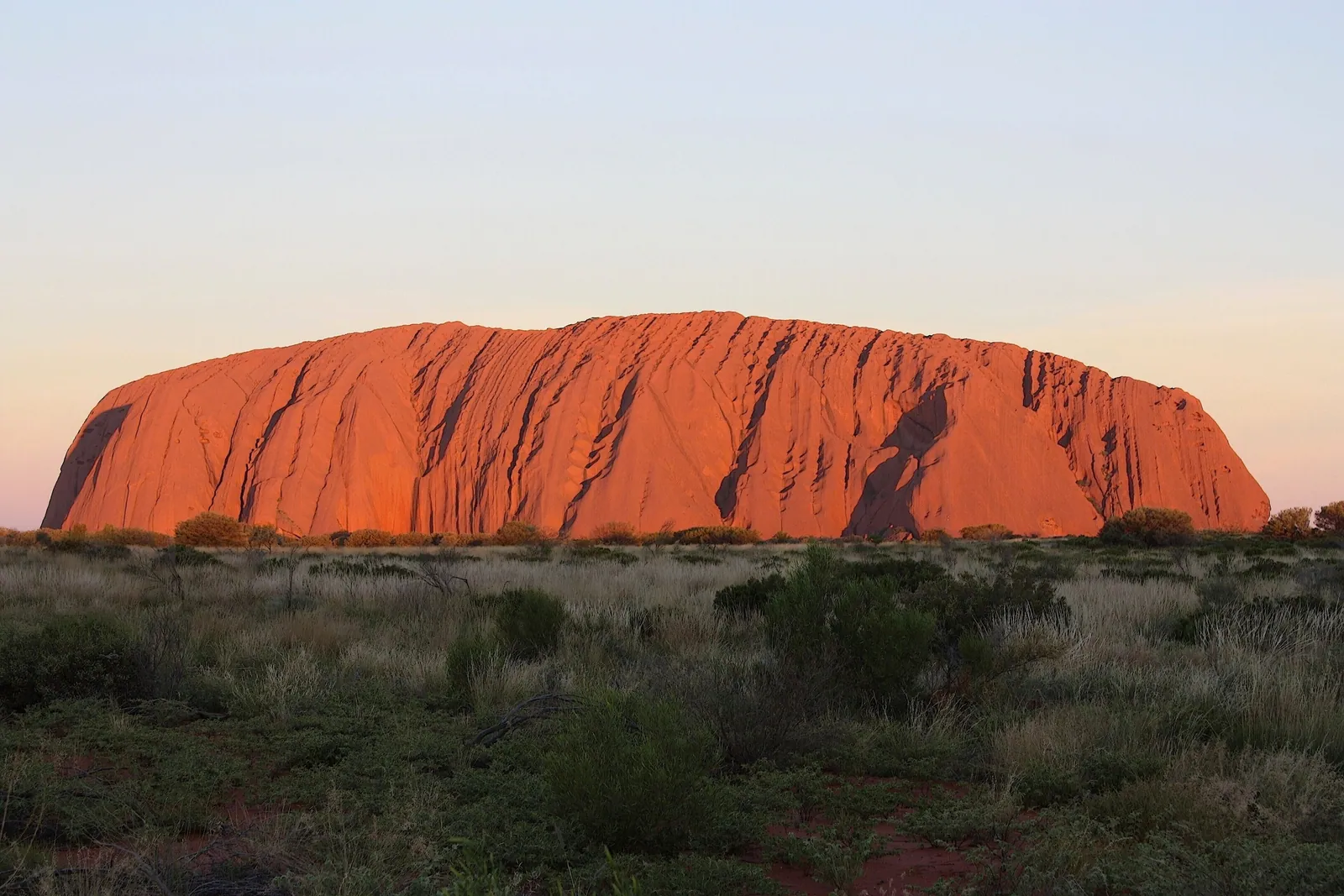
The Australian interior — Uluru, the Red Centre and the wider Outback — has a desert climate of extremes, and here the timing advice is firm. The southern autumn to spring, roughly April to September, brings clear, warm days and cold nights, and is by far the most comfortable window for walking and being outdoors.
The summer months, December to February, bring severe heat, with daytime temperatures in the Red Centre regularly above 40 degrees Celsius, and walks restricted during the hottest hours. The tropical north of Australia runs on a different pattern again — a dry season from about May to October and a hot, humid wet season the rest of the year — but for the Red Centre specifically, the cooler half of the year is the clear choice.
The tropical Pacific: wet and dry
Across the Coral Triangle and the South Pacific islands, the year divides not into hot and cold but into a wetter and a drier season. The drier season, broadly the southern winter months from about May to October, generally brings lower humidity, less rain, calmer seas and the most settled conditions for snorkelling, diving and island travel.
The wetter season, roughly November to April, is hotter and more humid, with heavier rain and a higher chance of tropical storms; the official South Pacific and Australian cyclone season runs over these months. This is not an absolute bar to travel — rain often falls in short, heavy bursts — but seas can be rougher. Raja Ampat is a partial exception, with its calmest diving window falling around October to April, which is one reason regional advice should always be checked locally.
Squaring the calendars on one journey
The tension is plain: the Outback wants the cooler southern winter, while parts of the tropical Pacific are at their best in different windows, and New Zealand's mountains are friendliest in the southern summer and autumn. No single month is perfect for everything, which is exactly why a multi-region journey is a series of compromises thoughtfully made.
The southern shoulder seasons, particularly the autumn months of March to May, tend to offer the best overall balance — comfortable in the Outback, still pleasant in New Zealand, and acceptable across much of the Pacific. The Pacific Arc journey is sequenced with these trade-offs in mind, ordering each region so travellers meet it close to its best, rather than asking one date to serve every climate at once.
Quick answers
When is summer in Australia and New Zealand?
Summer in the Southern Hemisphere falls in December, January and February, the reverse of the Northern Hemisphere. This is high season across Australia and New Zealand: warm, long days, but also peak crowds and prices. Winter runs June to August, when New Zealand's mountains see snow and the Australian interior is pleasantly cool by day and cold at night.
What is the best time to visit the Australian Outback?
The southern autumn to spring, roughly April to September, is the best window for the Red Centre and Uluru. Days are warm and clear, nights are cold, and conditions suit walking. The summer months bring extreme heat, often above 40 degrees Celsius, when longer walks are closed during the hottest hours of the day.
Does the tropical Pacific have a rainy season?
Yes. Instead of summer and winter, the tropical Pacific has a wetter season, roughly November to April, which is hotter, more humid and includes the cyclone season, and a drier season, roughly May to October, with calmer seas and more settled conditions. The drier season is generally best for snorkelling and island travel, though regional patterns vary and should be checked.
Let the reading become a route.
When an article sparks something, our planners are the next step. Tell us what you are dreaming of.