When to Visit Egypt: A Season-by-Season Guide
Egypt has essentially two seasons — warm and very hot — but the choice of month shapes everything from desert comfort to crowds at the tombs. A clear guide to timing a journey along the Nile.
For most travellers, the best time to visit Egypt is the cooler half of the year, roughly October to April, when daytime temperatures are pleasant and the sites are comfortable to explore. The peak of that window, from December to February, brings the kindest weather and, predictably, the largest crowds.
Egypt's climate is desert: reliably dry, with very little rain anywhere along the Nile, and a sharp split between a warm season and a fierce summer. Because almost every great monument is outdoors and largely without shade, temperature — not rainfall — is the variable that should drive your timing. Here is how the year breaks down.
Winter — the peak season
December, January and February are Egypt's high season for good reason. Daytime temperatures in Cairo and Luxor are typically mild and comfortable for walking the pyramids, temples and tombs, and the air is dry and clear. It is the most pleasant time to be outdoors all day.
The trade-offs are crowds and prices. The Valley of the Kings, Abu Simbel and Giza are at their busiest, and hotels and Nile boats are at their dearest, particularly around Christmas and the New Year. Desert nights and early mornings can be genuinely cold, so warm layers are needed despite the sunny days — a point many first-time visitors underestimate.
Spring and autumn — the shoulder seasons
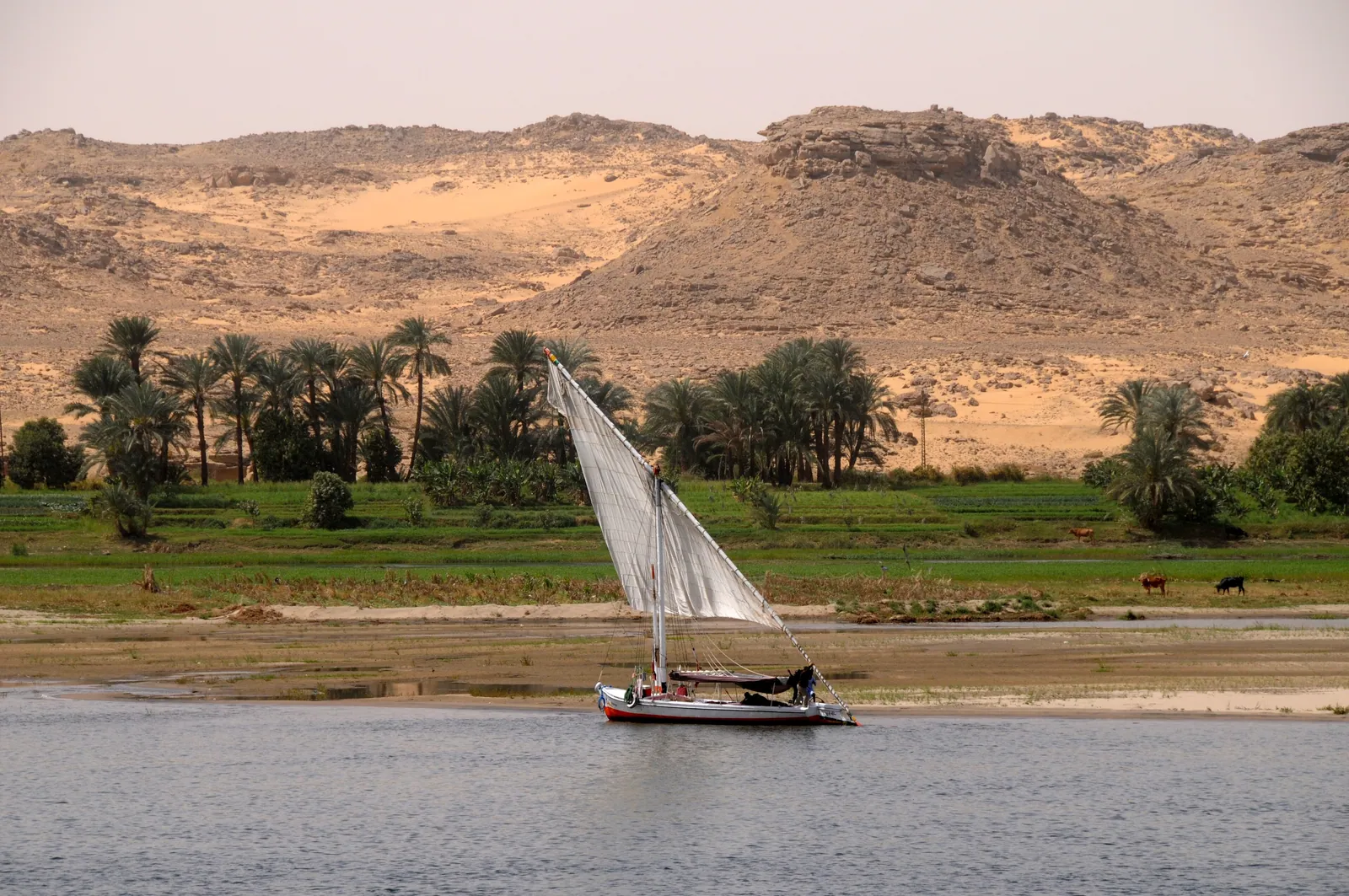
October to November and March to early April are, for many travellers, the sweet spot. Temperatures are warm rather than punishing, the crowds are thinner than at midwinter, and prices ease from their peak. The light is excellent, and a Nile sailing trip is especially pleasant in these months.
Spring carries one local caveat: the khamsin, a hot, dust-laden wind that can blow up from the desert between roughly March and May, occasionally hazing the sky for a day or two. It is intermittent rather than constant and rarely disrupts a trip, but it is the one weather feature of the shoulder season worth knowing about.
Summer — the hot season
From June through August, Upper Egypt — Luxor, Aswan, Abu Simbel — becomes extremely hot, with afternoon temperatures that regularly climb past 40 degrees Celsius and beyond. Cairo and the Mediterranean coast are more bearable, but the south is demanding.
Summer is not impossible: prices are at their lowest, the famous sites are quietest, and disciplined early starts let you visit before the worst heat. But it asks for real care with sun, hydration and pacing, and the open deck of a Nile boat is a hot place at midday. For most travellers it is the season to avoid, or to confine to the cooler north.
Light, festivals and special dates
A few fixed dates reward planning. At Abu Simbel, the sun penetrates the Great Temple to light its inner sanctuary around 22 February and 22 October, drawing crowds for the dawn event. Temples and tombs are generally best in the first hour after opening — for soft light, cooler air and smaller crowds alike.
It is also worth checking the dates of Ramadan, which shift earlier each year through the Western calendar. Sites stay open and travel runs normally, but daytime hours, restaurant openings and the rhythm of the cities change, and the evenings take on a particular festive character that can be a pleasure to share.
How we time our journeys
The Great Rift is scheduled for the southern dry season, June to October, because the journey continues far beyond Egypt — into the Serengeti at the height of the migration and on to the Cape. Egypt's chapter therefore tends to fall in the cooler edge of that window, and we keep its days in Upper Egypt paced with early starts to stay ahead of the heat.
If Egypt alone is the goal, the calculus is simpler: the Egypt-and-the-Nile module can be joined on its own, and for a stand-alone Nile journey we would point most travellers at the shoulder months of October to November or March, the most comfortable balance of weather, light and crowds.
Quick answers
What is the best month to visit Egypt?
October, November and March are often the ideal months — warm but not punishing, with thinner crowds and lower prices than midwinter. December to February brings the most comfortable temperatures but also the peak-season crowds and highest prices. The right choice depends on whether you prioritise weather or quiet.
Is it too hot to visit Egypt in summer?
Upper Egypt — Luxor, Aswan and Abu Simbel — is extremely hot from June to August, often above 40 degrees Celsius. Travel is still possible with early starts and careful attention to sun and hydration, and prices and crowds are at their lowest, but most travellers find the south uncomfortable in high summer and prefer the cooler months.
Does it rain in Egypt?
Very little. Egypt's climate is desert, and the Nile valley sees almost no rain through most of the year. The Mediterranean coast around Alexandria gets modest winter rainfall, but along the route most travellers take — Cairo, Luxor, Aswan — rain is rare enough that it need not influence your planning.

Let the reading become a route.
When an article sparks something, our planners are the next step. Tell us what you are dreaming of.