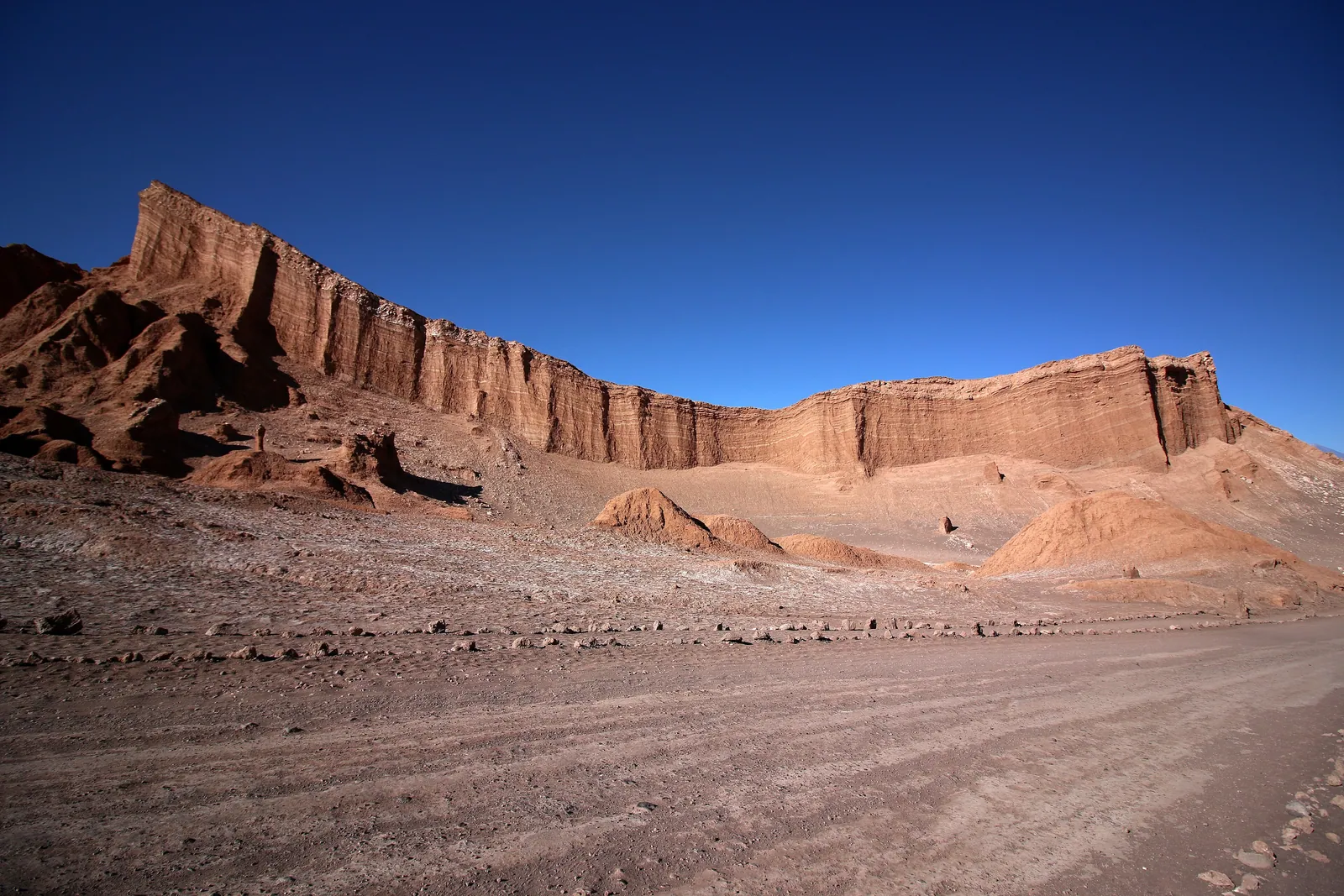
Why the Atacama Is the Driest Place on Earth
Some Atacama weather stations have never recorded rain. The dryness is no accident — it is the work of two mountain ranges, a cold ocean current and the planet's circulation. The science, explained simply.
The Atacama Desert is the driest non-polar place on Earth, and the claim is not loose travel writing. Parts of the desert receive on average just a millimetre or two of rain a year, and some weather stations have, in their entire records, never registered a drop. There are riverbeds here that have not run in a human lifetime.
This extraordinary dryness is not bad luck or coincidence. It is the precise, predictable outcome of where the Atacama sits — caught between two mountain ranges and a cold ocean, in a band of the planet where the atmosphere itself conspires against rain. Here is how four separate forces combine to make a desert this absolute.
First cause: the rain shadow of the Andes
The Atacama lies in the lee of the Andes, one of the highest mountain barriers on Earth, and that position alone would be enough to make it a desert. Moist air moving in from the Atlantic and the Amazon basin to the east is forced upward as it meets the mountains. Rising air cools, cooling air cannot hold its moisture, and so the rain falls on the eastern, Amazon-facing slopes.
By the time that air spills over the crest and descends toward the Atacama, it has been wrung dry. Descending air also warms and its capacity to hold moisture increases, so rather than releasing rain it actively soaks moisture up. This is a rain shadow, and the Atacama lies in one of the most complete examples of it anywhere on the planet.
Second cause: the cold Humboldt Current
On the Atacama's western side lies the Pacific, and it might seem that an ocean next door should keep a coast damp. It does not, because of the water's temperature. The Humboldt Current sweeps cold water up the coast of Chile from the Southern Ocean, and cold water chills the air directly above it.
Cold air is stable air: it does not rise, and without rising air there are no rain clouds. The cold sea surface produces low coastal cloud and fog but very little actual rainfall. So the ocean that borders the Atacama, far from watering it, helps lock the dryness in place — supplying just enough fog to sustain a few specialised plants on the coastal hills, and almost no rain at all.
Third cause: the subtropical high
The Atacama also sits beneath a permanent feature of the global atmosphere: the subtropical high-pressure belt. Around 20 to 30 degrees of latitude, in both hemispheres, the planet's circulation causes air to descend from high in the atmosphere back toward the surface. This sinking air is the reason most of the world's great deserts — the Sahara, the Kalahari, the Australian interior — lie in roughly the same latitude band.
Descending air is the enemy of rain. As it sinks it warms and dries, and it suppresses the upward currents that would otherwise build clouds. Over the Atacama, this subtropical high parks a lid of stable, sinking air above an already shadowed, fog-bound coast — a third independent reason for the desert to be dry.
The result: a desert of superlatives
Stack a rain shadow, a cold current and a subtropical high on one strip of land and you get the Atacama. The dryness has lasted not for centuries but for millions of years, making this one of the oldest deserts on Earth — and that long age shows in landscapes that erosion by water has barely touched, and in vast undisturbed deposits of nitrate and other salts.
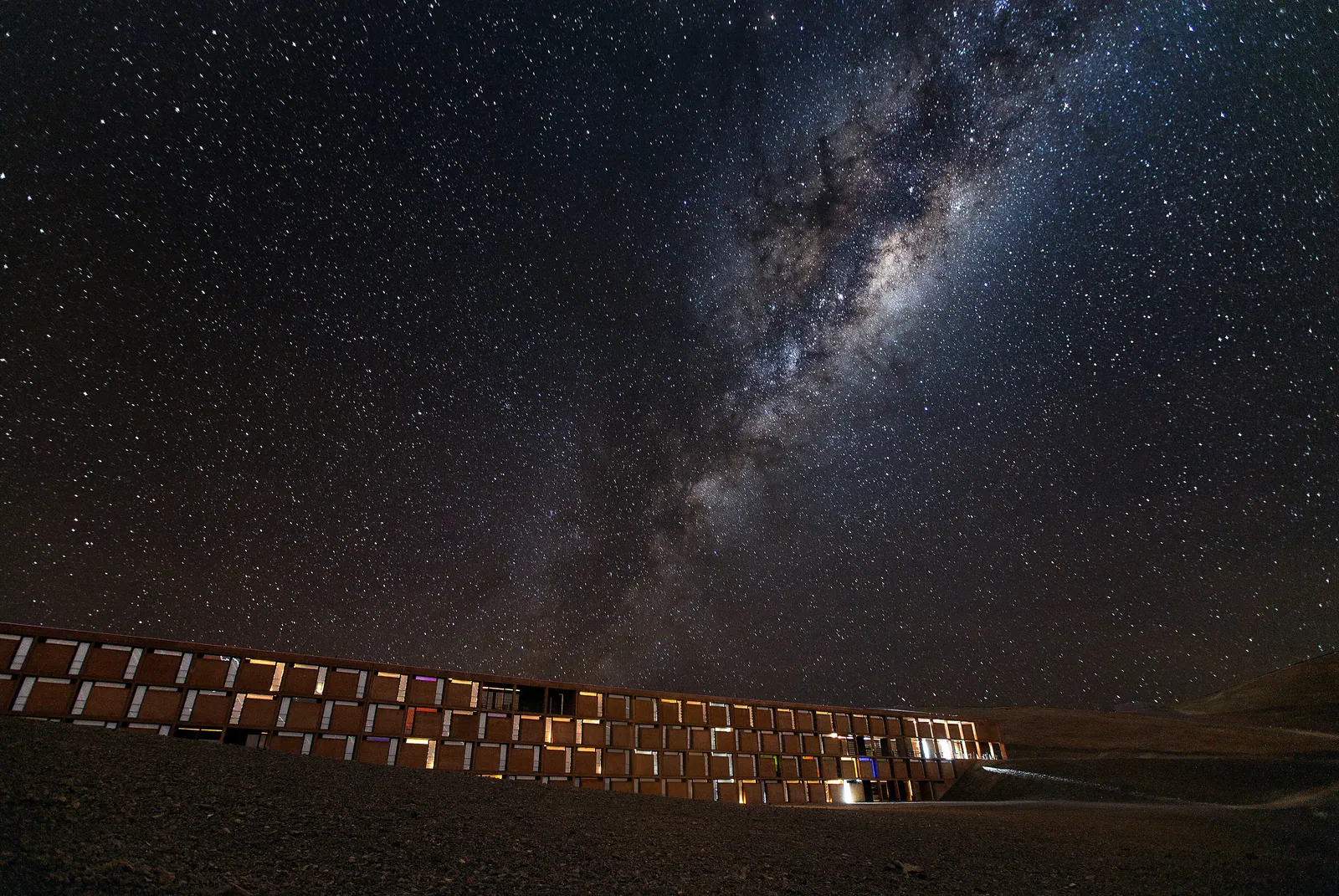
The same dryness is why the Atacama doubles as a stand-in for Mars: NASA tests rovers and instruments in its sterile, mineral soils. And it is why the night skies are so good — almost no water vapour to blur the stars. The desert's most punishing quality and its most magical one turn out to be the very same thing.
What the dryness means for a traveller
For the visitor, the Atacama's dryness has practical consequences worth planning around. The air pulls moisture out of you constantly and invisibly, so steady drinking of water matters far more than thirst suggests — and all the more because key excursions climb above 4,000 metres, where altitude compounds the effect. Skin and lips chap quickly; sun protection is non-negotiable under such thin, clear air.
It also makes the Atacama a rare year-round destination. With virtually no rain to disrupt it, the desert is reliably bright and clear in every season, which is exactly why grand journeys such as Andes to Antarctica and The Pacific Arc can route through the Atacama Desert with such confidence. The dryness that makes the desert so extreme is also what makes it so dependable.
Quick answers
How dry is the Atacama Desert, really?
Extraordinarily dry. Parts of the desert average only a millimetre or two of rain a year, and some weather stations have never recorded measurable rainfall in their entire records. It is considered the driest non-polar desert on Earth, and one of the oldest, with riverbeds that have not flowed for generations and salt deposits left undisturbed for millions of years.
Why is the Atacama Desert so dry?
Three forces combine. The Andes to the east cast a vast rain shadow, wringing moisture from incoming air before it reaches the desert. The cold Humboldt Current along the Pacific coast chills the air above it, producing fog but suppressing rain. And the Atacama sits beneath the subtropical high-pressure belt, where descending air warms, dries and prevents clouds from forming. Together they make rain almost impossible.
Does it ever rain in the Atacama, and does that affect a visit?
Very rarely. The most reliable rain is the brief 'Bolivian winter' of the southern summer, December to February, when occasional storms reach the high altiplano and can disrupt the highest excursions. The rest of the year is dependably dry and clear. Whenever you visit, the dry air dehydrates you quickly, so drink plenty of water — especially on excursions above 4,000 metres.
Let the reading become a route.
When an article sparks something, our planners are the next step. Tell us what you are dreaming of.