Hotel Registan Plaza
Hotel · €€A long-established full-service hotel within easy reach of the main monuments — a comfortable, well-run base for first-time visitors to the city.
39°39′N 66°59′E
Samarkand is one of the oldest continuously inhabited cities of Central Asia and a great crossroads of the Silk Road. It became the capital of Timur’s (Tamerlane’s) empire in the 14th century, and its monumental ensemble — “Samarkand – Crossroads of Cultures” — was inscribed as a UNESCO World Heritage Site in 2001.
Samarkand is a city built to be remembered. For more than two and a half thousand years it has stood on the trade routes between China and the Mediterranean, gathering caravans, ideas and conquerors — among them Alexander the Great, who took the city he knew as Marakanda in 329 BCE. Its golden age came under Timur, the 14th-century conqueror who made Samarkand the capital of an empire stretching from the Caucasus to the gates of India and summoned the finest craftsmen of the known world to build it.
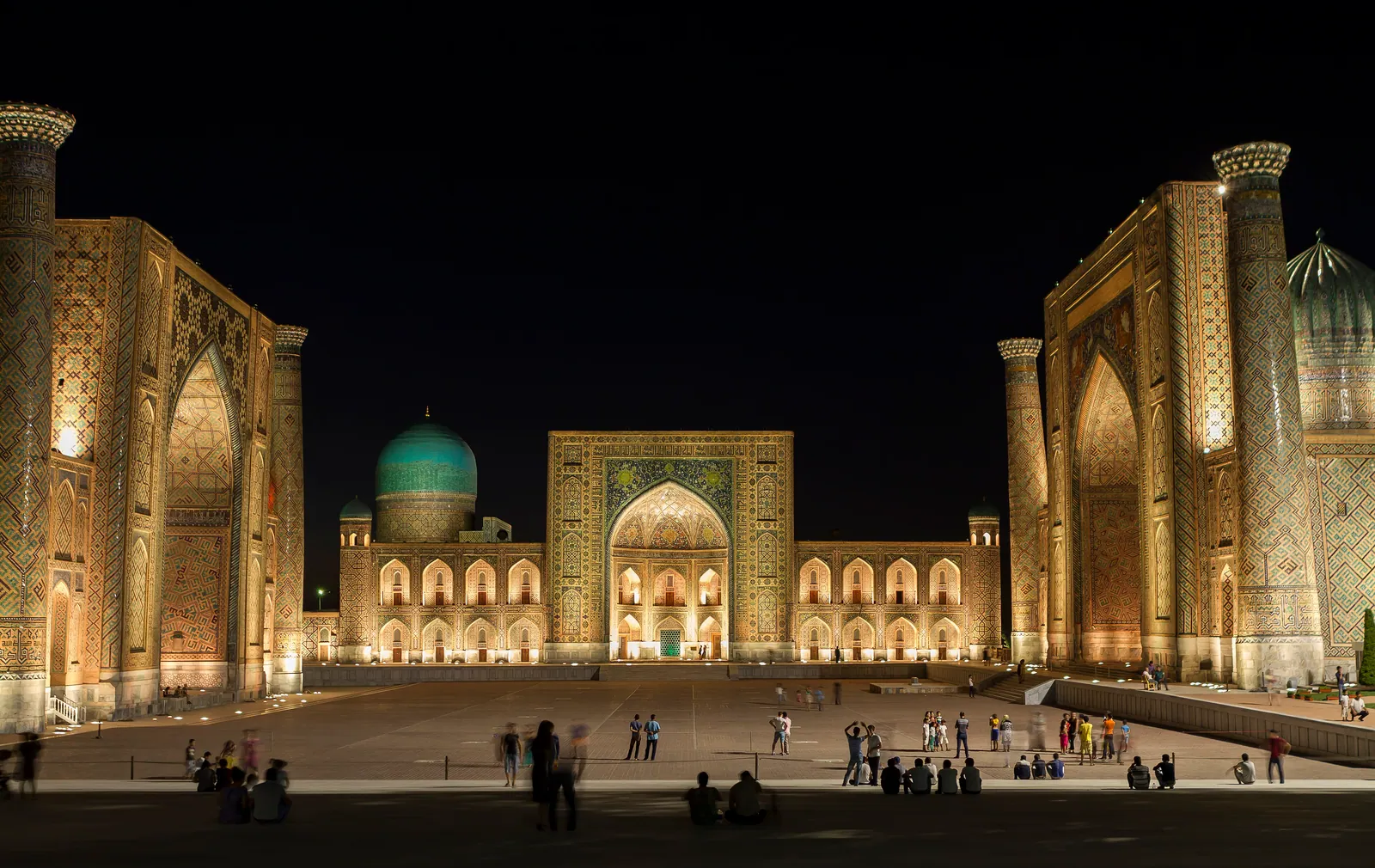
What they raised still stops travellers in their tracks. The Registan — three vast madrasas facing one another across a single square, their facades sheeted in turquoise, cobalt and gold — is among the most spectacular public spaces ever built. Beyond it lie the ribbon of blue tombs at Shah-i-Zinda, the colossal arch of the Bibi-Khanym Mosque, and the ribbed dome of the Gur-e-Amir, where Timur himself is buried. To walk Samarkand is to move slowly through the architecture of an empire that wanted, above all, to be unforgettable.
Come to the great square late in the day, when the low sun sets the tilework alight. Three madrasas of three different centuries face one another — there is no finer architectural ensemble in Central Asia.
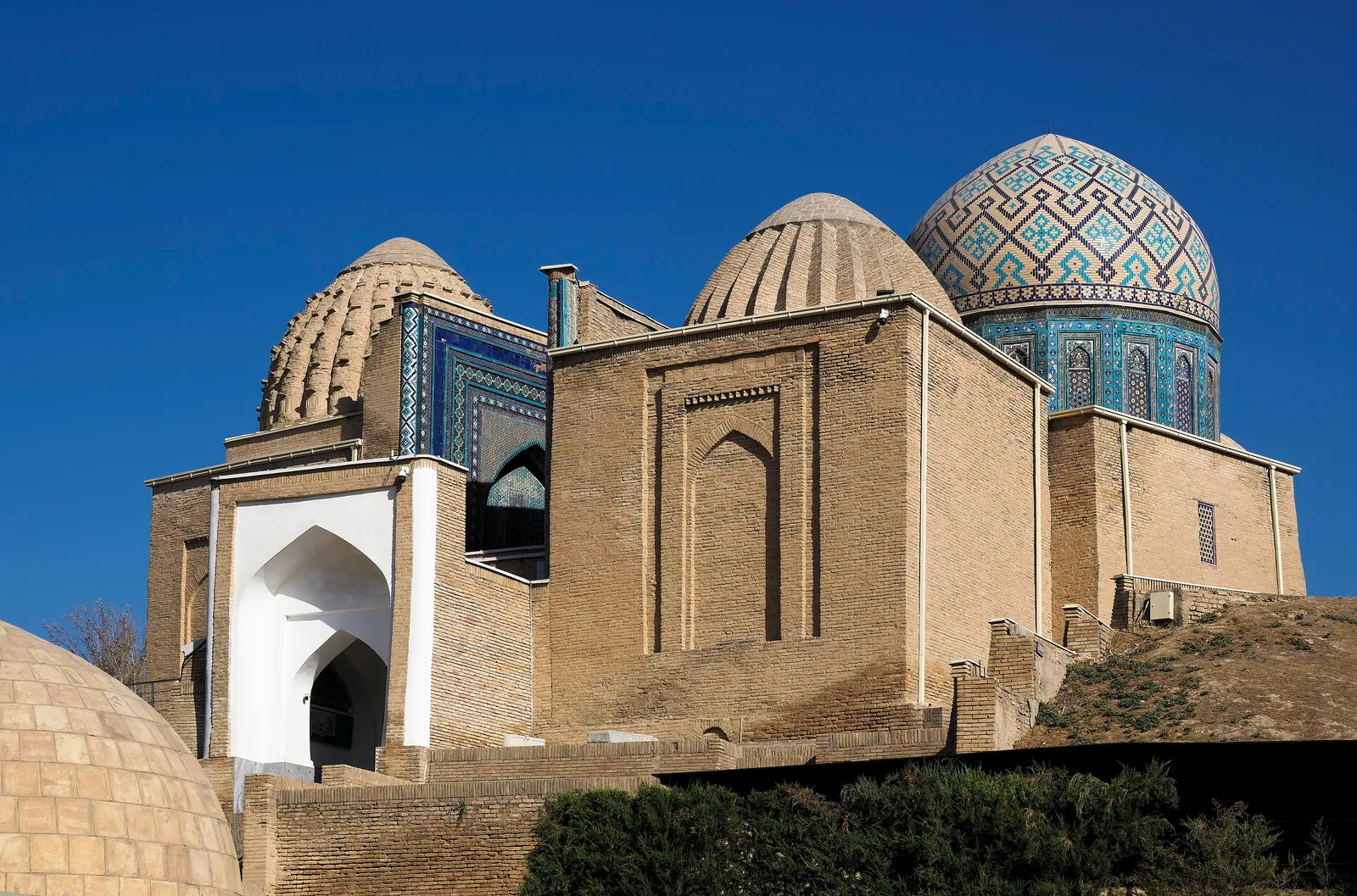
A narrow stepped avenue of tombs, each doorway a wall of intricate majolica. It is the most intimate and dazzling tilework in the city, best visited early before the light flattens.
Beside the Bibi-Khanym Mosque, Samarkand’s great market sells round non bread, dried fruit and spices — the living, everyday counterpart to the city’s monuments.
A short film to set the scene — sourced from YouTube and credited to its maker.
Hand-picked places to sleep, from the iconic to the characterful — each chosen for position as much as polish.
A long-established full-service hotel within easy reach of the main monuments — a comfortable, well-run base for first-time visitors to the city.
A polished modern resort in the landscaped Silk Road Samarkand development beside Eternal City — spacious and serene, a short drive from the historic centre.
Samarkand’s old quarter holds several small, family-run boutique guesthouses set in courtyard homes — characterful, walkable and an easy stroll from the great squares.
The sights that earn their fame — and a few the crowds miss.
Three madrasas — Ulugh Beg, Sher-Dor and Tilya-Kori — framing one square in turquoise and gold. The defining sight of Samarkand and of the Silk Road.
A stepped avenue of mausoleums built over centuries around a shrine linked to a cousin of the Prophet — a corridor of the finest blue tilework in the city.
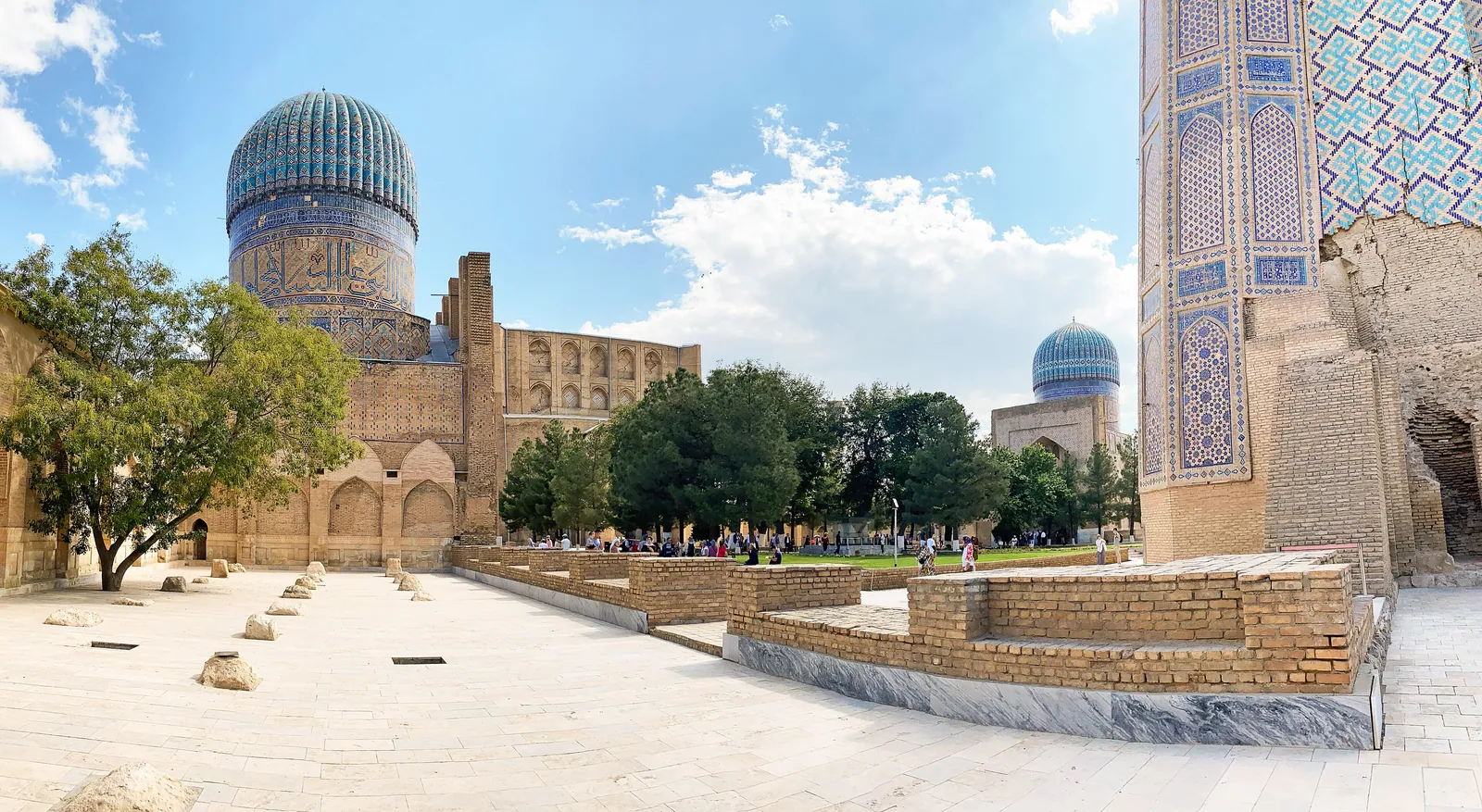
Once among the largest mosques in the Islamic world, raised by Timur after his Indian campaign — its colossal portal still dominates the streets around the Siab Bazaar.
The ribbed-dome tomb of Timur and his dynasty, and on the city’s edge the remains of grandson Ulugh Beg’s great 15th-century astronomical observatory.
From landmark restaurants to the small rooms only locals mention.
Plov — rice slow-cooked with lamb, carrot and onion in a vast cauldron — is best eaten at midday at a dedicated plov centre, the way Samarkand itself eats it.
The chaikhana is the heart of Uzbek dining: green tea, shashlik from the grill, lagman noodles and warm Samarkand non bread, taken slowly on a raised tapchan platform.
A well-known central Samarkand restaurant set under shade trees, pairing classic Uzbek dishes with European cooking — a relaxed choice for an evening meal.
| Location | Samarkand Region, eastern Uzbekistan, in the Zarafshan valley |
|---|---|
| Known to history as | Marakanda — a key city of the Silk Road for over two millennia |
| Golden age | Capital of the Timurid Empire under Timur (Tamerlane), from the late 14th century |
| Famous for | The Registan, Shah-i-Zinda, the Bibi-Khanym Mosque and the Gur-e-Amir mausoleum |
| Recognition | UNESCO World Heritage Site, “Samarkand – Crossroads of Cultures” (2001) |
| Language & currency | Uzbek (Russian widely spoken); the Uzbek som |
Samarkand is a chapter of The Long Way East · The Silk Road Reborn.
Spring (April to early June) and autumn (September to October) are ideal, with warm days, cool evenings and the tilework at its most luminous. Summer is very hot and dry, while winters are cold and quiet — clear but chilly, with the monuments largely to yourself.
Samarkand has its own international airport, and the fast Afrosiyob train links it with the capital, Tashkent, in about two hours — a comfortable, scenic ride. Most travellers fly into Tashkent or Samarkand and continue overland along the Silk Road by train.
For many nationalities, no. Uzbekistan has greatly liberalised entry, granting visa-free travel to citizens of a long list of countries, with a straightforward e-visa for others. Rules change, so confirm your nationality’s status before travel — Viajes Globales advises every traveller individually.
Two to three days is the sweet spot. Two days cover the Registan, Shah-i-Zinda, Bibi-Khanym and the Gur-e-Amir without rushing; a third allows the Ulugh Beg Observatory, the Siab Bazaar and time simply to sit with the city — its rhythm rewards a slow pace.
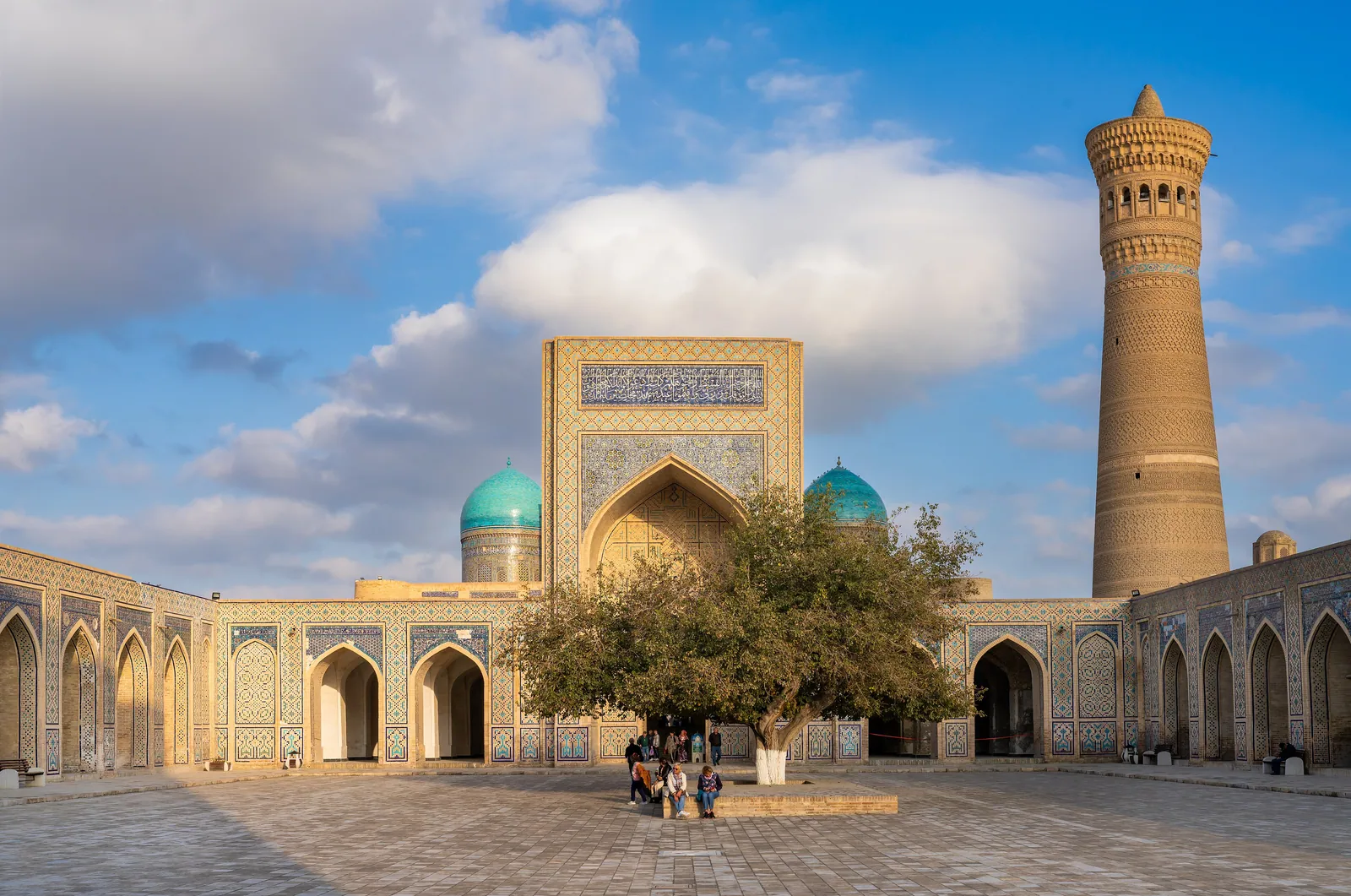
Absolutely — the two cities are the natural pairing. Bukhara, with its old town of madrasas and trading domes, lies a few hours west and is easily reached by the Afrosiyob train. Many travellers continue to Khiva as well, completing a classic Silk Road journey across Uzbekistan.
Travel here as a chapter of a grand journey, or as a trip of its own. We will tailor it to your dates and pace.